Making money in the stock market is no mean feat. Any novice trader knows the perils of finding a method that has stood the test of time. And while no holy grail may exist, technical analysis has a lot to offer.
Technical analysis is a broad category of stock market analysis designed to forecast future share price movements.
It can be as simple as looking at price and volume movements or as complex as fractal analysis.
The topic is so vast that it is hard to know where to begin, which is why we compiled a list of the best technical analysis books to help you accelerate your quest to identify a trading strategy that works well for you.
1 – Technical Analysis
of the Financial Markets
Among the very best technical analysis books is John Murphy’s classic, called Technical Analysis of the Financial Markets.
John Murphy is one of the most renowned technical analysts. He has appeared on Bloomberg, CNBC, and CNN as well as many other financial TV shows, and is the face of StockCharts.com, a financial information site featuring technical analysis tools.
Technical Analysis of the Financial Markets is the gold standard of technical analysis books. It is perhaps the most comprehensive book of its kind.
Unlike some other books, it is not too wordy yet at the same time it’s a complete resource.
You won’t simply discover technical analysis concepts, you will also discover their applications to futures and stock markets.
From technical tools and indicators to computer technology, the book covers all the essentials needed to objectively analyze stock charts.
You will learn about Japanese Candlesticks, intermarket relationships, and the rotation of stocks among many other topics.
So, whether you are looking to perform stock technical analysis or bitcoin technical analysis, you will have the tools you need to make more informed decisions.
Constructing an oscillator using two moving averages
Commodity channel index
Relative strength index (RSI)
Using 70 and 30 lines to generate signals
Stochastics (K%D)
Larry Williams %R
The importance of trend
Moving average convergence/divergence (MACD)
MACD histogram
Investor sentiment readings
Investors intelligence numbers
Point & Figure Charting
Point & figure versus the bar chart
The horizontal count
Price patterns
Measuring rate of change (ROC)
Commodity channel index
Measuring techniques
Trading tactics
Computerized P&F charting
Japanese Candlesticks
Basic candlesticks
Candle pattern analysis
Filtered candle patterns
Elliott Wave Theory
Basic tenets of Elliott Wave Principle
Corrective waves
The rule of alternation
Channeling
Wave 4 as a support area
Fibonacci ratios & retracements
Fibonacci time targets
Time Cycles
Dominant cycles
Combining cycle lengths
Left and right translation
How to isolate cycles
Seasonal cycles
Stock market cycles
The January barometer
The Presidential cycle
Maximum entropy spectral analysis
Cycle reading and software
Computers & Trading Systems
Welles Wilder’s parabolic and directional movement systems
Pros and cons of system trading
Money Management & Trading Tactics
Three elements of successful trading
Money management
Reward to risk ratios
Trading tactics
Types of trading orders
Intraday pivot points
Application to stocks
Asset allocation
Managed accounts and mutual funds
The Link Between Stocks and Futures
Intermarket analysis
The link between bonds and stocks
The link between bonds and commodities
The link between commodities and the dollar
Stock sectors and industry groups
Dollar and large caps
Intermarket correlation
Neural network software
Deflation scenario
Stock Market Indicators
Measuring market breadth
Comparing market averages
The Advance-decline line
AD Divergence
Daily versus weekly AD lines
McClellan oscillator
McClellan summation index
New highs versus new lows
Upside versus downside volume
The ARMS Index
Equivolume charting
Candlepower
Advanced Technical Indicators
Technical checklist
Chartered market technician (CMT)
Market technicians association (MTA)
Demand index (DI)
Payoff index (HPI)
2 – Charting & Technical Analysis
Charting & Technical Analysis by Fred McAllen is one of the very best technical analysis books for analyzing stocks, options, and forex markets, as well as mutual funds.
What distinguishes Charting & Technical Analysis from many other technical analysis books is the in-depth focus on who is buying and who is selling.
Fred McAllen’s book doesn’t simply spotlight charts with 20/20 hindsight perspective about where optimal buy and sell points are but goes further to explain how to identify when tops and bottoms are forming.
The clear focus of the book is empowering traders with knowledge to make more informed trading decisions.
Even if you are not an active trader but invest in mutual funds, the book is a valuable.
You will learn about the tricks of financial advisors and salespersons to earn commissions from mutual funds and how advancing your own knowledge can be a money-saver.
If you have been struggling to decipher and analyze stock charts, this book is a virtual must-read.
What You Will Learn
Japanese Candlesticks
Support, resistance, and trends
Trend lines
Chart patterns
Reversal patterns
Inverted head & shoulders patterns
Double tops and bottoms
Saucers and Spikes
Continuing patterns
Flags & Pennants
Bull flag
Bear Flag
Pennants
Price Gaps
Exhaustion gaps
The Key Reversal Day
Percentage retracements
The Interpretation of Volume
On-Balance Volume
OBV Breakouts
Other volume indicators
Short & Long-term Views
Top-down market approach
Moving Averages
Popular moving averages
Stochastics
Any time dimension
Options
Option put/call ratio
Stop Losses
Trailing stop/loss order
3 – How To Day Trade For A Living
How To Day Trade For a Living is a fascinating book not only in the knowledge it imparts but also because of the compelling narrative that led Andrew Aziz to write it.
Aziz had a PhD in Chemical Engineering from the University of British Columbia but despite his qualifications he was informed during the stock market crash of 2009 that he was no longer needed as an employee.
He decided to dedicate his future to learning day trading strategies and that journey led him to ultimately write How To Trade for a Living, a book that helps others to find stocks to day trade, the best brokers for day trading, and the best software for day trading.
What You Will Learn
Day Trading Strategies
ABCD pattern trading
Bull flag momentum trading
Top reversal trading
Bottom reversal trading
Moving average trend trading
VWAP trading
Support & resistance trading
Timing
When to enter and exit trades
Defining stop losses
Trading Psychology
How to control emotions trading
Money Management
How manage risk and reward
Trading Tools
Which software is best for day traders?
Best Brokers For Day Trading
Which brokers are best for day traders
4 – Technical Analysis Explained
If you want to understand technical analysis for stock trends, Martin Pring’s Technical Analysis Explained has stood the test of time as a proven resource.
The book was first published decades ago and continues to be a bestseller with good reasons.
It is widely regarded as the Bible of technical analysis because it is so comprehensive.
Indeed, it is designed to give you everything you need to forecast accurately how investors will respond to future events based on how they have statistically responded in the past.
Regardless of whether you trade stocks, ETFs, or commodities, Pring blends the art and science of technical analysis well.
Pring expands beyond stock analysis and focuses on ETFs and how to analyze them.
He also describes in detail his proprietary Pring Special K Indicator.
What You Will Learn
Trend-Determining Techniques
Market Cycle model
Financial markets and the business cycle
Dow theory
Parameters for intermediate trends
Price patterns
One-and-two bar price patterns
Trendlines
Moving averages
Momentum principles
Momentum indicators
Candle charts
Point and figure charting
Relative strength
Market Structure
Price: major averages
Price: group rotation
Longer time cycles
Volume oscillators
Breadth
Market Behavior
Why interest rates affect stock market
Sentiment indicators
Technical analysis & contrary opinion
Identifying market peaks and troughs
Automated trading systems
Technical analysis of global stock markets
Technical analysis of individual stocks
Elliott Wave
Theory of Elliott Waves
5 – Japanese Candlestick
Charting Techniques
Steve Nison has long been regarded as one of the leading authorities on Japanese Candlesticks trading.
In Japanese Candlestick Charting Techniques, he walks readers step by step through the theory and practice of this eastern method of investment analysis.
Whether you are looking to gain an edge in futures or equities trading, or simply in hedging and speculation, Japanese Candlestick Charting Techniques is a one-stop guide.
It covers the basics of Japanese Candlestick charting techniques as well as advanced methods that can be applied to almost any market.
For traders who like to learn through application, hundreds of examples are shown throughout the book.
What You Will Learn
Japanese Candlesticks Basics
Background of candle charting techniques
How to construct candlestick lines
Reversal Patterns
Umbrella lines
Hammer
Hanging man
Engulfing pattern
Dark-cloud cover
Piercing pattern
Star Patterns
Morning star
Evening star
Morning and evening Doji stars
Shooting star
Inverted hammer
Reversal Patterns
Harami pattern
Harami cross
Belt-hold lines
Upside-gap two crows
Three black crows
Three advancing white soldiers
Three mountains and three rivers
Counterattack lines
Dumpling tops and frypan bottoms
Tower tops and bottoms
Continuation Patterns
Windows
Tasuki
High-price gapping
Low-price gapping
Rising and falling three methods
Dojis
Northern doji
Long-legged doji
Gravestone doji
Dragonfly doji
Tri-star
Candles with Trend Lines
Springs and upthrusts
Change of polarity principle
Candles with Moving Averages
Simple moving average
Weighted moving average
Exponential moving average
Applying moving averages
Candles with Oscillators
Relative strength index
Moving average oscillator
Stochastics
Moving average convergence-divergence (MACD)
Measured Moves
Breakouts from boxes
Swing targets
Flags
Pennants
6 – Technical Analysis For Dummies
If you are a newbie wanting to learn technical analysis from the ground up, Technical Analysis for Dummies is a great place to start.
The book is a step-by-step guide to help you identify stock market trends and spot turning points in order to make decisions in real-time.
The ultimate goal of the book is to help you to improve your portfolio performance through a deep understanding of technical analysis.
Whether you are looking to perform cryptocurrency technical analysis, gold technical analysis, forex technical analysis, crude oil technical analysis or simply plain vanilla equities analysis, Technical Analysis for Dummies is a comprehensive resource.
What You Will Learn
Technical Analysis Toolbox
Introduction to technical analysis
Charting
Market timing
The Essence of Market Movement
Identifying crowd behavior
Trading mean conversion
Retracements
Market Sentiment
Tracking on-balance volume
Key reversals
Volume indicators
The Art of Trading
Choosing your trading style
Classifying indicators
How indicators work
Choosing indicators
Risks of backtesting
Managing The Trade
Building a trading plan
Stop loss orders
Adding & reducing positions
Reading Basic Bars
Identifying an uptrend and downtrend
Selecting time frames
Market Behavior
Tick and bar placement
Trading range
Identifying common special bars
Filling the gap
Average trading range
Japanese Candlesticks
Dojis
Identifying emotional extremes
Reversal patterns
Continuation patterns
Pattern Analysis
Ascending and descending triangles
Double bottoms and double tops
Head and shoulders
Gaps and retracements
Drawing Trendlines
Support and resistance lines
How to use linear regression
Breakouts and false breakouts
Using resistance to enter and exit
Channel Analysis
Channel-drawing basics
Analyzing breakouts
Linear regression analysis
Pivot support and resistance
Dynamic Analysis
Simple moving averages
Exponential moving averages
Multiple moving averages
MACD analysis
Measuring Momentum
How to calculate momentum
Applying momentum
Determining relative strength index
Stochastic oscillators
%K and %D indicators
Estimating Volatility
Low volatility with and without trending
High volatility with and without trending
Standard deviation
Average true range bands
Point-and-Figure Charting
Applying pattern analysis
Constant range bars
Combining point-and-figure techniques with other indicators
Cycles and Waves
Financial cycles
Seasonality
Gann 50 retracement
Secrets of Top Technical Traders
Learn your expectancy
The trend is your friend
Diversify
Rules for Working with Indicators
Use support and resistance
Follow the breakout principle
Embrace patterns
What do you think of fundamental analysis vs technical analysis? Do you apply stock technical analysis when making investment decisions? Let us know if you read other great technical analysis books that we missed.
It’s no secret that many consumers have lost faith in some big-name banks, who often nickel and dime them on fees at every twist and turn.
Digital banking startups have sprouted up to combat large institutions by providing more transparency, charging lower fees, and improving user experiences through increased mobile compatibility.
Among them is a highly ambitious start-up called Revolut. It is one of the most successful up-and-comers with over 1.5 million customers who collectively have saved over $160 million in fees according to the company.
So what has Revolut done to attract so many customers?
Revolut makes it less costly when traveling abroad to pay for things and withdraw money by providing a free, prepaid, multi-currency debit card absent foreign exchange markup costs.
When you add up the cost savings, Revolut has some serious appeal. But what else do you need to know about the Revolut Mastercard?
When you travel internationally, bank fees are more than a nuisance. They can really stack up to a hefty amount.
Some credit card companies entice travelers with no foreign transaction fees (like Chase does with its Sapphire Reserve card), but most tack on charges when you buy goods and services abroad.
And if you have ever found yourself in the unlucky position of needing to withdraw cash from an ATM abroad, you may well have got a shiver up your spine thinking about all the fees destined to hit your account.
In addition to the fees charged by the local bank, your own bank frequently adds insult to injury by charging you a penalty fee for using an international ATM too.
Not only can ATM fees act like quicksand on your account balance but foreign exchange fees also hurt you when banks charge a “markup” over and above the current exchange rate.
That means what you pay is very different from the exchange rate you are quoted online, which is the interbank rate – the rate banks charge each other to perform currency exchanges.
Some banks tack on as much as 3% to purchases you make. That may not seem like much when you pay for a coffee but if you are tempted by a Rolex watch or some other expensive item, the fees could really hurt.
How Revolut Can Save You Money
The Revolut card, a prepaid MasterCard, is designed to get around these problems by acting like a local debit card.
Spend Internationally Without Fees
Instead of carrying a U.S. card abroad, which requires a currency conversion, the Revolut card lets you spend fee-free at the real exchange rate and make free international ATM withdrawals.
Hold Multi-currency Accounts
Revolut also provides a mobile app that lets you hold, transfer, and exchange your money in USD and 25 other foreign currencies at the real exchange rate.
So if you are in Paris buying a couple of croissants and you have a balance of 50 USD stored on your Revolut card, you can purchase the croissants at their current price in the local currency without paying any exchange rate markups or penalty fees.
It’s as if you were down at your local bakery in the United States paying for the same goods with a U.S. card because the only charge deducted from your balance is the cost of the croissants.
Free International Money Transfers
Like Xoom, Remitly, and litany of other international money transfer services, Revolut enables you to send money securely to bank accounts abroad.
But unlike many other companies, Revolut can save you as much as 8% by using the real exchange rate.
And compared to other companies, Revolut has an equally large, if not larger, network of supported countries – currently 120 countries.
Buy & Exchange Cryptocurrency
Cryptocurrency digital exchanges are notoriously expensive when it comes to transactions costs.
Coinbase is an early pioneer in the cryptocurrency space and makes it as easy as entering your credit card number to buy and sell Bitcoin (BTC), Ethereum (ETH), Litecoin (LTC), and Bitcoin Cash.
But the simplicity comes at the price of high transaction fees when compared to the traditional costs of buying and selling stocks, options, and futures at established brokers like tastyworks.
The days of high commissions charged by digital currency exchanges who facilitate cryptocurrency trading may be numbered because Revolut enables customers to buy and sell at significantly lower transaction costs.
You can buy, hold, and exchange Bitcoin, Ethereum, and Litecoin with 25 fiat currencies at the best possible exchange rate for a fee of 1.5% upfront.
We found the setup time is fast, which is in stark contrast to many digital currency exchanges that have cumbersome and lengthy onboarding processes.
You can also view real-time cryptocurrency rates on your mobile app, track your performance over time, and receive instant price alerts.
Revolut Review: Budgeting App
Compared to Revolut competitors like Monzo and N26, Revolut has grown its customer base faster thanks in part to over $80 million in venture funding.
It hasn’t spent its money only on customer acquisition. Product development has been a clear priority for Revolut, which has added a budgeting app to its list of product offerings.
Revolut will automatically categorize your transactions and provides a polished user interface so you can spot spending spikes, whether on restaurants, travel, groceries, or shopping.
Send Money To Family & Friends
Not only can you send money overseas, but you can also send money to anyone in your contact address book on your mobile phone.
If you wish to send money to family or friends, you can invite them to join Revolut and, with a few clicks, send them money.
The money lands in their accounts and can be retrieved when they sign up to Revolut.
Split Bills For
Dinner, Rent, Or Travel
If you have ever been frustrated at the end of a meal when attempting to split a bill because someone didn’t have enough cash or the restaurant limited the number of credit cards, you will be pleased to discover that Revolut can solve that problem digitally.
Like its competitor, Venmo, Revolut makes it easy to send and request money easily from family and friends for everything from the restaurant bill to monthly rent or travel costs when abroad.
Revolut Partnerships
If it seems like Revolut is eating the lunch of other apps and bank services by providing similar services at lower cost, it is!
And it’s not stopping with the list of products mentioned.
Revolut has partnered with a host of other companies to provide additional services that you can expect it to roll out over time, including:
If its current list of partners is anything to go by, Revolut aims to be a one-stop shop for all things banking related.
While most of these partners are currently European based, it won’t be a surprise to see Revolut partner with U.S. based firms for similar services too.
Revolut Reviews
From Customers
Revolut was founded when its founder and CEO, Nikolay Storonsky, discovered firsthand from trading currencies at Credit Suisse how high forex fees can be.
And while he and his team have undoubtedly built great technology to bring a valuable idea to the world, some growing pains are still evident.
While most Revolut reviews by users earn the company top marks, quite a few complain about poor customer service.
A common complaint revolves around the lack of human support.
It’s clear Revolut is trying to automate where possible with chatbots but they are falling short of the mark with enough customers to warrant concern.
A lingering question remains about the extent and timeliness of the support you will receive if your Revolut card is stolen or you send money but it doesn’t arrive.
On the whole, it seems like queries are answered and complaints are successfully resolved but not in the timeline expected by customers from a top tier company.
With that said, Revolut has raised an enormous amount of venture funding and it would be surprising if a chunk of it isn’t allocated to bolstering its customer service department.
Revolut Pricing
Revolut provides two pricing plans, Standard and Premium.
The Standard Plan has no cost while the Premium Plan charges a monthly fee of GBP 6.99.
Feature
Standard
Premium
Free USD checking account
✅
✅
Free Euro IBAN account
✅
✅
Interbank FX rates
✅
✅
Free bank transfers in 25 currencies
✅
✅
Free ATM withdrawals monthly (up to GBP 200 or EUR 200)
✅
✅
Free ATM withdrawals monthly (up to GBP 400 or EUR 400)
❌
✅
Free unlimited FX volumes
❌
✅
Free exclusive Premium cards
❌
✅
Free overseas medical insurance
❎
✅
Free global express delivery
❌
✅
Exclusive priority 24/7 customer support
❌
✅
Exclusive Premium promotions
❌
✅
Note that cross-currency exchanges are free only up to GBP 5,000 or equivalent per rolling month. Thereafter, a 0.50% fair usage fee applies.
If you are ever worried about hitting the limit, you can check your remaining fee-free allowance.
Revolut Pros and Cons
Revolut Pros
Revolut Cons
✅ Fee-Free Purchases Abroad: You won’t be hit with penalty fees nor spread markup charges when buying goods and services abroad.
❌ Customer Support: The most common complaint about Revolut is poor customer support when things go wrong like stolen cards or tracking down money transfers.
✅ Multi-currency Accounts: Transfer, hold, or exchange money in U.S. dollars and 25 other currencies at real exchange rates.
❌ ATM Withdrawals: Some customers complain about having trouble when withdrawing funds from ATMs abroad so it is best to bring more than one card with you to be safe.
✅ Free Money Transfers: Send money internationally to over 120 countries free.
❌ Lengthy Delays: Some customers complain about long delays when receiving new cards.
✅ Send Money Via Mobile Phone: It is free to send money by mobile phone to family and friends who sign up to Revolut too.
✅ Split Bills: No more problems divvying up restaurant checks, you can split bills easily among friends at no cost.
✅ Cryptocurrency Exchange: Revolut charges a fraction of the cost of many other digital currency exchanges to buy and exchange cryptocurrencies.
✅ Free Overseas Medical Insurance: Premium buyers enjoy free medical insurance overseas.
✅ 14% Discount: When you pay upfront for the Premium plan, you receive a 14% discount.
Revolut Review Summary
Revolut is a digital banking alternative that enables you to buy goods and services abroad without penalty at the real exchange rate using a prepaid debit card.
It is free to send money internationally via money transfers and to friends and family locally with a few clicks on your mobile phone.
Whether you are exchanging money, spending it abroad, or transferring it, the Revolut prepaid multi-currency card can be used for all purposes and is accepted widely.
Premium members even get free medical insurance overseas, which includes dental treatment and access to an extensive network of medical centers around the globe.
It is clear Revolut has ambitions to displace just about every other banking need you may have from splitting bills among friends at restaurants to wealth management, lending, and insurance.
But all that ambition has not come without some growing pains in the form of less than stellar customer support.
While our research shows that the majority of customers are pleased, the few who complain spotlight slow response times and difficulty connecting to humans.
If your priority is cost, Revolut is almost unparalleled in the number of services it provides at no cost. And with continued expansion, we expect customer support will improve too.
Revolut Team & Financiers
Revolut has been financed by some of the most successful venture capitalists, including:
TradingView began as a provider of stock charts for traders but over the years has expanded to include stock screeners, an educational portal, and a social network where active traders can exchange ideas.
Unlike some old school charting services that seem a little outdated, TradingView is a highly polished stock market platform that features state of the art charts for equities, futures, currencies, contracts for difference, and indexes globally. It even features cryptocurrencies in its lineup.
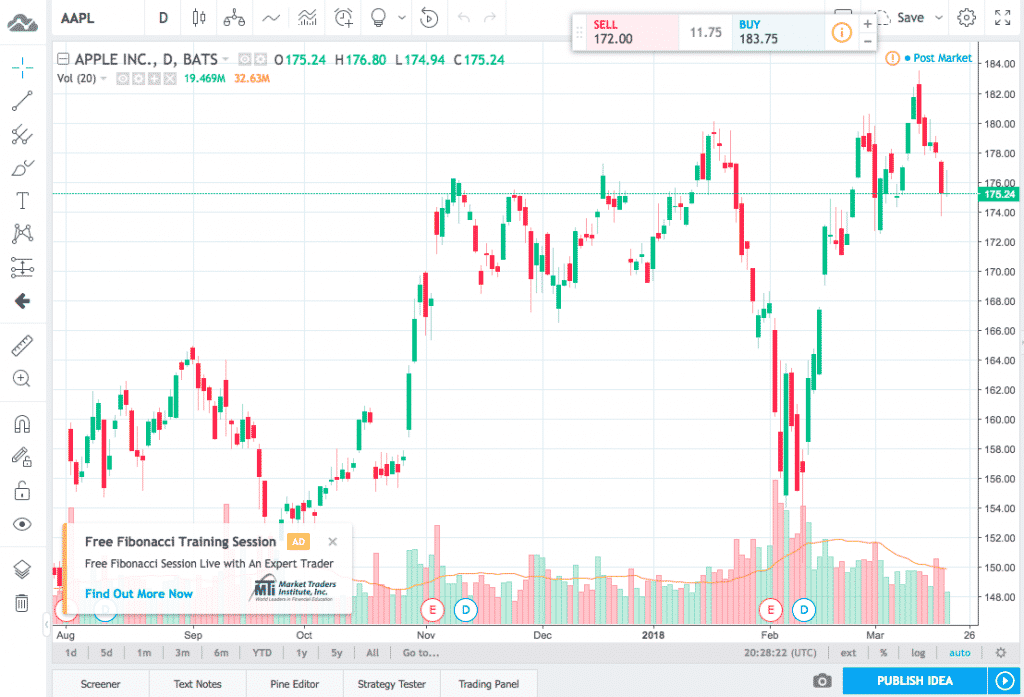
Stock charts are jam-packed with useful tools to help evaluate trends including drawing tools, indicators, and overlays.
Best of all, TradingView comes with a free trial evaluation period and a low monthly price.
Active traders looking for top quality stock charts will find it hard to identify a better service than TradingView.
Whether you are looking for advanced charting capabilities to make more informed trading decisions, trading ideas to find the next opportunity, education to improve your financial acumen, or people to bounce ideas off of, TradingView has got you covered.
Even before paying a dime, you can access a ton of great information at no cost. But the downside for free users is regular ads interrupting your user experience.
Paying members get access to lightning fast HTML5 charts, real-time chats with other members, published ideas, and a workspace to save any charts you customize.
While active traders will be spoiled for choice with the vast functionality at TradingView, newbies may feel a little intimidated by the busy charts. But even then, it is possible to connect with the support team or other community members.
For investors who like to be hands-off, TradingView is probably not a good fit. It would be better to explore robo-advisors like Betterment or Personal Capital, who can manage your money using computer algorithms.
TradingView is ideal for traders who believe technical analysis can provide an edge in making better buy and sell decisions. And to help those traders achieve their aims, it provides an assortment of indicators and trend analysis tools.
Even fundamental analysts and macroeconomic investors will find valuable insights.
TradingView Features
Whether you are trading U.S., European, Asian, African, or Middle Eastern securities, TradingView has got you covered.
From stock screeners to heat maps, TradingView has it all.
Plus, it comes with a 30-day free trial and a very reasonable monthly price thereafter, especially if you are willing to commit to a 2-year payment.
Stock Screener
✅
Forex Signal Finder
✅
Cryptocurrency Signal Finder
✅
Economic Calendar
✅
Trading Ideas
✅
Educational Wiki
✅
Published Ideas
✅
Real-time Social Chat
✅
Heat Maps
✅
Global Markets Coverage
✅
Equities, Bonds, Currencies, Futures
✅
TradingView App
✅
HTML5 Charts
✅
Free 30 Day Trial
✅
How TradingView Ideas Work
Whether currencies, stocks, indices, futures, cryptocurrencies, bonds, or CFDs are your thing, TradingView features ideas across all asset classes.
It provides a range of trend analysis tools, including:
Support and resistance
Supply and demand
Pivot points
Fibonacci
Trend lines
Candlestick analysis
Seasonality
Fractals
Cycles
Chartists and technical analysts can use TradingView to identify chart patterns like head and shoulders, wedges, double tops or bottoms, cup and handles, flags, pennants, rectangles, parallel channels, pitchforks, and triangles.
Standard indicators and overlays like oscillators, volatility, volume, moving averages, breadth indicators, and Bill Williams Indicators are available too.
Elliott Wave and Kondratieff Wave fans won’t be disappointed either. But TradingView goes further and includes additional wave analysis like Sine Waves, Wolfe Waves, and Neo Waves.
For advanced chartists, Gann Box, Gann Fan, and Gann Squares are available.
So too are harmonic patterns, including:
AB=CD
Three drives
Gartley
Bat
Butterfly
Crab
Cypher
5-0
Shark
TradingView goes beyond standard charting to include additional valuable tools relating to risk management, macroeconomics, trading psychology, fundamental analysis, Chart Art, and Bullseye.
What Cryptocurrencies Are Available Via TradingView?
When you get started with TradingView free stock charts, you can view popular cryptocurrencies too.
Simply type in the crypto pair, such as BTCUSD, to see how bitcoin compares to the US dollar.
Beyond Bitcoin, Ethereum, Litecoin, and Ripple, many other cryptocurrencies are available on TradingView, which features cryptocurrencies pairs trading on major exchanges like Bittrex, Poloniex, and Kraken.
What Are TradingView Scripts?
TradingView features 5,000+ custom-built indicators and strategies, which are coded in the Pine programming language.
Among the many Scripts are the following:
Oscillators
Relative strength index (RSI)
Average directional index (ADI)
Stochastic oscillator
Chande momentum oscillator (CMO)
True strength index (TSI)
Ultimate oscillator (UO)
Stochastic RSI
Vortex indicator (VI)
Directional movement index (DMI)
DeMarket indicator (DeM)
Centered Oscillators
Moving average convergence divergence (MACD)
Commodity channel index (CCI)
Fisher transform
Momentum indicator (MOM)
Woodies CCI
TRIX
Detrended price oscillator (DPO)
Percent price oscillator (PPO)
Bears power
Know sure thing (KST)
Volatility
Average true range (ATR)
Bollinger bands (BB)
Rate of change (ROC)
Donchian channels
Keltner channels (KC)
Parabolic stop and reverse (PSAR)
Historical volatility
Standard deviation
Volatility stop
Chaikin volatility (CHV)
Trend Analysis
Ichimoku
Pivot points
Price/earnings ratio (P/E)
Support & resistance
Commitment of traders (COT)
Linear regression
Pring special K
Zig zag indicator
Candlestick analysis
Relative strength comparison (RSC)
Volume
Put/call ratio (PCR)
Volume indicator
Money flow index (MFI)
Chaikin money flow (CMF)
Volume profile
Volume weighted average price (VWAP)
Accumulation/distribution line (ADL)
Price volume trend (PVT)
Ease of movement (EOM)
Negative volume index (NVI)
Moving Average
Exponential moving average (EMA)
Weighted moving average (WMA)
Simple moving average (SMA)
Hull moving average (HMA)
Kaufman’s adaptive moving average (KAMA)
Smoothed moving average (SMMA)
Variable index dynamic average (VIDYA)
Volume-weighted moving average (VWMA)
Fractal adaptive moving average (FRAMA)
Double exponential moving average (DEMA)
Breadth Indicators
OnBalance volume (OBV)
McClellan oscillator
McClellan summation index
Advance/decline ratio
Cumulative volume index (CVI)
Arms Index (TRIN)
Advance/decline line
High/low index
Advance/decline volume line
Bill Williams Indicators
Awesome oscillator (AO)
Williams fractal
Market facilitation index
Williams alligator
Gator oscillator
Accelerator oscillator (AC)
TradingView Pros and Con
TradingView Pros
TradingView Cons
✅Powerful Software: TradingView has little competition when it comes to providing a comprehensive technical analysis tool suite for active traders. It’s fast, powerful, and extensive.
❌Intimidating Interface: New traders may be intimidated by the vast array of options available.
✅Selection Of Securities: Currencies, stocks, indices, futures, cryptocurrencies, bonds, and CFDs can all be analyzed.
❌Mutual Funds: Mutual fund investors should look elsewhere, such as Morningstar, for coverage.
✅Global Coverage: Coverage extends beyond the United States financial markets to include those in Europe, Africa, Middle East and Asia.
✅Lighting Fast Charts: HTML5 charts are used to create a lightning fast user experience.
✅Mobile Friendly: Traders on-the-go can access the TradingView app, which features extensive functionality too.
✅Real-time: Members get access to real-time data.
✅Low Pricing: If you are willing to commit to a 2-year deal, the per month pricing works out to be as low as $9.99.
✅Free 30-Day Trial: You can try out TradingView at no cost for 30 days.
✅Stock Screeners: Extensive stock screening capabilities are provided.
✅Technical Analysis Suite: Standard technical indicators and overlays are available as well as pattern analysis tools and much more.
✅Beyond Technical Analysis: TradingView includes tools in addition to technical analysis that relate to macroeconomics, trading psychology, and fundamental analysis.
✅Social Network: It is easy to connect in real-time to other members who can help you screen trading ideas.
✅Education: The TradingView wiki is extensive and available to traders looking to improve their knowledge.
✅Customer Support: Members who pay for the Premium membership plan receive priority support.
TradingView Securities
TradingView features stocks, cryptocurrencies, ETFs, bonds, futures, cryptocurrencies and CFDs, but does not include mutual funds nor options in its lineup.
TradingView provides three billing plans, Pro, Pro+, and Premium as well as a free plan.
The best rate is available by committing to a two year plans where you can save up to 33% compared to a month-to-month billing rate.
Pro
Pro+
Premium
$9.95 (based on 2-year billing)
$19.95 (based on 2-year billing)
$39.95 (based on 2-year billing)
$14.95 (based on monthly billing)
$29.95 (based on monthly billing)
$59.95 (based on monthly billing)
Free 30-day Trial
Free 30-day Trial
Free 30-day Trial
The differences between the plans are as follows:
Compare Plans
Free
Pro
Pro+
Premium
Charts per layout
1
2
4
8
Devices at same time
1
1
2
5
Server side alerts
1
10
30
100
Indicators per chart
3
5
10
25
Indicator on indicator
1
1
9
24
Saved chart layouts
1
5
10
unlimited
Indicator templates
1
unlimited
unlimited
unlimited
Enhanced watchlists
1
unlimited
unlimited
unlimited
Customer support
❌
regular
Fast
Priority
SMS Alerts
❌
❌
❌
✅
Signature & website fields
❌
❌
❌
✅
Intraday Renko, Kagi, Line break, Point & Figure charts
❌
❌
✅
✅
Intraday spread charts
❌
❌
✅
✅
Extended trading hours
❌
❌
✅
✅
Create custom chats
❌
❌
✅
✅
Volume profile indicators
❌
✅
✅
✅
Fastest Data Flow
❌
✅
✅
✅
More real-time data options
❌
✅
✅
✅
Custom time intervals
❌
✅
✅
✅
Dedicated backup data feed
❌
✅
✅
✅
No ads
❌
✅
✅
✅
PRO Badge
❌
✅
✅
✅
Screener Auto Refresh
❌
✅
✅
✅
Twice as much data on charts
❌
✅
✅
✅
Backtesting for trading strategies
✅
✅
✅
✅
Stock screener
✅
✅
✅
✅
Forex signal finder
✅
✅
✅
✅
Simply best financial charts
✅
✅
✅
✅
50+ intelligent drawing tools
✅
✅
✅
✅
Prebuilt technical analysis
✅
✅
✅
✅
Community powered technical analysis
✅
✅
✅
✅
Pine script
✅
✅
✅
✅
Hotlists
✅
✅
✅
✅
Simulated trading
✅
✅
✅
✅
Trade through selected brokers
✅
✅
✅
✅
Fundamental stock data
✅
✅
✅
✅
Global economic data
✅
✅
✅
✅
Economic and earnings calendars
✅
✅
✅
✅
Earnings, splits and dividends
✅
✅
✅
✅
Compare symbols
✅
✅
✅
✅
Multiple symbols per chart
✅
✅
✅
✅
Price scales
✅
✅
✅
✅
Real-time context news
✅
✅
✅
✅
Private idea publishing
✅
✅
✅
✅
Text notes
✅
✅
✅
✅
TradingView Review Summary
TradingView is a social network for traders and provides trading ideas, real-time quotes, and free charts for stocks, futures, currencies, and cryptocurrencies.
But much more than standard technical analysis and community chat features, TradingView features screeners, backtesting strategies, an extensive array of indicators, real-time data feeds, heat maps, and earnings calendars to name but a few of its capabilities.
For active traders, few stock chart services come close to TradingView in the scope of features offered. Whether you are trading markets in the United States or foreign markets, the coverage provided is virtually all-encompassing with the Middle East, Africa, Asia and Europe all supported.
With so much functionality, you might expect to pay premium prices but TradingView charges under $10 monthly for its basic package and lets you give it a test-run at no cost for 30 days as part of a free trial.
On trading days, the New York Stock Exchange, or NYSE, is open Monday through Friday from 9.30 a.m. to 4.00 p.m. Eastern for the Core Trading Session.
Pre-opening session begins at 7.00 a.m. ET whereby orders can be entered and are queued until the Opening Auction at 9.30 a.m. ET.
The Closing Imbalance Period spans from 3.45 p.m. to 4.00 p.m.
The New York Stock Exchange, or NYSE, observes all U.S. holidays and stock market holidays for 2018, 2019 and 2020 are listed below.
Stock Market Holidays:
All Markets
NYSE Arca Equities observe the same holiday schedule as the NYSE. However, when the NYSE closes early, the NYSE Arca Equities hours may vary as a result of its extended trading day.
NYSE Holiday
2018
2019
2020
New Years Day
Monday, January 1
Tuesday, January 1
Wednesday, January 1
Martin Luther King Jr. Day
Monday, January 15
Monday, January 21
Monday, January 20
Washington’s Birthday
Monday, February 19
Monday, February 18
Monday, February 17
Good Friday
Friday, March 30
Friday, April 19
Friday, April 10
Memorial Day
Monday, May 28
Monday, May 27
Monday, May 25
Independence Day
Wednesday, July 4
Thursday, July 4
Friday, July 3 (July 4 holiday observed)
Labor Day
Monday, September 3
Monday, September 2
Monday, September 7
Thanksgiving Day
Thursday, November 22
Thursday, November 28
Thursday, November 26
Christmas
Tuesday, December 25
Wednesday, December 25
Friday, December 25
Independence Day
NYSE markets close early at 1.00 p.m. Eastern on:
Tuesday, July 3, 2018; and
Wednesday, July 3, 2019.
For eligible options, the closing time is 1.15 p.m. Eastern time zone.
Thanksgiving Day
NYSE markets close early at 1.00 p.m. Eastern on:
Friday, November 23, 2018;
Friday, November 29, 2019; and
Friday, November 27, 2020, which is the day after Thanksgiving.
For continuous executions, Crossing Session orders are accepted beginning at 1.00 p.m. until 1.30 p.m. Eastern.
Christmas
NYSE markets close early at 1.00 p.m. Eastern on:
Monday, December 24, 2018;
Tuesday, December 24, 2019; and
Thursday, December 24, 2020.
NYSE Bonds
The NYSE bond auctions are conducted twice daily at 4.00 a.m. ET for the Opening Bond Auction and at 8.00 a.m. ET for the Core Bond Auction.
If an order has not been executed during a bond auction, it becomes eligible for continuous trading immediately after the auction.
Bond Trading
Times (Eastern)
Early Trading
4.00 a.m. → 8.00 a.m.
Core Trading
8.00 a.m. → 5.00 p.m.
Late Trading
5.00 p.m. → 8.00 p.m.
NYSE Arca Options
The Options Clearing Corporation expiration calendar is listed below for equity options, ETF options, ETF exceptions, index options, index exceptions, and ETN options.
The Options Clearing Corporation expiration calendar for NYSE American Options is listed below for equity options, ETF options, ETF exceptions, index options, index exceptions, and ETN options.
The timelines for the NYSE American Equities pre-opening session, early trading session, core trading session, and late trading session are listed below.
Trading Session
Time (Eastern)
Description
Pre-opening Session
3.30 a.m.
Orders entered will be queued until Early Open Auction at 4.00 a.m.
Early Trading Session
4.00 a.m. → 9.30 a.m.
3.59 a.m. → 4.00 a.m. is the Early Open Auction Imbalance Freeze Period
4.00 a.m. – Early Open Auction
9.29.55 a.m. → 9.30 a.m. is the Core Open Auction Imbalance Freeze Period
Core Trading Session
9.30 a.m. → 4.00 p.m.
9.30 a.m. – Core Open Auction
3.59 p.m. → 4.00 p.m. is the Closing Auction Imbalance Freeze Period
4.00 p.m. – Closing Auction
Late Trading Session
4.00 p.m. → 8.00 p.m.
NYSE Arca Equities
The timelines for the NYSE Arca Equities pre-opening session, early trading session, core trading session, and late trading session are listed below.
Trading Session
Time (Eastern)
Description
Pre-opening Session
3.30 a.m.
Orders entered will be queued until Early Open Auction at 4.00 a.m.
Early Trading Session
4.00 a.m. → 9.30 a.m.
3.59 a.m. → 4.00 a.m. is the Early Open Auction Imbalance Freeze Period
4.00 a.m. – Early Open Auction
9.29.55 a.m. → 9.30 a.m. is the Core Open Auction Imbalance Freeze Period
Core Trading Session
9.30 a.m. → 4.00 p.m.
9.30 a.m. – Core Open Auction
3.59 p.m. → 4.00 p.m. is the Closing Auction Imbalance Freeze Period
4.00 p.m. – Closing Auction
Late Trading Session
4.00 p.m. → 8.00 p.m.
New York Stock Exchange
Holidays FAQ
What time does the New York Stock Exchange Open?
Excluding holidays, the NYSE opens at 9.30 a.m. ET for trading each day from Monday through Friday.
Is the NYSE stock market open on weekends?
No, the New York Stock Exchange stock market is closed on weekends.
Is the stock market open on Martin Luther King Jr. Day?
No, the stock market is closed on MLK day.
Is the stock market open on Christmas Day?
No, the NYSE stock exchange is closed on Christmas Day.
Is the stock market open on the day after Christmas Day, Dec 26?
Yes, the stock market is open on December 26.
Is the stock market open on Thanksgiving Day?
No, the stock market is closed on Thanksgiving.
Is the stock market open on Election Day?
Yes, the stock market is open on Election Day.
When do NYSE partial holidays take place?
On Independence Day Eve and the day after Thanksgiving Day, the NYSE generally observes partial holidays by opening at 9.30 a.m. ET and closing early at 1.00 p.m. ET.
Apart from fixed holidays, when is the NYSE closed?
During extraordinary times, such as system failures or technical glitches, wars, or even when the President of the United States dies, the NYSE may close temporarily.
Did we miss any stock market holidays or NY stock exchange holidays? Let us know in the comments below. Or tell us how you plan to spend your holidays.
The American Journal of Pharmaceutical Education reports that the average indebtedness for pharmacy students has exceeded the average first year salary in recent years.
Almost 300,000 pharmacist jobs exist in the U.S. and the total student indebtedness is closing in on almost $200,000, which means that collectively pharmacists are shouldering a debt burden of tens of billions of dollars.
To lessen the financial obligations upon graduating, consider applying for one of the many pharmacy school scholarships on offer.
Tylenol Scholarship
Colloquially known as the Tylenol Scholarship, the official name is the Tylenol Future Care Scholarship.
Each year 30 students are awarded scholarships of $5,000 and 10 students are awarded scholarships of $10,000 for combining academic excellence, community involvement, leadership, and commitment to a career caring for others.
To be eligible for the Tylenol scholarship, you will need to attend an accredited institution which may be a two or four year college or University in the United States.
And you must be either a student or practitioner seeking a degree to actively treat patients.
As long as you have at least one or more academic years remaining and are not an employee or family member of Johnson & Johnson Consumer Inc. or McNeil Consumer Healthcare Division or affiliated companies, you will most likely be eligible.
If you are fortunate enough to win, you can apply your scholarship award to tuition, fees, books, supplies, and equipment required for courses.
The ASHP Student Leadership Award Program recognizes students with demonstrated leadership qualities who have an interest in pharmacy practice.
A maximum of twelve awards are handed out annually to students who represent the best attributes of ASHP members and have a proven history of accomplishments.
Only pharmacy students in their second to fourth years are eligible to apply.
You must also be a full-time pharmacy student enrolled in a professional Doctor of Pharmacy program at an ACPE-accredited college of pharmacy.
Applicants must have a cumulative GPA of at least 2.75 to apply (based on a 4.0 scale or equivalent).
To apply for the $2,000 cash award from the ASHP Research and Education Foundation as well as the award plaque, you will need to:
Write an essay of no more than 750 words about how you would increase awareness and understanding of the Practice Advancement Initiative among student colleagues
Provide 3 recommendation forms signed by each recommender
Complete a Certification of Acceptance signature page
The NCPA Foundation is a non-profit, philanthropic 501(c)(3) organization that relies on support from individuals and corporations to help develop future leaders and entrepreneurs in the pharmacy profession.
The NCPA Foundation provides scholarships to pharmacy students, research programs dedicated to improving the success of independent pharmacy and patient care, aid to community pharmacy owners, and community health awareness programs.
The core focus of the non-profit is to stimulate pharmacy ownership and entrepreneurship in pharmacy students, provide educational support to pharmacy students and independent pharmacies in the event of natural disaster, support research to advance the competitive status of independent pharmacies, and educate communities to the benefits of independent pharmacy services.
The NCPA Foundation Scholarship awards students with distinguished leadership qualities, an interest in pharmacy management, and a demonstrated history of academic excellence.
Historically, companies like McKesson have sponsored a range of pharmacy scholarships, including:
Presidential Scholarships are for candidates with outstanding leadership qualities and academic credentials. The award payable to the school is for $2,000 plus a $300 travel stipend
Partners in Pharmacy is for pharmacy students who are student members of the NCPA and enrolled in an accredited U.S. school who have demonstrated leadership qualities and academic achievement. The award is for $2,000 in addition to a $300 travel stipend
Neil Pruitt Sr. Memorial Scholarship in Entrepreneurism is for applicants with a demonstrated interest in entrepreneurism, proven leadership and academic qualities. Recipients are awarded $2,500 plus a $300 travel stipend
William B. Simmons Memorial Scholarship for Pharmacy Management is intended for applicants who have a demonstrated interest in independent pharmacy management, a history of scholastic success, and leadership accomplishments that are adjudicated by the NCPA Foundation Scholarship Committee. The award is for $2,000 in addition to a travel stipend of $300
The American Foundation for Pharmaceutical Education has a mission to advance and support pharmaceutical sciences education at U.S. schools and colleges of pharmacy by funding first year graduate school and pre-doctoral fellows in the pharmaceutical sciences, pre-doctoral fellowships in the clinical pharmaceutical sciences, and pharmacy faculty development research grants.
AFPE First Year Graduate Fellowships are designed to encourage students to pursue careers in pharmaceutical sciences. They support leading Pharm.D degree candidates in the first year of graduate school.
AFPE Pre-doctoral Fellowships in the Pharmaceutical Sciences and Pre-Doctoral Fellowships in the Clinical Pharmaceutical Sciences awards exceptional Ph.D students to help them focus on industry-oriented subjects, such as drug delivery, drug development, clinical trial design and management, manufacturing quality control, and pharmaeconomics.
AFPE Pharmacy Faculty Development Fellowships in Community Pharmacy Practice and in Geriatric Pharmacy support full-time PharmD and PhD pharmacy college faculty members as they pursue six month projects designed to benefit the pharmaceutical industry, pharmacy industry, science education, and national health.
Pre-Doctoral Fellowship in Pharmaceutical Sciences
Pre-Doctoral Fellowship in Health Outcome Disparities
Kappa Epsilon – AFPE Fellowship
Phi Lambda Sigma – AFPE First Year Graduate School Fellowship
Rho Chi – AFPE First Year Graduate School Fellowship
Gateway to Research Scholarship
William M. Heller Mentor of the Year Award
RESPy Award
RESPy award winners are nominated by Pharmacy School Deans or School Faculty & Administration with endorsement from a Dean.
The award honors extraordinary humanitarian work in the community by pharmacy students.
Each year, Pharmacy Times® awards students a scholarship of $1,000, a featured article about their service, a hand-crafted mortar and pestle, plus an invitation to the Walmart pharmacy intern program.
They are designed to educate and coach health professionals for careers in Indian Health programs.
Three scholarships are available:
Preparatory Scholarship
American Indian and Alaska Native undergraduate students can receive financial aid provided that they are descendants or members of state-recognized, federally-recognized or terminated Tribes.
Candidates must be enrolled in eligible courses that lead to qualified health professional degree programs.
Pre-Graduate Scholarship
Candidates must have similar lineages as Preparatory Scholarship applicants and must be enrolled in courses leading to a bachelor’s degree in one of the following areas:
Pre-medicine
Pre-dentistry
Pre-podiatry
Or other subjects needed by the Indian Health programs
Health Professions Scholarship
Recipients of the Health Professions Scholarship are obliged to fulfill a service commitment in full-time clinical practice upon completion of post-clinical or academic training.
The scholarship covers tuition, fees, and living expenses.
Next Steps
If you have applied for scholarship and grants, and taken advantage of federal aid, consider leading private lenders like SoFi and CommonBond, who offer highly competitive rates.
Among cryptocurrencies, Bitcoin receives the most media headlines but did you know that less well known Bitcoin alternatives might be faster and have more functionality? Two of the leading contenders are Litecoin and Ethereum. When you compare Litecoin vs Ethereum, which cryptocurrency is best?
Along with Bitcoin, Litecoin and Ethereum have grown like mushrooms in recent years towards multi-billion dollar market capitalizations but don’t let that fool you into thinking either cryptocurrency is a sure bet.
Before speculating on either Litecoin or Ethereum, you should consider how comfortable you are owning highly volatile digital assets. In virtually the blink of an eye, the prices of cryptocurrencies have been known to swing by double digit percentages.
Over time, they have created enormous wealth for some early adopters but prices can plummet so fast and soar so quickly that you may feel like you are on a rollercoaster ride if you track prices daily.
With that consideration in mind, which cryptocurrency is best? Is it the relatively new cryptocurrency, Ethereum, which launched in 2015 and quickly rose to second in the ranks behind Bitcoin? Or Litecoin, the more established digital currency, that has been around since 2011?
Litecoin Vs Ethereum
Perhaps the biggest difference between Litecoin and Ethereum is that the former is a cryptocurrency only while the latter, Ethereum, is an open-source, blockchain-based distributed computing platform that can support smart contract functionality.
That’s a complicated way of saying that Ethereum not only makes a cryptocurrency called ether possible, but can also support the launch of new cryptocurrencies and make it possible to crowdsource funding for new projects.
The simplest way to think about Ethereum is to compare it to something you probably use every day, your mobile phone. If you have an Android or iOS phone, you have apps that can perform a wide variety of functions from ordering an Uber to mapping a route across town.
Apps are written in a wide variety of languages for many purposes and can be downloaded by anyone. Similarly, Ethereum was designed as the foundational Blockchain layer that understands general purpose programming languages to bring flexibility to the blockchain world.
What Is Blockchain?
So Ethereum is a general purpose Blockchain but what is a Blockchain? A Blockchain is a decentralized system that contains some kind of shared memory.
For example, in the case of bitcoin, the shared memory is how many bitcoins everyone has at some time.
A blockchain application needs to be decentralized and have shared memory.
Once you have a decentralized Blockchain, you can build many things on top of it.
The way it works is through what are called smart contracts, which are computer programs that control digital assets.
With Ethereum, you can send ether to a computer program, which controls where the money goes. For example, it can send money to any address.
Think about an insurance contract as a real life example whereby digital currency is sent to purchase coverage.
Crowdfunding is another application example whereby if people contribute enough money within a certain time frame, a project is funded, similar to how Kickstarter works. If insufficient money is raised to fund a project then everybody gets refunded.
These sets of rules can be applied to many applications beyond the financial world which is why a big challenge for blockchain developers is to figure out how to support the scale and size of the opportunity for blockchain applications in the real world.
Currently, blockchain is not capable of supporting as many transaction as Visa processes payments or even Uber processes rides.
For now, the blockchain is limited to more niche applications, though lots of work is being done to one day cater to the scale and size of the opportunity to disrupt everything from financial transactions on Wall Street to insurance purchases, and many more applications.
What Is Ethereum?
Ethereum was created by Vitalik Buterin, who theorized that Bitcoin needed a scripting language for application development.
The Ethereum blockchain is the foundation on top of which decentralized applications can be built.
Here are just a few of the decentralized applications that shine a light on how developers are building on top of the Ethereum blockchain:
Imogen Heap used the technology to improve digital rights management for music.
Augur and Stox have built prediction markets which are exchange-traded markets used for the purpose of trading the outcome of events.
Digix has created digital tokens pegged to gold.
Slock.it is using the technology to build smart locks, which are electromechanical locks designed to lock or unlock doors wirelessly based on cryptographic keys.
Etheroll has built online gambling applications based on the Ethereum blockchain.
RWE uses it for electric car charging management.
uPort relies on the Ethereum blockchain to build secure identity systems for the internet whereby you don’t need a password to login.
The Ethereum blockchain platform is estimated to have over 50% market share for initial coin offering projects, which is why Ethereum’s value is believed to extend beyond that of a typical cryptocurrency.
What Is The
Enterprise Ethereum Alliance?
Where Ethereum has potential beyond most other cryptocurrencies is that a coordinated effort has been launched to create a reference standard for the Ethereum blockchain that can be used to solve problems across a wide range of industries.
The Enterprise Ethereum Alliance (EEA) includes many of the world’s leading companies, including Microsoft, J.P. Morgan, Deloitte, Accenture, BNY Mellon, Merck, Toyota, Mastercard, Cisco, Scotiabank, CME Group and even Cornell University’s Research Group.
The idea is to come together to create a private permissioned version of the Ethereum blockchain that can be used to address problems in numerous industries, such as health, automotive, technology, banking, consulting, management, pharmaceutical and entertainment.
The network effect of a coordinated group of leading Fortune 500 businesses joining forces to create a common standard adds a valuable dimension to Ethereum beyond what most other cryptocurrencies, including Litecoin, can offer.
In a nutshell, Ethereum makes it possible to employ Blockchain technologies without having to start from scratch.
What Is Litecoin?
Litecoin is a peer-to-peer cryptocurrency that is in many ways similar to Bitcoin because it relies primarily on the same open source code. It was released in 2011 by Charlie Lee, a former Google employee.
The big difference between Litecoin and Bitcoin is in the speed of transactions. Litecoin is about four times faster than Bitcoin.
Another big difference is the maximum number of Litecoins that can be created is 84 million while only 21 million Bitcoins can be produced.
Similar to many cryptocurrencies, Litecoins are released based on a geometric series that halves every 4 years.
And similar to Ethereum, Litecoin can be purchased at Coinbase.
According to EtherScan, the total supply of ethers is approximately 97 million.
How Do You Buy
Ethereum or Litecoin?
To buy cryptocurrencies, you need a digital wallet. If you wish to buy Ethereum, you could visit a web wallet like Coinbase, which acts both as a broker to allow you buy and sell ethers and a wallet where you can store your purchase.
Coinbase is accessible not only via the web but also on iOS and Android devices. It uses two factor authentication for heightened security.
Another web wallet is MyEtherWallet, which differs from most other web wallets by keeping your Ethereum private key on your machine. By contrast, Coinbase stores your private key on hosted servers, which are insured.
Other Ethereum wallets allow you to house your cryptocurrency too. For example, Ledger Nano S is a hardware wallet where your Ether is stored offline. Trezor is another hardware wallet first developed for Bitcoin that also supports Ether.
If you prefer to store your digital currency on your desktop, Exodus support multiple cryptocurrencies including Bitcoin, Ethereum, and Litecoin. Another desktop wallet is Mist, which is the official Ethereum wallet.
For cryptocurrency aficionados, MetaMask provides a desktop wallet that lets you store your Ethereum and access decentralized Ethereum applications.
Ethereum Vs Litecoin Value Tokens
The value token of the Ethereum blockchain, ether, is listed under the symbol ETH on cryptocurrency exchanges.
Litecoin is traded with the symbol LTC.
How Much Does It Cost To
Purchase Litecoin or Ethereum?
If you wish to purchase Litecoin or Ethereum at Coinbase, you will pay a hefty transaction fee compared to the cost of buying stock on a brokerage platform like tastyworks or thinkorswim.
Coinbase fees are subtracted from the amount entered to arrive at the total. So, let’s say you want to sell $100 of ETH (ethers) and the transaction fee is 1.49%, your total will be $98.51.
When you use a credit or debit card, a fee of 3.99% is applied but that reduces to 1.49% using a Coinbase USD Wallet.
Ethereum Price Vs Litecoin Price
Have you traded Litecoin or Ethereum? What do you think about cryptocurrencies? We would love to hear from you – share your comments below.
In the old days, you didn’t have much choice when it came to picking a financial advisor because they were all human!
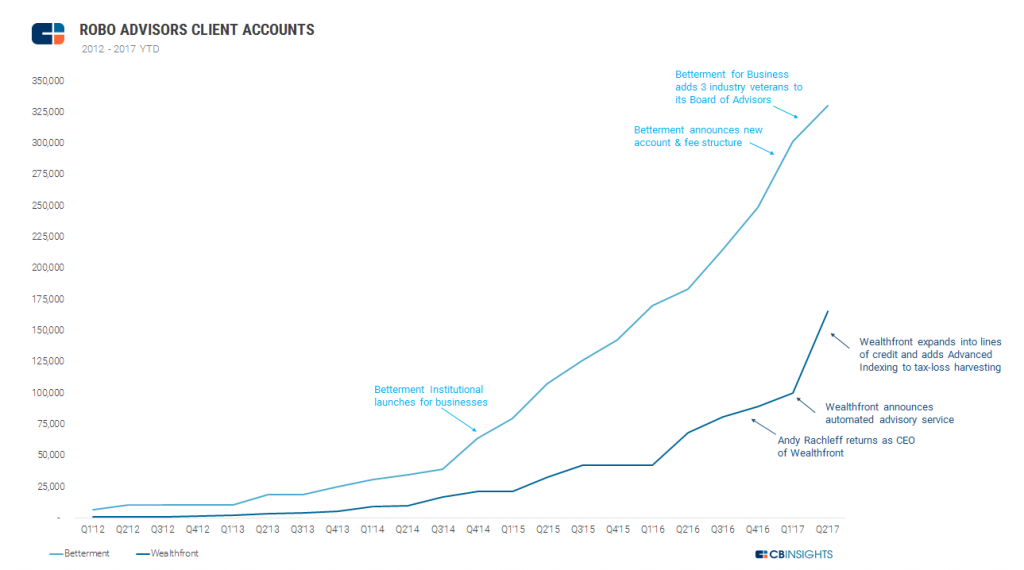
These days, you can select between human advisors and robo-advisors, such as Betterment and Personal Capital.
But regardless of which you choose, you should make sure you have a list of the most important questions to ask your financial advisor before you walk in the door and get mesmerized by glossy charts of rising stocks or speak with a sales representative who dazzles you with projections of rosy retirements.
So, what are the most important questions to ask your financial advisor?
1. What Management Fees Do You Charge?
Traditional financial advisors are increasingly fighting an uphill battle these days when it comes to fees. On average, human advisors charge advisory fees on managed assets north of 1%, though you can find many who will charge lower amounts, especially if you let them manage more of your money.
The reason human advisors are increasingly pressured to lower annual fees is that the majority of robo-advisors charge significantly lower management fees. For example, one of the industry leaders, Betterment, charges approximately one quarter what human advisors charge.
Plus, robo-advisors have become so sophisticated that they automate processes that are time-consuming for human advisors, such as harvesting tax losses and dynamically rebalancing portfolios.
2. How Do You Get Paid?
If you are speaking with a human advisor in particular, you should make a point to ask the question: “how do you get paid?”
At first glance, you might think this question is the same as the first question, but it’s precisely that assumption financial advisors may hope you make so you don’t ask the tough questions!
Financial advisors are required to disclose how they get paid when you ask, and while you might have made the assumption that they only earn income from the management fees charged to you, the reality is they may have other income streams you would otherwise never know about.
When the doors close behind you, financial advisors often meet with mutual fund representatives who pitch them on the latest and greatest fund offerings. And when those funds find their way into your portfolio, your financial advisor may earn a kick back.
3. What Are The Total Costs?
After asking the first couple of questions, you might think this question is redundant.
Haven’t you already found out everything you need to know about fees and how the financial advisor is getting paid?
Unfortunately not!
In addition to paying management fees to your financial advisor, you also will pay expense ratios and commissions costs on trading, plus other fees potentially.
Expense ratios are the fees charged at the fund level by mutual fund operators. And the sneaky thing is you don’t ever really get to see these unless you look hard.
You can always track expense ratio costs down but they aren’t reported on your quarterly financial statements, so they can be hard to uncover.
Robo-advisors generally use low expense ratio funds and charge lower management fees than human advisors, but may pass on trading commissions costs to you.
Investing is a tricky business because most investors do not beat major market averages over time after factoring in fees.
It is so hard to beat the market that a reasonable goal is simply to track the performance of the market.
When Vanguard Group founder, Jack Bogle, first suggested a diversified portfolio would outperform the average “stock-picker,” he was ridiculed but over time he was proven right.
Jack Bogle, Founder Vanguard Group
You should ask your financial advisor whether they invest using Modern Portfolio Theory, which is based on Nobel-prize winning research.
Almost all robo-advisors build client portfolios based on Modern Portfolio Theory, and generally use template portfolios depending on client risk tolerances.
Some financial advisors will tailor portfolios to your own individual circumstances, which seems like a good idea until you realize that to do so for say 150 clients would be very difficult to manage well.
Think about how hard it is for you to keep track of your own investments let alone the portfolios of 149 other investors simultaneously.
Unless the financial advisor has a team of assistants, the reality is your portfolio may not remain balanced as time goes by because any human advisor will have a hard time keeping up.
5. Do You Offer Tax-Loss Harvesting?
When you invest as part of a taxable account, you will usually have a sprinkling of winners and losers. The idea behind tax-loss harvesting is to sell losing positions to offset gains from selling winners.
If you simply sold winning positions without selling the losers too, you may end up paying more in capital gains taxes.
Many financial advisors focus on gross returns, and pay little heed to tax consequences, but the reality is the money you get to keep is net of paying Uncle Sam.
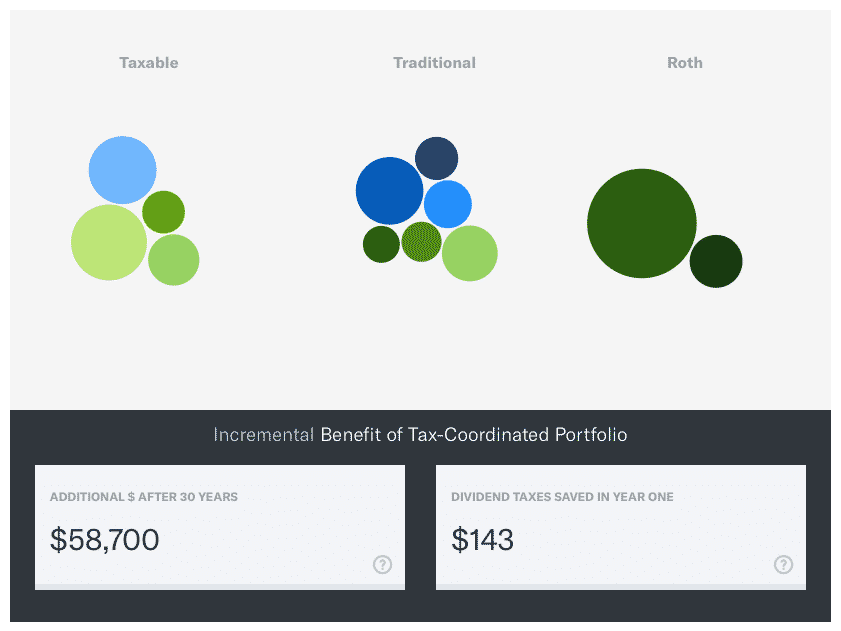
Most good robo-advisors offer tax-loss harvesting as a complimentary service. Betterment goes a step further with tax-coordinated portfolios that it claims can increase your portfolio value by as much as 15% over 30 years.
Wealthfront also optimizes for tax impact with its Direct Indexing service, which essentially mimics the diversification of a fund using individual securities that can better optimize returns for tax impact.
6. What Level Of Service Can I Expect?
If you choose a robo-advisor, the level of service you can expect is usually clearly stated upfront. You may for example pay one fee-level for purely digital advice, and a higher fee if you want access to financial experts.
When you select a traditional financial advisor, the level of service you can expect to receive may be a little more murky.
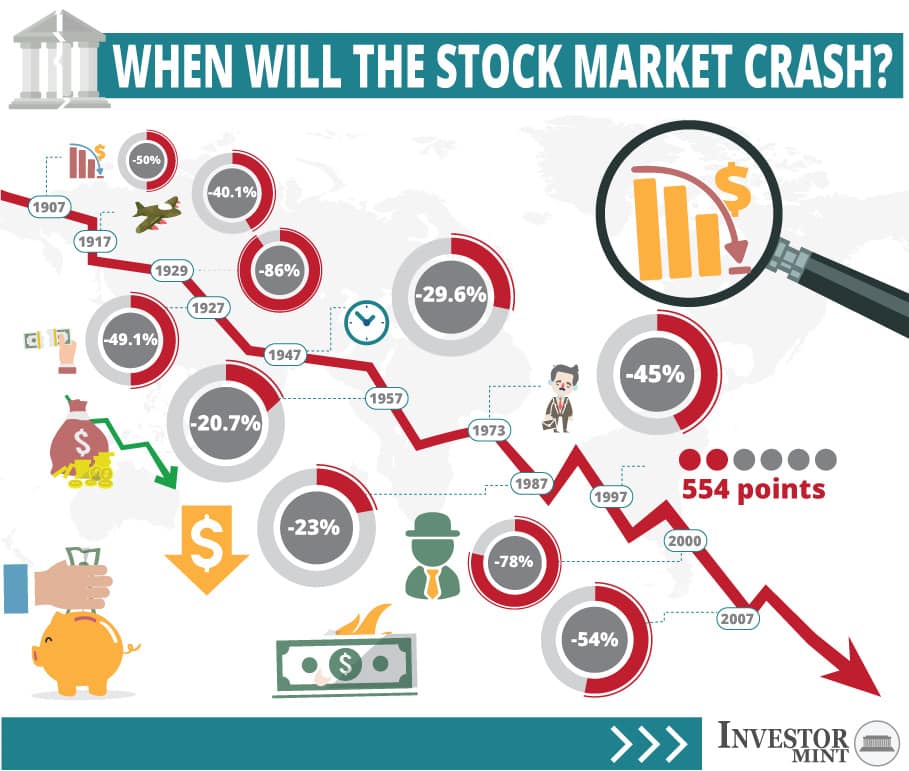
Are you able to call your advisor when you feel panicky about a stock market crash?
How often can you email them to receive portfolio performance updates?
Will you meet with your financial advisor each quarter for regular updates? Or will you see them just once a year?
It is better to define the terms of communication ahead of time so you are not left in the lurch when your money has already been invested in a diversified portfolio and it is costly to make changes.
7. What Is Your Experience Investing Client Assets?
When the rubber meets the road, you want your financial advisor to be a rock of support. Investing can be an emotional business at the best of times with greed and fear often sweeping aside rationale and leading to poor decision-making if you are not careful.
Warren Buffett, Berkshire Hathaway
You want to be sure your financial advisor has seen the ups and downs of market cycles, experienced economic booms and recessions, and navigated a steady course throughout.
Ideally, you want your financial advisor to be passionate about what they do, so you can be confident that they are constantly monitoring your portfolio when your attention is focused on your career.
To glean insights into how connected they are to financial markets, ask some probing questions about recent financial events and quarterly reports or whether they have read investor letters, such as Warren Buffett’s annual Berkshire shareholder letter.
Your financial advisor is licensed right? Well, you would hope so, but if you ever saw any of the frightful American Greed episodes on TV where con-artists persuade unsuspecting clients to hand over their life-savings despite holding no official credentials, you will know it is best to ask ahead of time for licenses than to be sorry later.
Common designations that financial advisors hold include:
Series 7
Series 24
Series 51
Series 63
Series 65
Series 66
Insurance licenses
Other licenses that won’t necessarily make a person eligible to manage your money but are nice-to-haves include:
Certified Public Accountant (CPA)
Juris Doctor (JD)
Chartered Financial Consultant (ChFC)
Certified Fund Specialist (CFS)
Chartered Life Underwriter (CLU)
9. How Much Do You Earn When I Buy An Annuity?
If you are approaching retirement, an annuity can sound very appealing. After all, what’s not to like about a guaranteed stream of income each year for the rest of your life?
Before you are bedazzled by the holy grail of never having to worry about income forever more and signing your nest-egg over in exchange for an annuity income stream, a tough question to ask your financial advisor is: “how much do you make when I buy an annuity?”
Get ready to watch your financial advisor squirm uncomfortably in his/her seat because annuities can be among the highest earning products that financial advisors sell.
It may be hard to fathom but if you were to purchase a million dollar annuity, your financial advisor may be pocketing as much as $50,000 or more from the sale.
What you may not know is that your financial advisor and the annuity company are in cahoots so-to-speak where the advisor gets a very generous kickback from the annuity company after you hand over your hard-earned savings.
Not all annuities are equal and not all financial advisors earn hefty sums from pitching annuities, but you should at the very least ask some probing questions before signing any documents.
10. Are You A Fiduciary?
A fiduciary is a person who acts in your best interests. You might think that is similar to a non-fiduciary who is required to recommend “suitable” products but the difference is significant.
Acting in your best interests is a higher standard of care than finding suitable investment products.
Take the example of the annuity sale. An advisor who pitches you on the sale of an annuity and pockets $50,000 may argue that it is suitable for your financial goals, risk profile and circumstances.
By contrast, a fiduciary may recognize that the income stream from the annuity is suitable, but to act in your best interests, another investment that pays a steady dividend stream and keeps more money in your pocket is a better choice.
Over time, financial advisors can build up a handsome book of business, and if that money isn’t in the safe hands of a custodian, even the most honest advisor may be tempted to abscond to a Caribbean island, never to be heard from again.
Perhaps, that’s a little dramatic but throughout history, a litany of abuses have been exposed when it comes to minding client assets. And many stem from the absence of an independent custodian.
You don’t want your financial advisor to also be the custodian of your assets but rather you should make sure they use a third-party, who is independent, so they can’t get tempted to to dip into the pool of monies whenever they feel like it.
Ask your financial advisor the question, who is your custodian? Some custodians aren’t well known to the general public, so even if it’s not a name you recognize, google it later to verify it’s a respected name.
12. What Information Do I Have Access To?
Shocking as it may seem in this day and age, not all brokerage platforms provide dashboards that let you see basic information, such as your portfolio performance over time.
Make a list of the top 3 things you know you will want to see when you log on to your brokerage account, such as portfolio performance, tax documents, and fee reporting.
Then verify with your financial advisor that these, and others that are important to you, are accessible to you via your online portal.
It can be expensive transferring assets from one advisor to another, so it is best to do a test-run to see what information you will have access to ahead of time.
13. Is My Portfolio Transferred In-Kind?
Some financial advisors demand that you transfer cash as a new client so that they can build a portfolio for you from scratch.
But what if you had invested in Alphabet stock or Facebook stock when they came public and you are sitting on large unrealized gains?
By selling these stocks, you may incur very significant tax liabilities, whereas if your assets had been transferred in-kind, the stocks would have never been converted to cash and no tax events would have taken place.
So, be sure to figure out whether your portfolio of stocks, bonds, ETFs, and any other products are transferred in-kind, or need to be encashed first.
14. Do You Invest My Money In Mutual Funds?
If you have a history investing only in stocks, mutual funds have some surprises in store for you and they are not all pleasant.
The idea behind a mutual fund is to diversify your holdings more easily than buying stocks or bonds individually.
Instead of buying thirty individual stocks for example, you could simply purchase a mutual fund featuring those stocks. Companies like Motif make it easy to customize your own selection of stocks to form a motif, which mimics a mutual fund.
But the ease of investing in a diversified portfolio is offset to some extent by a couple of factors not seen when investing in stocks:
You pay ongoing fees, called expense ratios
You may be liable for tax payments, even if you didn’t participate in the gains!
When you hold a stock, you may own it forever without paying any ongoing fees. But when you buy a mutual fund, the manager must be paid to oversee the fund, and operating expenses must be paid too from the expense ratio charge. Over time, these fees can add up and hurt long-term performance.
It is also theoretically possible to buy a mutual fund in mid-December of a given year and be hit with a large tax bill the very next day.
So, if your financial advisor does invest in mutual funds on your behalf, ask them what the expense ratios of those mutual funds are and what tax liabilities you should expect to pay, if any.
15. How Many New Clients Do You Take On Each Year?
Financial advisors face a bit of a dilemma. To make more money, they need to take on more clients, but the more clients they take on, the harder it is to deliver quality service.
A rule of thumb is that it’s hard for a financial advisor to serve more than 150 clients at any one time.
Now, if you join a firm that has many advisors, they may obviously be able to handle many more clients, but any single advisor is probably limited to about 150 clients.
Big, brand name firms often serve fewer clients because they target ultra-wealthy individuals who demand more attention.
But for the ordinary Joe or Jane, an advisor will probably be tapped out when that 150 threshold is met.
So, if your advisor tells you they have more than 150 clients, you should ask them how much attention they will give to your portfolio.
After all, if they serve more than 150 clients, they can probably only attend to your portfolio for at most a couple of days a year unless they use standardized model portfolios that are similar across all client portfolios.
And if they have just 5 or 10 clients, you might want to ask how much experience they have investing money on behalf of others because they might be new to the business.
Robo-advisors rely on computer algorithms to build client portfolios so they are not limited to the same extent as are human advisors.
16. What Is Your Succession Plan?
If you are investing your money with a financial advisor who has a single person practice, you should make sure to ask them what happens to your money if something happens to them.
Also, if your financial advisor has more than a few grey hairs, you might want to ask them what their succession plan is and how they will transition assets to a new advisor when they retire.
Handing over a financial advisory practice can be a sticky business because the financial advisor selling will almost certainly value the practice more than the buyer will and so negotiations can stall.
The last thing you want is for your assets to be in limbo and not managed while your financial advisor is distracted negotiating a succession plan.
17. What Is The Profile Of Clients?
Some clients are hands-off and want their financial advisor to not bother them unless absolutely necessary. Others prefer to be involved in every decision.
When you meet with your financial advisor, ask them what the profile of their clients is – are they hands-off? What age are they? What is their average risk profile?
An off-the-shelf solution is not right for everyone, so if your financial advisor has a cookie-cutter approach to serving clients, you might want to look elsewhere if you are getting close to retirement.
On the other hand, if you have many years to retirement and don’t have especially complex circumstances, then perhaps a cookie-cutter approach is all you need and want.
Regardless, make sure that you and your financial advisor have similar objectives for your portfolio so that your working relationship will be a mutual fit.
Betterment and Wealthfront began in 2008 as early robo-advisor pioneers. Since then, they have gone on to collectively raise almost $500 million in venture capital, accumulate approximately $1.6 billion in client assets, and serve around 500,000 clients. But which robo-advisor is best: Betterment or Wealthfront?
Nipping at the heels of these top robo-advisors is a slew of rivals, who also provide digital financial advice powered by computer algorithms. Some like Ellevest target women while others like Schwab Intelligent Portfolios use proprietary funds in client portfolios to compete on fees.
In spite of their rivals’ innovations, Betterment and Wealthfront continue to lead the pack, and have gone from strength to strength in building top notch automated investment management products at much lower cost than what most traditional financial advisors charge.
But just because both robo-advisors have accumulated billions of dollars in client assets in a short time period doesn’t mean they are alike. When you look under the surface, they are different in many ways, so picking between them boils down to the factors that are most important to you: fees, human advice, tax impact, socially responsible investing options, retirement tools, financial calculators, mobile access, and customer support.
Betterment and Wealthfront have both won loyal fans for delivering world class products but they have done so by pursuing different product and growth strategies.
FEES
Both robo-advisors offer digital advice at the same low fee of 0.25% annually, though Wealthfront will manage your first $10,000 at no cost.
And both cater to investors who want to align their dollars with their values by adding socially responsible investing portfolios into the mix.
But Wealthfront has drawn a line in the sand when it comes to human advice. While Betterment makes Chartered Financial Professionals® available to clients who are willing to pay a slightly higher fee of 0.40% annually on managed assets, Wealthfront insists it will remain true to its origins as a purely digital robo-advisor.
Feature
Betterment
Wealthfront
Digital advice
✅
✅
Social Impact Investing
✅
✅
Low Fees
✅
✅
Tax Loss Harvesting
✅
✅
Tax Optimized Portfolios
✅
✅
Direct Indexing
❌
✅
Goal-based Investing
✅
❌
Mobile Access
✅
✅
Financial Calculators
✅
✅
Retirement Calculator
✅
✅
529 Plans
❌
✅
Fractional Shares
✅
❌
Human Advice
✅
❌
TAXES
Although both robo-advisors focus on after-tax returns, Wealthfront has the edge. It is not that Betterment does a poor job by any stretch of the imagination. In fact, Betterment offers tax-loss harvesting and tax coordinated portfolios to optimize asset allocation across accounts. Plus, Betterment can even optimize for the tax impact of spouses’ overall portfolios.
But Wealthfront edges out Betterment with a feature it calls Direct Indexing, which mimics the performance of a fund while actually constructing the portfolio with individual securities that can be more easily sold and replaced for optimal tax-loss harvesting purposes.
FRACTIONAL SHARES
Unlike Wealthfront, Betterment can ensure that your cash is fully invested at all times by using fractional shares.
Fractional shares are a way to avoid cash drag in a portfolio. For example, if you had $25 of cash remaining in your portfolio, you couldn’t buy a single share of some high-priced companies, such as Alphabet. But if you could buy just a portion of a share, your whole $25 would be fully invested (and fractional shares makes that possible).
GOAL-BASED INVESTING
For anyone who has struggled to come up with cash when it is time to pay for a new car, vacation, or simply to buy gifts, Betterment may have the answer for you with goal-based investing.
Where in the old days a few cookie jars may have sufficed to allocate money to various different upcoming financial costs, Betterment has created an online equivalent that lets you deposit money into virtual buckets to keep you on financial track.
An additional $5,000 managed free for each friend invited who signs up
Management Fees thereafter: 0.25%
Account Minimum: $500
via Wealthfront secure site
Betterment or Wealthfront:
Investment Method
Most top robo-advisors rely on Modern Portfolio Theory, which is based on Nobel-prize winning research, to allocate your money.
The basic premise is to maximize returns for a given risk profile. So, if you are highly risk averse, your portfolio will generally feature a heavy weighting towards bonds and a lower weighting of equities, such as value stocks.
And equally, if you can tolerate more risk, your portfolio will usually have a higher portion of stocks, which can be more volatile.
Bonds historically have not produced returns as high as those generated by stocks. So if you have a higher weighting of bonds, your downside risk will likely be lower than an investor who is more risk-seeking but so too will your upside be more limited.
Asset Classes
Betterment
Wealthfront
U.S. Stocks
✅
✅
Foreign Stocks
✅
✅
Emerging Markets
✅
✅
Treasury Inflation Protected Securities (TIPS)
✅
✅
Corporate, Municipal, International & Emerging Market Bonds
✅
✅
Real Estate Investment Trusts (REITs)
❌
✅
Natural Resources
❌
✅
When it comes to the variety of asset classes offered, Wealthfront has the edge by featuring both exposure to real estate via REITs, and access to natural resources.
Betterment or Wealthfront:
Account Types
Both Betterment and Wealthfront support a wide variety of account types, from standard taxable accounts to retirement and trust accounts. But Wealthfront has the edge in offering 529 Plans.
If you have children who you expect will attend college one day, a 529 College Savings Plan is generally a good idea to save and grow money that can be allocated towards their tuitions.
529 Plans are a little messy because they are often different for each state, so many robo-advisors steer clear of them.
However, Wealthfront embraces 529 Plans, and in doing so separates itself from many of its rivals. With that said, Betterment doesn’t officially offer 529 Plans but does advise on them.
Account Types
Betterment
Wealthfront
Taxable
✅
✅
Individual Retirement Account (IRA)
✅
✅
IRA Transfer
✅
✅
Roth IRA
✅
✅
Simplified Employee Pension (SEP) IRA
✅
✅
401(k)
✅
✅
401(k) Rollover
✅
✅
Trust
✅
✅
529 College Savings Plans
❌
✅
Betterment or Wealthfront:
Services
One of the most valuable services offered by robo-advisors is dynamic portfolio rebalancing.
The idea is to keep positions in a portfolio weighted so that they align with your risk profile.
The danger of not rebalancing is that some positions over time grow so large that they dominate an entire portfolio, which amplifies returns and losses beyond target risk levels.
While both Betterment and Wealthfront include free portfolio rebalancing in their offerings, they diverge on other services offered.
Betterment makes it easy to connect with human financial experts, called Chartered Financial Professionals®, while Wealthfront provides an advanced tax-optimization strategy, called Direct Indexing, as well as a portfolio line of credit.
Account Types
Betterment
Wealthfront
Automated Investment Management
✅
✅
Tax Loss Harvesting
✅
✅
Portfolio Rebalancing
✅
✅
Human Advice
✅
❌
Line Of Credit
❌
✅
Direct Indexing
❌
✅
Betterment or Wealthfront:
Customers
The vast majority of Wealthfront and Betterment customers are from the general public, though as we will see, Betterment has a broader customer acquisition strategy.
Wealthfront has fewer overall customers, who on average invest $40,900, but is growing faster than Betterment, where the average client invests $27,400.
High net worth clients account for anywhere from 25-50% of Wealthfront’s business but less than 25% of Betterment’s business.
While Betterment and Wealthfront both serve retail clientele, what you may not know is that Betterment also serves business via two B2B offerings.
BETTERMENT FOR ADVISORS
Betterment For Advisors is designed for institutional investors and registered investment advisors.
BETTERMENT FOR BUSINESSES
Betterment for Businesses is designed for employers who want to offer retirement services and 401(k)s.
Wealthfront AUM vs Betterment AUM
According to official filings, by June 2017, Betterment had amassed client assets of $9.06B compared to $6.76B at Wealthfront.
It’s perhaps no surprise to see Betterment outpace Wealthfront in the amount of client assets because Betterment serves not only retail clients but also business customers too.
Plus, Betterment has raised more money than Wealthfront. Venture funds, such as Bessemer Venture Partners, Reinmkr Capital, and Anthemis Group, have invested $275 million.
By contrast, Wealthfront has raised $129.5 million from Andreesen Horowitz, Greylock Partners, Social Capital, and Spark Capital among others.
In the first half of 2017, Wealthfront was growing accounts about 3x faster than Betterment, which is a surprise given how Betterment has about twice as many clients and twice as much funding.
It is possible that Wealthfront’s 529 Plan offering has been a factor in this growth. Historically, human financial advisors offered prospective clients 529 Plans as an introductory product to get them on the “client ladder” so to speak. Once clients are satisfied, traditional financial advisors can generally pitch standard taxable accounts and retirement accounts more easily.
Wealthfront Team vs Betterment Team
The professional pedigree of the executive team at Wealthfront is hard to match, and it is a testament to Betterment’s founding team that they have not only competed so well up to now but outshone Wealthfront in terms of the size of assets under management and the number of clients served.
WEALTHFRONT CEO: ANDY RACHLEFF
Wealthfront is led by Andy Rachleff, who was a graduate of the University of Pennsylvania and Stanford University Graduate School of Business, and previously a co-founder and general partner at Benchmark Capital.
Wealthfront CEO, Andy Rachleff
BETTERMENT CEO: JON STEIN
Betterment is a New York-based robo-advisor, founded by Jon Stein and Eli Broverman.
Impressively, they built the platform while in business school and didn’t raise money until after presenting at Techcrunch Disrupt in 2010.
Stein has a top class background too, having graduated from Harvard in 2001 and thereafter Columbia Business School.
Together Stein and Rachleff have built companies valued north of one billion dollars collectively, and both feature on our list of top 5 robo-advisor CEOs.
Betterment CEO, Jon Stein
Wealthfront or Betterment:
Regulatory Licenses
Both Betterment and Wealthfront are licensed in all 52 states and territories. And both have FINRA broker-dealer registrations as well as SEC Investment Advisor Registrations.
For clearing, Betterment uses APEX Clearing Corporation while Wealthfront clears through RBC Correspondent Services.
Regulatory
Betterment
Wealthfront
Geographic Licenses
USA + territories
USA + territories
Clearing House
APEX Clearing Corporation
RBC Correspondent Services
SEC Investment Advisor Registration
May 21, 2009
Nov 21, 2008
FINRA Broker-Dealer Registration
July 22, 2004
Feb 15, 2010
Betterment or Wealthfront:
Summary
So, which robo-advisor is best, Betterment or Wealthfront? Both robo-advisors charge low fees for automated investment management services, though Betterment has pivoted to a hybrid model that includes human advisors (albeit for a higher fee and higher account minimums). So, if connecting to a real person is important to you, Betterment is your best choice.
If you are looking to optimize after tax returns, Betterment won’t leave you shortchanged either. Tax loss harvesting and tax coordinated portfolios optimize for tax efficiency at Betterment but Wealthfront has the edge when it comes to tax-advantaged investing with its Direct Indexing program.
The goal-oriented investing approach promoted by Betterment and its retirement tool, RetireGuide, is especially helpful to visualize how much you need to save for retirement and how much you can afford to spend during your retirement years. If you struggle to save for the rainy day life events that crop up from time to time, then Betterment will be a good fit.
For families with kids who want to squirrel away money to pay for college down the line, Wealthfront will be your best bet for now because it caters to 529 college savings plans whereas Betterment will only advise on them. Both robo-advisors support standard taxable as well as retirement IRA accounts, though you will only get advice on 401(k)s at Betterment.
Overall, Betterment and Wealthfront are in neck-and-neck race for pole position in the robo-advisor industry. Betterment has the edge for now, but over its shoulder is Wealthfront coming up strong. Whichever you do decide to choose, you can’t go wrong, though for now we give the nod to Betterment.
Cost and speed are two primary factors for day traders who are placing a high volume of trades rapidly but to be counted among the best online trading platforms for day traders, more bells and whistles are needed.
Research, screening tools, back-testing simulators, virtual trading platforms, online educational webinars and customer support are all part and parcel of what make a trading platform great.
So, which online trading platform is best for day traders when weighing up all those factors?
The good news for traders is that competition among brokers is fierce and many have innovated on cost and technology. A broker in contention for the top spot is tastytrade.
Commissions: Closing trades for Stocks & ETFs and Options are commission-free
Account Balance Minimum: $0
Commissions: $0 flat rate for stocks
via tastytrade secure site
Is tastytrade The Best Online Trading Platform For Day Trading?
tastytrade supports trading in stocks, futures, options, and ETFs but not mutual funds.
The team behind tastytrade has been innovating trading software since 2000. Many of the same team who built other world class platforms have been instrumental in making tastytrade one of the fastest, most reliable, and most secure trading platforms in the world.
tastytrade is built by traders for traders. At tastytrade, you can trade stocks, options, ETFs, and futures. What you won’t find at tastytrade is mutual funds.
The philosophy of the executive team at tastytrade is to empower self-directed traders. And tastytrade provides a world class dashboard and user experience to make it easy to dip in and out of the market at the speed you expect and need.
tastytrade makes it easy to trade wherever you are whether on a mobile device, desktop or browser.
The browser interface is among the most robust web-based trading platforms in the industry. You get the same functionality as the downloadable desktop version without any installation requirements.
For day traders who value a flow of stock market ideas, a nice feature of the tastytrade web-based application is the curated experts trade section on the Follow page.
Visualizing trades is made easy using the tastytrade Trade Curve tool. Plus, you get to view the history of your trade when using the Analyze tool.
How Much Are tastytrade Commissions & Fees?
tastytrade commissions and fees are among the most competitive of all brokerage firms. The standout attraction is no commissions costs (excluding clearing fees) on all closing trades.
As expected from a customer-focused broker, tastytrade has a simple pricing structure with no base rates or confusing tiers.
Commissions across the board are low but the eye-catching pricing benefit is zero commissions costs on all closing trades (excluding clearing fees).
Options Opening Trade
Stock Opening Trade
Futures Opening Trade
All Closing Trades
$1.00 (per contract)
$0.00 (unlimited shares)
$2.50 (per contract)
$0.00 (clearing fees apply)
The small print is that all options trades incur a clearing fee of $0.10 per contract, all stock trades incur a clearing fee of $0.0008 per share, and all futures trades incur a clearing fee of $0.30 per contract.
For any ACH withdrawals or deposits, no fees apply. And no annual maintenance fees are charged on IRA accounts.
It’s best to opt for digital reporting if at all possible because tastytrade does impose a hefty $5 per statement charge for paper monthly and quarterly statements as well as paper tax statements.
Options traders should take note of the $5 cost when exercising long positions or taking assignment on short options contracts.
Other fees to note include single-listed proprietary index option fees:
Symbol
Description
Fee Per Contract
SPX
S&P 500 Index
$0.65
RUT
Russell 2000 Index
$0.18
VIX
CBOE Market Volatility Index
$0.65
OEX
S&P 100 Index (American-style exercise)
$0.40
XEO
S&P 100 Index (European-style exercise)
$0.40
DJX
Dow Jones Industrial Average Index 1/100
$0.18
NDX
NASDAQ 100 Index
$0.18
Check out a complete list of tastytrade pricing here.
Best Online Trading Platform For Trade Ideas & Strategies?
tastylive features extensive content from tastytrade covering trading strategies, trade ideas, and guest interviews.
Whether you are a day trader, swing trader, technical trader, or even an investor focused on the long-term, a flow of trade ideas can be valuable so you can pounce on opportunities when they arise in the stock market.
tastylive shines when it comes to new ideas and trading strategies. If content is king then tastylive is royalty among brokerages because its content quality, volume and production is second to none in our view.
How prolific is tastylive content? On its tastytrade YouTube channel alone you will find thousands of videos featuring an extensive range of topics. Options traders will enjoy videos on strategies, such as:
If you want to dive deep into gamma scalping, delta-neutral trading, or want to learn about theta options strategies, tastytrade has a depth of content that will knock your socks off.
Stock and futures traders aren’t left out in the cold either. Whether you want to avoid common mistakes before taking the plunge into the markets for the first time, or you want insights into more obscure topics, such as the ratio of metal prices, you are likely to find answers at tastytrade.
The tastylive team also interviews leading traders and business people, so you get much more than a trading platform, you also get a media hub.
A sample list of guests at tastylive in the past include:
David Katcher of ride-sharing platform Lyft
Jeremiah Green of Eat Purely
Jason Weingarten of Yello
Kathryn Pisco of Unearth The World
Shirley Yang of Muses
If you wanted, you could probably switch off CNBC and Bloomberg, switch on tastytrade and still get a stream of excellent content, stock market ideas, and stock market insights.
tastytrade Account Selection
tastytrade supports individual margin and cash accounts, traditional IRA, Roth IRA and international accounts.
As a comparatively new broker, tastytrade offers fewer account choices than some of the major brokers but unless you have complex financial circumstances and numerous account types, you should be all set.
Account types supported include:
Account Type
Description
Individual Cash
You must cover your trade’s purchase price with money in your account.
Individual Margin
You can borrow money to trade and use all strategies available on the tastytrade trading platform.
Traditional IRA
Retirement IRA accounts are available so you can grow earnings on a tax-deferred basis.
Roth IRA
After-tax contributions can be invested and earnings withdrawn tax-free and penalty-free for qualified distributions.
International
tastytrade supports international accounts.
For those looking for Joint Tenants In Common, Joint With Rights Of Survivorship, Custodial UGMT/UTMA, Coverdell, Trust and Corporate accounts, tastytrade plans to roll them out but they’re not yet ready for prime time.
Summary: tastytrade Online Trading Platform
tastytrade may be the new kid on the block of online trading platforms. The same commitment to pioneering technology is evident at tastytrade where fast, accurate, and low cost order execution is prioritized.
Frequent traders will be thrilled that tastytrade charges zero commissions on closing trades (though clearing fees still apply). In our view, tastytrade has content that is unparalleled, and features stock and options education as well as market insights.
Experienced traders should expect tastytrade to build on its existing suite of tools so that over time it rivals powerful platforms such as thinkorswim.
The bottom line is tastytrade is one of the best online trading platforms for day traders, options traders, stock traders, and experienced traders.
When bitcoins first appeared, they were marginalized and dismissed by many but the value of bitcoins steadily climbed over the years and major companies, such as Microsoft, Dell, Subway and Virgin Galactic, now accept bitcoins for payments.
The cryptocurrency ecosystem has expanded with the launch of Ethereum, Ripple, Litecoin and a host of others. And as cryptocurrencies have grown more popular, the initial coin offering, or ICO, has become more mainstream.
An ICO is similar to an initial public offering, or IPO, and is favored as way to launch a new cryptocurrency.
What Is A Cryptocurrency?
The best way to think about a cryptocurrency is as digital money. You can’t touch it or feel it as you can a dollar bill, but it can be used as a medium of exchange to buy goods and services.
The big difference between cryptocurrencies and major currencies, such as Dollars, Sterling, and Yen is that cryptocurrencies, such as bitcoin, are decentralized.
In the U.S., the Federal Reserve increases money supply by purchasing Treasury bonds and decreases money supply by selling Treasury bonds, which removes cash from the economy.
The idea behind cryptocurrencies was to create a digital asset that was controlled by no central authority.
Unlike centralized banking systems that use electronic money, the decentralized nature of cryptocurrencies means that money can be transferred anonymously using a blockchain transaction database that relies on a distributed ledger.
What Is Bitcoin?
Perhaps the most famous of all cryptocurrencies is bitcoin. Bitcoin was created by an unknown programmer, widely reputed to be Satoshi Nakamoto, and released as open source software in 2009.
Bitcoin allows you and and another person to transact directly with each other. Unlike a peer-to-peer transaction whereby you pay a fee to say PayPal for the privilege of making the transaction, a digital transaction using bitcoins is direct and avoids paying fees to any intermediary.
A network of nodes verifies each transaction and records them in a ledger called a blockchain.
Unlike electronic transactions, digital cryptocurrency transactions take place without any administrative oversight. But the integrity of the transactions have largely been validated and, less than a decade after launch, over 100,000 merchants accept bitcoins and millions of users have cryptocurrency wallets.
How Initial Coin Offerings Work
An initial coin offering, or ICO, is a way to raise funds by trading future cryptocoins for cryptocurrencies with liquid value. The best way to think about an ICO is like an IPO but for a cryptocurrency.
If an investor wants to raise money in a cryptocurrency, they can do so via the issuance of cryptocoins.
The coins from an ICO can be traded much like shares can after an IPO. However, the coins do not confer ownership as shares do.
So, let’s say you wanted to buy a new cryptocurrency, Bill & Jane’s Extraordinary Cryptocurrency, you would hand over bitcoin or ethereum and receive some of Bill & Jane’s Extraordinary Cryptocurrency.
The ICO coins mimic digital coupons and are issued on a ledger, or blockchain, to allow for easy trading and over time your hope is the value of the coins will rise.
New initial coin offerings are posted on social media sites, such as Facebook, as well as specialty sites, such as Cyber.Fund.
The way to get started is as follows:
Set up a cryptocurrency wallet
Identify a project of interest for which the ICO is financing
Verify your wallet is compatible with the tokens (which are the digital coins offered during the ICO)
Export private keys into another wallet to access the new coins (for security reasons)
Wallets are increasingly compatible with different types of tokens so buying tokens is becoming easier but it’s not yet quite as simple as buying shares in a public company, such as Twitter or Autozone.
What You Need To
Know About An ICO
When you buy coins in an ICO, you participate in a project, an economy or a Decentralized Autonomous Organization (DAO).
You will generally buy either coins or tokens. Coins correspond usually to participation in an economy while tokens let you participate in a project or DAO.
ICO Type
Participation In
Coin
Economy
Token
Project or DAO
A defined number of coins or tokens is specified prior to sale and the prices are set by the creators of the project, DAO or economy.
How Is An ICO
Different From An IPO?
OWNERSHIP RIGHTS
The major difference between participating in an ICO vs an IPO is that you receive shares in an IPO that provide you ownership in a company whereas in an ICO you get rights to a project only.
VOTING RIGHTS
Unlike an IPO, you don’t get a right to vote with an ICO, and fundraising may span many rounds.
Generally, tokens increase in value as the release date approaches, creating an incentive for investors to buy in early.
REGULATORY OVERSIGHT
IPOs are heavily regulated with transparent reporting. In contrast, ICOs are launched on exchanges that are minimally regulated, if at all.
FINANCIAL DATA TRANSPARENCY
Access to financial data is straightforward when participating in an IPO whereas ICO details are released in a whitepaper or publicly accessible via blockchain.
TAX LIABILITIES
In an IPO, both investors and companies pay taxes whereas in an ICO investors are subject to capital gains taxes but companies may not be liable to direct taxation.
The Murky Underworld Of Cryptocurrencies
Cryptocurrencies make it easy to anonymously transact online. This anonymity has spawned a murky world of veiled economies where drugs, trade secrets and other illicit transactions exchange hands.
Another dark side of the cryptocurrencies revolution is ransomware attacks where hackers demanded bitcoins to remove harmful software.
Because of these drawbacks, some governments have taken steps to crack down on cryptocurrencies. For example, China’s major bitcoin exchange halted trading in early 2017.
While the harmful bi-products of cryptocurrencies are apparent, the blockchain technology that is central to its success has increasingly been touted as having the potential to disrupt other industries.
What Industries Are At Risk Of Disruption From Blockchain Technology?
BANKING
Blockchain technology is intended to be a secure, digital ledger which has the potential to supplant banks as storehouses of value.
Where blockchain could prove disruptive in the banking industry is by cutting out the function of middlemen and back-office staff.
A consortium of financial institutions, called R3, has already come together to develop a platform and commercial applications for blockchain distributed ledger technology.
MONEY TRANSFERS
Decentralized payment technologies, such as bitcoin and ethereum, have the potential to transform business architecture for money transfers according to The World Economic Forum.
By using blockchain technology, direct money transfer between senders and recipients internationally is made possible faster and with less cost.
CYBERSECURITY
Data interceptions pose risks for cybersecurity but when the source of the data is robust as is the case with blockchain technology, the integrity of data communications using cryptographic methods is believed to be more secure.
AUTO SALES & AUTO LEASES
If you have ever experienced the paperwork hassles when buying or leasing a car, you will know just how time consuming it is.
Visa and Docusign recognized how much wasted time is associated with these transactions and have partnered on a “proof-of-concept” car leasing program to streamline the process.
ONLINE MUSIC
Online music sharing has historically been a contentious area because major streaming platforms take such a big portion of the revenue pie from artists.
Blockchain has the potential to cut out the hefty commissions paid so artists can receive direct payments. The idea is to create direct engagement between artists and customers.
STOCK TRADING
How do you trade shares in a private company? That’s the problem blockchain start-up Chain wants to solve.
And it’s not alone, Overstock.com subsidiary TØ.com has been approved by the SEC to issue public bonds and the hope is to enable stock transactions online using blockchain technology.
What Are The Risks Of
Buying Cryptocurrencies In An ICO?
CRYPTOCURRENCY FRAUD
ICO thievery and fraud is a risk when buying cryptocurrencies. A quick Google search will uncover a host of scams that makes you think the world of cryptocurrencies has similarities to the Old Wild West.
PRICE VOLATILITY
The price of cryptocurrencies are famously volatile too. You will need to buckle up and hold on for a rollercoaster ride when you buy cryptocurrency coins because it is not uncommon for prices to swing by 20% and more in a single week, or even a day.
LIMITED LEGAL PROTECTION
Legally, you have little protection if you fall victim to a cryptocurrency scam. Proponents of cryptocurrencies advocate for little regulatory oversight because it hinders innovation.
But that’s no solace if you hand over your hard earned real world dollars only to find them lost in a digital currency scam.
The way ICOs are promoted makes it difficult for investors to clawback money if problems arise, not least because ICOs generally market the sale of coins as donations whereby you buy “software presale tokens” that provide you with little recourse.
PRICE BUBBLES
Following the enormous success of bitcoin, investors stampeded into Ethereum causing prices to soar at first.
As with any investment, bubbles and busts may occur. One of the most famous market bubbles in history took place between 1636-1637 in tulips.
During the Dutch Golden Age, speculation in tulip bulbs caused prices to skyrocket and collapse almost as quickly.
In retrospect, it might seem preposterous but at the time many investors got suckered so history teaches investors to err on the side of caution when any asset is soaring higher.
A list of cryptocurrencies that have gained popularity include:
Name
Symbol
Bitcoin
BTC
Ethereum
ETH
Ripple
XRP
Litecoin
LTC
Ethereum Classic
ETC
NEM
XEM
Dash
DASH
IOTA
MIOTA
Monero
XMR
BitShares
BTS
Stratis
STRAT
EOS
EOS
Waves
WAVES
ZCash
ZEC
Steem
STEEM
AntShares
ANS
BitConnect
BCC
Golem
GNT
Bytecoin
BCN
Have you bought bitcoins, ethereum or another cryptocurrency? Have you bought goods and services with bitcoin or ethereum? What were your experiences, positive or negative? We would love to hear from you.






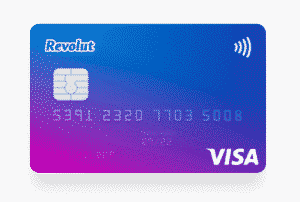 The Revolut card, a prepaid MasterCard, is designed to get around these problems by acting like a local debit card.
 Revolut also provides a mobile app that lets you hold, transfer, and exchange your money in USD and 25 other foreign currencies at the real exchange rate.
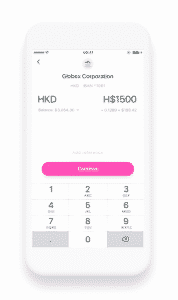 Like Xoom,
 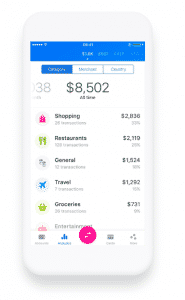 Compared to Revolut competitors like Monzo and N26, Revolut has grown its customer base faster thanks in part to over $80 million in
 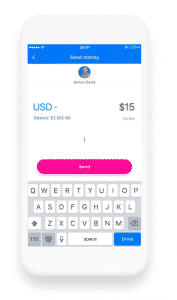 Not only can you send money overseas, but you can also send money to anyone in your contact address book on your mobile phone.
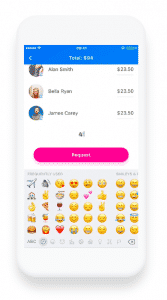 If you have ever been frustrated at the end of a meal when attempting to split a bill because someone didn’t have enough cash or the restaurant limited the number of credit cards, you will be pleased to discover that Revolut can solve that problem digitally.