
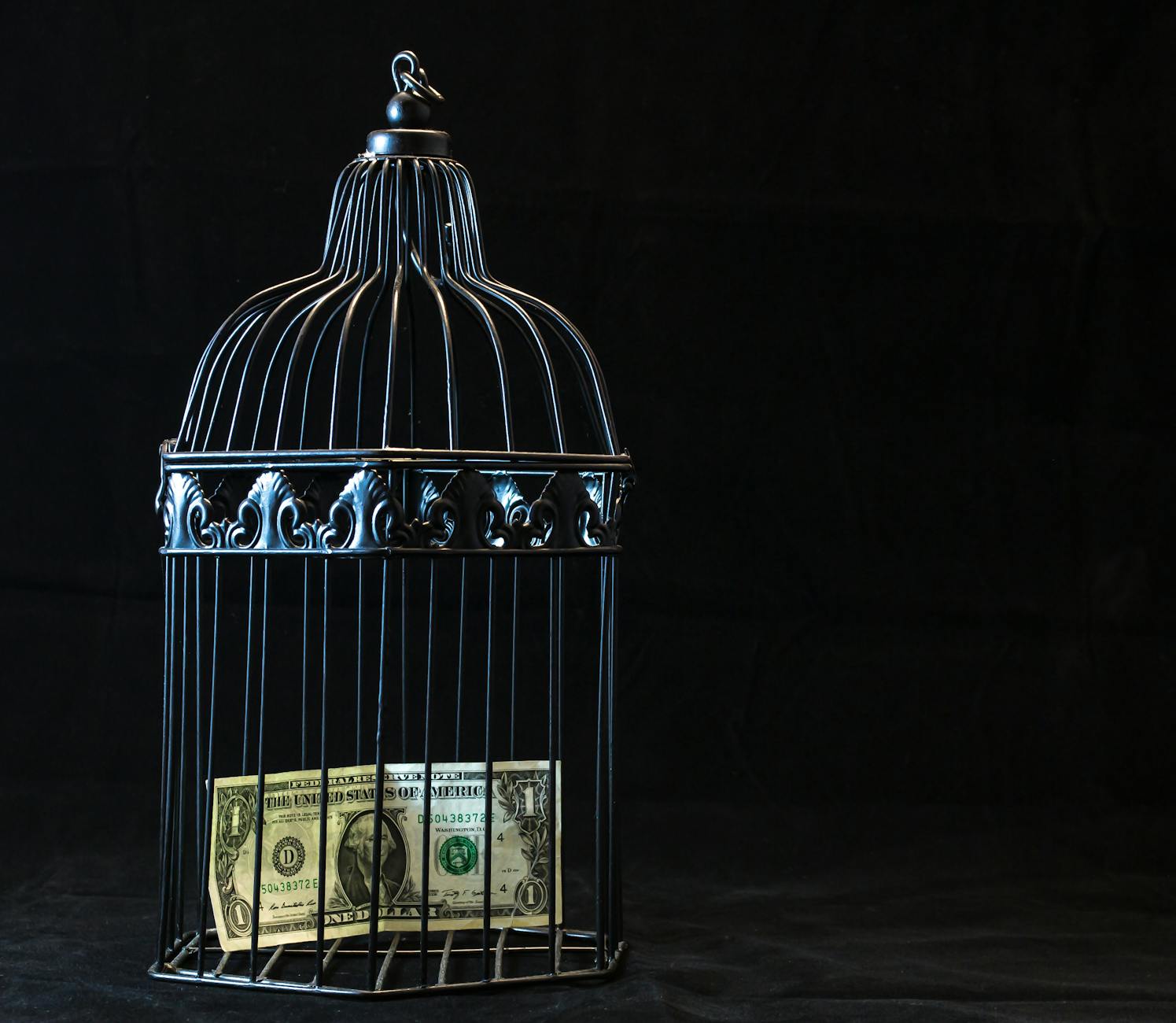
Behavioral Finance Traps That Cost You Money: Loss Aversion, Overconfidence, and FOMO Investing in 2026
Most investors focus on picking the right stocks or timing the market. Few examine what happens between those trades — the emotional responses, rationalizations, and crowd-following instincts that quietly drain portfolio returns year after year. These are behavioral finance traps, and in 2026, they are more expensive than ever to ignore.
Research consistently shows that individual investors underperform market benchmarks not primarily because they lack information, but because they act on emotion. Loss aversion, overconfidence, and FOMO (fear of missing out) are three of the most financially damaging patterns identified in behavioral finance. Understanding how each one works — and how they interact — is the first step toward protecting your portfolio from yourself.
How Much Are Behavioral Finance Traps Costing You?
The gap between what markets return and what individual investors actually pocket is called the behavior gap. It is measurable, persistent, and significant — though estimates vary depending on methodology and time horizon.
- The annual cost of emotional investing is difficult to pin to a single figure. Morningstar estimated a 1.22% annual behavior gap for the decade ending December 2024. DALBAR’s 2024 report painted a sharper picture: the average equity investor underperformed the S&P 500 by 8.48% in 2024 alone, and by approximately 1.20% annually over 20 years. Regardless of which figure you anchor to, the direction is consistent — emotional trading costs real money over time.
- FOMO-driven trades — those made primarily because a stock or asset is trending — are generally detrimental compared to buy-and-hold strategies. Increased transaction costs and emotional interference erode long-term returns, even when the underlying asset eventually recovers.
- During significant market downturns, such as those in 2020 and 2022, panic selling locked in losses for a notable percentage of retail investors who exited near market bottoms rather than holding through the recovery.
- Overconfident traders tend to execute more trades than disciplined investors, which significantly increases trading costs and tax drag from short-term capital gains — steadily eroding portfolio returns over time.
- The 2025 AI rally saw retail FOMO buying reach peak levels near market highs. As of early 2026, many of those positions are down an estimated 20–35% from their euphoria-phase entry points.
These are not edge cases. They represent consistent patterns documented across decades of behavioral finance research, and they are accelerating as social media, AI-generated alerts, and finfluencer culture make emotional investing faster and easier than ever.
Loss Aversion: The Trap of Holding Losers Too Long
Loss aversion is the well-documented psychological tendency to feel the pain of a loss more intensely than the pleasure of an equivalent gain. Research by Nobel laureate Daniel Kahneman and Amos Tversky found that losses feel roughly twice as painful as gains of the same size feel good. In practice, that asymmetry drives some of the costliest investment mistakes.
The Break-Even Fallacy
Consider a common scenario: You buy a stock at $100 per share. It drops to $70. Instead of reassessing the position on its current merits, you hold — not because the fundamentals support a recovery, but because selling makes the loss feel real and permanent. “I’ll sell when it gets back to $100” becomes the default plan.
The problem is that capital sitting in a losing position at $70 is missing every gain available elsewhere. If the stock takes four years to recover to $100, you have earned nothing on that money during that time. A diversified index fund over the same four years might have returned 40–50%. That is the real cost of loss aversion: not the loss itself, but the opportunity cost of frozen capital. Each year spent waiting for break-even is a year your money is not compounding elsewhere.
Zero-Risk Bias and Cash Drag
Loss aversion also manifests as a preference for cash — the illusion of zero risk. Investors who shift heavily into cash during downturns avoid paper losses, but expose themselves to a different problem: inflation erosion. In 2024, inflation ran at approximately 2.95–3.5% annually. In 2025, it ran at roughly 2.7%. Idle cash parked in low-yield savings accounts or money market funds lost real purchasing power at a similar rate — with no upside participation when equity markets recovered. The “safe” choice quietly reduced real wealth while better opportunities passed.
The Reverse Compounding Pattern
Loss aversion produces a specific wealth-destroying habit: investors exit winners early — locking in small gains before they can become losses — while holding losers indefinitely, waiting for break-even. The result is the exact opposite of compounding. Gains are capped. Losses are allowed to grow. Over a 10–15 year period, this pattern alone can meaningfully reduce total portfolio value compared to a simple buy-and-hold approach.
Overconfidence Bias: Why Winning Streaks Lead to Bigger Falls
Overconfidence is one of the most consistently documented biases in behavioral finance. It does not require being a novice investor — in fact, a string of early successes is often what triggers it most powerfully.
Position Sizing After Wins
After several successful trades, investors frequently increase their position sizing dramatically. The reasoning feels intuitive: “I’ve been right consistently, so I should bet bigger.” What this actually does is expose the portfolio to catastrophic drawdown risk. A concentrated position representing 40–50% of a portfolio, in a sector that corrects 20–25%, can wipe out months of prior gains in a matter of days. The winning streak that built confidence becomes the setup for the loss that erases it.
Dismissing Risk Controls
Overconfident investors often abandon stop-loss orders and position limits, treating them as tools for less-skilled or overly cautious traders. This is among the most dangerous expressions of the bias. Stop-loss orders exist not because losses are inevitable, but because they remove emotional decision-making from the equation at the worst possible moment. An investor who dismisses these guardrails is betting not only that their market analysis is correct, but that their emotional response during a fast-moving decline will be rational — a far harder bar to clear.
Active Management and the Overconfidence Premium
Active fund managers — professionals with full research resources and dedicated analytical teams — still underperform passive index funds by an estimated 1.5–2% annually on average. A significant contributor is overconfident sector rotation and market timing. If professional managers with institutional resources cannot consistently outperform through active forecasting, the probability that an individual retail investor will do so through frequent trading is low. Overconfidence inflates that estimate well beyond what the historical record supports.
Overconfidence also tends to peak near market tops. The highest-conviction buys — those made with the most certainty — frequently coincide with the worst risk/reward entry points, when valuations are stretched and speculative interest is at its highest.
FOMO Investing in 2026: The Cost of Chasing Viral Trends
Fear of missing out is not new in markets, but the infrastructure amplifying it has changed fundamentally. Social media, AI-powered price alerts, Reddit threads, and influencer-driven financial content now deliver real-time hype at scale, compressing the time between a trend emerging and retail capital flooding in.
The 2025 AI Rally: A Case Study in FOMO
The 2025 AI stock surge is the most recent large-scale FOMO event. Valuations in AI-adjacent sectors were driven to levels that required sustained, multi-year revenue growth just to justify current prices. Retail buying accelerated near the peaks, fueled by social media momentum and influencer coverage rather than fundamental analysis. By early 2026, many positions established during the euphoria phase are down an estimated 20–35%, with some speculative AI plays down considerably more. Investors who entered based on trending narratives rather than earnings, cash flow, and balance sheet quality are now holding losses with no clear near-term catalyst for recovery.
Why FOMO Bypasses Due Diligence
FOMO works by creating urgency. When an asset is trending, the emotional frame shifts from “is this a good investment?” to “will I miss this if I don’t act now?” That shift is costly because it substitutes social proof for fundamental analysis. A stock with a compelling narrative and viral momentum can attract capital regardless of its underlying financials — until it cannot.
This dynamic also elevates fraud risk. When investors buy based on hype rather than public filings, they are less likely to catch early warning signs: revenue recognition irregularities, insider selling patterns, or deteriorating margins buried in quarterly reports. The urgency that FOMO creates is precisely the environment in which fraudulent or structurally weak companies raise the most capital.
An Emerging Behavioral Shift in 2026
Some behavioral finance observers and market commentators have noted an early-stage shift in investor behavior in 2026. A concept appearing in certain market commentary — sometimes labeled FOLO, or Fear of Losing Out on quality — suggests that a segment of retail investors is redirecting attention away from pure trend-following and toward companies with strong balance sheets, consistent free cash flow, and durable competitive positions. It is worth noting that this terminology is not yet widely established in formal behavioral finance research, and its reach remains limited.
If the underlying shift has staying power, it represents a more constructive application of the same anxiety that drives FOMO — channeled toward fundamental analysis rather than momentum-chasing. Whether it persists depends largely on whether continued market volatility keeps punishing purely trend-driven strategies over the next 12–18 months.
How These Behavioral Traps Interact and Compound
Loss aversion, overconfidence, and FOMO rarely operate in isolation. In practice, they form a reinforcing cycle that is more destructive than any single bias alone.
The typical sequence:
- Overconfidence leads to aggressive entry into a speculative position with outsized sizing.
- FOMO attracts additional retail capital, pushing valuations higher and temporarily validating the overconfident thesis.
- Herd behavior amplifies the trend; more investors pile in near the top.
- A catalyst — a weak earnings report, a macro data release, or simple valuation exhaustion — triggers a selloff.
- Loss aversion prevents timely exits. Investors hold, expecting recovery, while the position continues to deteriorate.
- Panic selling eventually occurs near the worst possible price, locking in maximum losses.
Confirmation bias accelerates every stage. Throughout the decline, investors seek out bullish commentary and dismiss sell signals, reinforcing the hold decision. By the time negative information becomes undeniable, the damage is already severe.
A single cycle through this pattern — overconfident entry, FOMO-amplified sizing, loss-aversion-delayed exit — can produce substantial portfolio losses over a period of months. For younger investors experiencing it early, the psychological consequence is often overcorrection: excessive caution that keeps them on the sidelines during subsequent recoveries, compounding the original damage across years.
Real-World Examples: Behavioral Finance Traps in 2024–2026
Magnificent Seven Concentration
Through 2024 and into 2025, overconfident retail and institutional portfolios became heavily concentrated in a small number of large-cap technology companies. When sector rotation began in early 2026, portfolios with 40–60% exposure to these names experienced disproportionate drawdowns relative to more diversified benchmarks. The concentration itself was a behavioral product — overconfidence in a trend that had worked for multiple consecutive years, layered on top of FOMO about underweighting the “obvious winners.”
Crypto and Meme Stocks
Investors who entered crypto and meme stocks at or near their 2021 peaks are, in many cases, still holding positions down 60–80% from those highs. Loss aversion is the primary reason: selling locks in a loss that feels definitive and painful, while holding preserves the hope — however statistically unlikely — of a return to break-even. The longer the holding period, the more emotionally entrenched the position becomes.
Dividend Aristocrats Overlooked
While FOMO capital chased speculative trends, dividend growth stocks — companies with 25 or more consecutive years of dividend increases — largely went unnoticed by retail investors throughout 2023–2025. Many posted total returns of 15–20% during periods when FOMO-driven speculative positions fell 40% or more. The opportunity cost of behavioral bias is sometimes most visible in what investors chose not to own.
Systems to Override Behavioral Finance Traps: Rules Beat Willpower
Awareness of behavioral biases is necessary but not sufficient. Knowing you are prone to loss aversion does not prevent you from freezing when a position is down 20%. What works is removing the in-the-moment decision entirely through pre-set rules and automated systems.
Pre-Set Buy and Sell Rules
Define entry and exit criteria before opening any position. Example: “I will buy X when the price reaches Y, and I will exit automatically if the position falls 15% from my cost basis.” Writing this down before the trade removes the emotional renegotiation that inevitably occurs under pressure. If you cannot define your exit before you enter, reconsider whether you should enter at all.
Stop-Loss Orders
An automatic stop-loss at 12–15% below your purchase price overrides loss aversion mechanically. The order executes without requiring willpower in the moment. This is one of the simplest and most effective structural defenses against indefinitely holding losing positions while waiting for a recovery that may not arrive on your timeline.
Written Investment Policy Statement
Document your investment goals, time horizon, target asset allocation, and rebalancing rules. Review it quarterly — not daily. A written policy functions as a pre-commitment device. It is harder to rationalize abandoning a written plan than a mental one, especially in high-stress market environments when emotional pressure is greatest.
Decision Journal
Log every significant trade with three data points: the reasoning behind the decision, your emotional state at the time, and the expected outcome. Review these entries quarterly. Most investors discover clear and repeating patterns — specific emotional triggers that reliably precede poor decisions — that are invisible without a written record.
Monthly Portfolio Reviews, Not Daily
Daily portfolio monitoring increases emotional reactivity without improving decision quality. A 2–3% daily swing is statistical noise in a long-term portfolio, not a signal requiring action. Monthly reviews reduce the frequency of emotional inputs and the temptation to act on short-term fluctuations.
Diversification as a Structural Guardrail
Holding 20 or more uncorrelated positions reduces both the financial impact of any single mistake and the emotional temptation to concentrate in a trending asset. When no single position can make or break a portfolio, FOMO-driven concentration becomes structurally harder to execute — and the consequences of any one loss remain manageable rather than catastrophic.
Objective Third-Party Accountability
A fee-only financial advisor provides an external check on emotional reasoning. Their cost — typically around 1% of assets annually — is frequently less than the losses attributable to a single poorly timed, emotionally driven decision. Advisors do not eliminate behavioral bias, but they introduce a required conversation before major moves that slows the impulse-to-action pipeline precisely when it matters most.
What to Do Next: Audit and Automate Your Behavioral Blind Spots
The following steps are practical starting points. None require specialized knowledge — only honest self-assessment and basic use of your existing brokerage platform.
- Review your last 5–10 trades. Label each one: Was it FOMO-driven? Overconfident? Loss-aversion-driven? One pattern almost certainly dominates. Identifying it allows you to build a targeted countermeasure rather than trying to fix everything at once.
- Write down your actual investment time horizon. If it is 5 or more years, commit to measuring performance over that timeframe — not over the last quarter. This single reframe eliminates most of the pressure that generates emotional trading decisions.
- Pre-define entry and exit rules before any new position. Set a buy price, a stop-loss level, and a hold duration before the trade opens. Do not revise these rules after the trade is live without a documented, non-emotional reason.
- Automate rebalancing and stop-losses. Most brokerage platforms support both. Automation removes daily decision-making and the cognitive load that leads to behavioral errors under stress.
- Track results quarterly, not daily. Evaluate whether your overall system is working over 12-month rolling periods. One bad quarter is not a reason to abandon a sound strategy — but a pattern across multiple quarters may be.
- Consider professional guidance if solo discipline is consistently breaking down. A 1% advisory fee is a straightforward trade-off against the persistent drag that emotional decision-making imposes on long-term returns.
Disclosure: This article is for educational purposes only and does not constitute personalized financial, investment, tax, or legal advice. Performance figures and estimates cited are based on available research and should be treated as approximate ranges, not guarantees. Consult a qualified financial advisor before making changes to your investment strategy.