
How to Invest Your 2026 Tax Refund: Should You Pay Down Debt, Build Savings, or Buy Stocks?
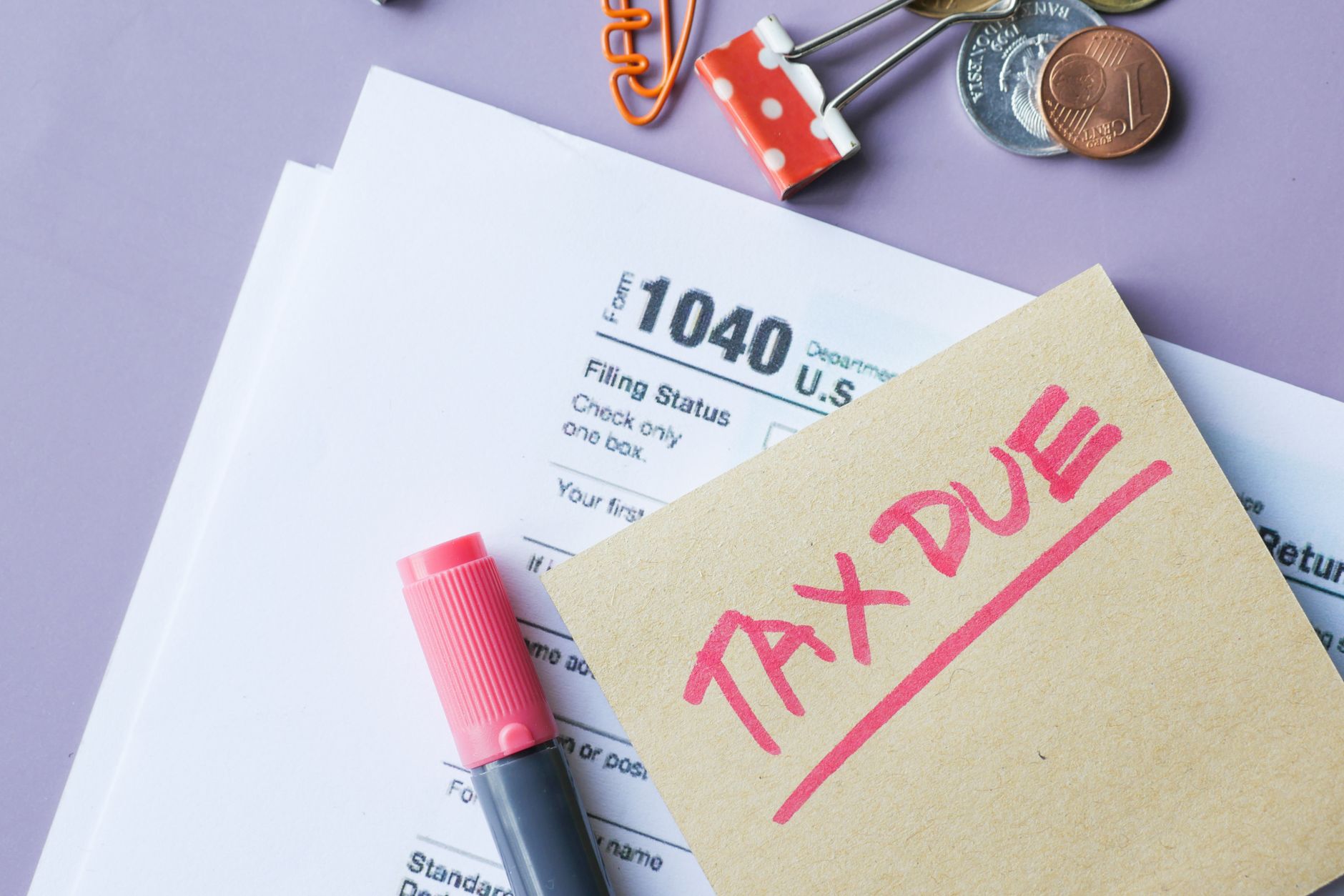
The average 2026 tax refund topped $3,200 as of early May, according to IRS filing data — up 14.1% from the same point in 2025. For millions of households, that’s a meaningful sum arriving all at once. The question isn’t whether to do something smart with it. The question is: what order?
This guide walks through a sequenced decision framework — not a single “right answer” — because the best move depends on your interest rates, savings gaps, and timeline. Here’s how to think through it.
What You’re Really Working With: Average 2026 Tax Refund Amounts
IRS data through mid-February 2026 showed an average refund of $2,476 during the early weeks of the filing season. By early May, the average had climbed above $3,200. The range for most households falls between $2,476 and $3,500, with higher amounts for filers claiming dependents or making specific W-4 adjustments.
The 14.1% year-over-year increase is largely attributed to tax changes included in the One Big Beautiful Bill Act, which restructured several provisions affecting withholding and credits.
One framing point worth stating clearly: a tax refund is not a bonus or windfall. It’s your own money — withheld from paychecks throughout the year and now returned without interest. That context matters when deciding how to allocate it. There’s no psychological need to spend it; there’s also no financial reason to feel guilty about keeping a portion for yourself.
Priority #1: Build or Replenish Your Emergency Fund First
Before anything else — debt paydown, investing, or retirement contributions — the emergency fund takes priority. Why? Because without one, any unexpected expense forces you back into debt, often at high interest rates.
The Target: 3–6 Months of Living Expenses
Financial planners consistently recommend keeping three to six months of essential expenses in a liquid, accessible account. Based on the average U.S. household spending roughly $6,440 per month (per CNBC Select data), the target range is approximately:
- Minimum (3 months): ~$19,320
- Conservative (6 months): ~$38,640
The gap between where most people are and where they should be is significant. A 2025 GOBankingRates survey found that nearly 40% of Americans have $250 or less in savings. If you’re in that group, directing your entire refund toward an emergency fund isn’t just reasonable — it’s the most important financial move you can make this year.
Where to Park It
Use a high-yield savings account (HYSA) earning 4.5–5.0% APY. Your emergency fund should be FDIC-insured, fee-free, and accessible within one to two business days. It should not be invested in the stock market — market timing risk defeats the purpose of an emergency fund.
Actionable example: You currently have $1,000 saved and need $19,320 as a three-month cushion. Your $3,200 refund closes about 17% of that gap. Pair it with a monthly auto-transfer of $200 to reach the target in roughly 15 months.
Priority #2: Crush High-Interest Debt (6% APR and Above)
Once your emergency fund is funded or meaningfully funded, the next highest-return move is usually paying off high-interest debt — specifically anything carrying an interest rate of 6% or higher.
Why This Beats Investing in Most Cases
Paying off a 20% APR credit card is, mathematically, a guaranteed 20% return. The stock market has historically returned around 7–8% annually after inflation for a diversified portfolio — but that comes with volatility and no guarantee. A guaranteed 20% beats an expected 7–8% every time, with zero risk.
Common high-interest targets to prioritize:
- Credit cards: typically 18–24% APR
- Payday loans: often 300%+ APR (highest priority)
- Personal loans with rates above 6%
- Store credit accounts with deferred interest traps
Real Numbers: What $3,000 Saves You
If you carry a $3,000 balance on a credit card at 20% APR and pay it off with your refund, you eliminate approximately $600 per year in interest charges. That $600 is now available for saving or investing — and compounds forward from there.
Debt Payoff Strategies
Two common approaches:
- Avalanche method: Pay minimums on all balances, throw extra cash at the highest-rate debt first. Saves the most interest mathematically.
- Snowball method: Pay minimums on all balances, pay off the smallest balance first. Builds momentum through quick wins. Works better for people who need motivation to stay on track.
Both work. Pick the one you’ll actually stick with.
Priority #3: Maximize Retirement Contributions (IRA, 401(k), HSA)
After high-interest debt is addressed, tax-advantaged retirement accounts offer some of the best long-term return on your refund — especially if you haven’t yet hit annual contribution limits.
2026 Contribution Limits
| Account Type | 2026 Limit | Catch-Up (Age 50+) |
|---|---|---|
| Traditional or Roth IRA | $7,500 | $8,600 (age 50+) |
| 401(k) / 403(b) | $23,500 | $30,500 (age 50+) |
| HSA – Self-Only HDHP | $4,400 | +$1,000 (age 55+) |
| HSA – Family HDHP | $8,750 | +$1,000 (age 55+) |
Source: TaxAct 2026 IRA and HSA contribution limit data.
Key Filing Deadline Rule
You can contribute to a prior tax year’s IRA or HSA until the federal tax filing deadline (typically April 15). That means your refund — if received early in the filing season — could count toward your 2025 retirement contribution before the deadline passes, or toward your 2026 limit if received later.
Why Retirement Contributions Often Beat Even Low-Interest Debt
If your employer offers a 401(k) match and you’re not yet capturing it fully, that match is a 50–100% instant return on contributions. No debt payoff strategy competes with free matching dollars. Capture the full employer match before paying down any debt below the 6% threshold.
Priority #4: The Debt vs. Investing Decision for Lower-Interest Debt
Once high-interest debt is gone and retirement contributions are on track, you hit the genuinely nuanced question: should you pay down lower-rate debt or invest the money instead?
The 6% Rule
Fidelity’s research suggests a practical framework: if the interest rate on your debt is 6% or higher, pay it down before investing extra dollars. If it’s below 6%, investing typically has the mathematical edge, assuming a diversified long-term portfolio.
Applied to common debt types:
- Student loans at 4–5% APR: Historically, investing your refund rather than making extra payments comes out ahead over a 10–20 year horizon. The market’s long-run average of 7–8% exceeds the loan rate.
- Mortgage at 2–4% APR: Almost always better to invest. Mortgage interest may also be tax-deductible, further reducing the effective rate.
- Auto loans at 5–7% APR: Apply the 6% rule. At 5%, lean toward investing; at 7%, lean toward payoff.
The Psychological Factor Is Real
Math favors investing at low rates, but math doesn’t account for sleep quality. If carrying any debt causes significant stress — even a 4% student loan — a hybrid split (50% toward debt, 50% toward investments) is a legitimate strategy. Eliminating financial anxiety has real value that a spreadsheet won’t capture. The “right” answer is the one you’ll actually follow.
Priority #5: Invest in Stocks, Index Funds, or Diversified Portfolios
If your emergency fund is healthy, high-interest debt is gone, and retirement accounts are funded, your refund is now genuinely investable capital. Here’s how to deploy it with minimal friction and cost.
Low-Cost Index Funds: The Default Starting Point
For most investors, a broad-market index fund — such as an S&P 500 fund or a total U.S. market fund — is the most defensible starting point. These funds:
- Carry expense ratios as low as 0.03% annually
- Provide instant diversification across hundreds or thousands of companies
- Require no active management or ongoing research
- Historically track the market’s long-run return of ~10% nominal, ~7–8% after inflation
Robo-Advisors
If you want a fully automated, diversified portfolio with automatic rebalancing, a robo-advisor (Betterment, Wealthfront, Schwab Intelligent Portfolios) handles allocation for you. Most require $1,000–$10,000 to open a meaningful position. Annual fees typically run 0.25% of assets managed — low, but slightly higher than a DIY index fund approach.
Taxable Brokerage Accounts vs. Retirement Accounts
If you’ve already maxed your IRA and 401(k) contributions, open a taxable brokerage account. Taxable accounts don’t offer upfront tax deductions, but they provide flexibility — no early withdrawal penalties, no required minimum distributions, and access to your funds at any age. This matters for anyone considering early retirement or career transitions.
What to Avoid
- Individual stock picking: Unless you’re spending 10+ hours researching each company, individual stock selection is statistically likely to underperform a simple index fund after fees and taxes.
- Market timing: Waiting for a “better entry point” has historically underperformed lump-sum investing in most measured periods. Time in the market consistently beats timing the market.
- High-fee actively managed funds: Average expense ratios of 0.5–1.0% compound into tens of thousands of dollars in lost returns over 20–30 years.
Bonus: Allocate 10–20% for Yourself — Seriously
This isn’t permission to blow your refund. It’s an acknowledgment that sustainable financial discipline includes intentional reward. The research and behavioral finance literature both support this: small personal wins reduce the burnout that leads people to abandon financial plans entirely.
The guideline: use 10–20% of your refund on something meaningful to you, then put 80–90% toward financial goals. On a $3,200 refund, that’s $320–$640 for a weekend trip, a new piece of equipment, a dinner out, or a hobby. The remaining $2,560–$2,880 goes to work.
This isn’t a rationalization to overspend. It’s a system design choice — one that makes the financial plan more likely to survive contact with real life.
What to Do Next: Your Refund Action Plan
Here’s a step-by-step allocation sequence. Work through it in order:
-
Calculate your emergency fund gap.
Multiply your monthly essential expenses by 3 (minimum) and 6 (target). Subtract your current liquid savings. That gap is your first allocation target. -
List all debts by interest rate.
Flag anything at 6% APR or above for payoff priority. Sort remaining balances for the avalanche or snowball approach. -
Check remaining 2026 contribution space.
Confirm how much room you have left in your IRA ($7,500 limit), 401(k) ($23,500 limit), and HSA ($4,400 self-only / $8,750 family). If you haven’t captured your full employer 401(k) match, that comes before any debt paydown below 6%. -
Allocate your refund in this order:
- Emergency fund (fill the gap first)
- High-interest debt (6% APR and above)
- Employer 401(k) match (capture any free matching dollars)
- IRA or HSA contributions (if under 2026 limits)
- Moderate-rate debt or stock investing (apply the 6% rule, or split 50/50)
- Personal reward: 10–20% off the top or at the end, your choice
-
Set up automatic monthly contributions.
A tax refund is a one-time event. The habits it starts are not. Automate a monthly transfer — even $100 — to whichever category you prioritized second. The compounding value of consistency over 10–20 years will dwarf any single refund amount.
Bottom Line
The average 2026 refund of $3,200+ is large enough to make a real dent in a savings gap, eliminate a credit card balance, or fund a significant portion of an annual IRA contribution. It’s not large enough to do all of those things at once — which is exactly why sequencing matters.
The hierarchy is clear: emergency fund first, high-cost debt second, tax-advantaged retirement third, lower-rate debt or investing fourth. Within that structure, use the 6% rule to separate debt payoff from investing decisions, and give yourself permission to allocate a small portion toward something you actually enjoy.
This article is for informational purposes only and does not constitute personalized financial, tax, or investment advice. Consult a qualified financial professional before making decisions based on your specific situation.