
Best Stock Trading Apps for Beginners 2026: Commission-Free Brokers Compared on Fees, Features, and Usability
A decade ago, buying a single share of stock cost $5 to $10 in broker commissions — each way. A round trip on a $500 position could erase 4% of your capital before the market moved at all. Today, every major U.S. retail broker charges $0 for stock and ETF trades. The competition has shifted to account minimums, hidden fees, platform quality, and education — factors that matter far more to beginners than the headline commission rate.
This guide compares seven of the top commission-free trading apps available in 2026: Robinhood, Fidelity, Charles Schwab, Interactive Brokers (IBKR Lite), E*TRADE, SoFi, and Ally. We break down what each platform actually costs, which features matter for new investors, and which app fits your specific situation.
Disclaimer: This article is for informational purposes only and does not constitute personalized financial, tax, or legal advice. Fee structures and features are subject to change; verify current terms directly with each broker before opening an account.
Why Commission-Free Trading Matters for New Investors
The elimination of per-trade commissions is not just a marketing move — it fundamentally changes how beginners should approach investing. When brokers charged $7 per trade, buying 10 different stocks cost $140 in fees alone. That friction punished diversification and encouraged holding large positions rather than spreading risk.
With $0 commissions now standard, you can build a diversified portfolio of ETFs incrementally without fee drag. That said, “commission-free” does not mean free. The real cost of ownership for a brokerage account includes:
- Options contract fees: Most brokers charge $0.65 per contract even when stock trades are free.
- Account inactivity fees: Some regional brokers charge $25–$50 if your account sits dormant for 12+ months.
- Wire transfer fees: Outbound wire transfers typically cost $10–$25 even at zero-commission brokers.
- Instant deposit fees: Robinhood charges $5 per instant deposit; most competitors waive this for standard ACH.
- Currency conversion: Relevant if trading international stocks; Interactive Brokers and Fidelity apply 2–4 basis points.
- Regulatory assessments: The SEC charges a small transaction fee on sell orders (approximately $0.0000278 per dollar sold as of 2026). This is minimal but exists at every broker.
The brokers in this guide charge $0 for stock and ETF trades and $0 account minimums. The differences lie in what they charge beyond that baseline — and what they provide in return.
Who This Guide Is For
Not every beginner has the same needs. This comparison is most useful for four investor profiles:
- Mobile-first investors who want to trade stocks and ETFs from their phones without complex interfaces or account minimums.
- Buy-and-hold investors focused on retirement accounts (Traditional IRA, Roth IRA) and low-maintenance index fund strategies.
- Curious active traders who want to explore options, fractional shares, and faster order execution with basic charting.
- Budget-conscious beginners who prioritize low barriers to entry and want no surprises on their monthly statements.
Top Commission-Free Stock Trading Apps Compared (2026)
Below is a snapshot of the leading platforms. Detailed fee and feature breakdowns follow in subsequent sections.
| Platform | Stock/ETF Commission | Options (per contract) | Account Minimum | Fractional Shares | Best For |
|---|---|---|---|---|---|
| Robinhood | $0 | $0 | $0 | Yes | Mobile-first beginners |
| Fidelity | $0 | $0.65 | $0 | Yes | Long-term / retirement investors |
| Charles Schwab | $0 | $0.65 | $0 | Yes | Full-service investors of all levels |
| IBKR Lite | $0 | $0.65 | $0 | Yes | Advanced / cost-conscious traders |
| E*TRADE | $0 | $0.65 | $0 | No | Active and options traders |
| SoFi | $0 | N/A | $0 | Yes | Beginners wanting financial planning tools |
| Ally | $0 | $0.50 | $0 | No | Simple, low-fee self-directed accounts |
Robinhood
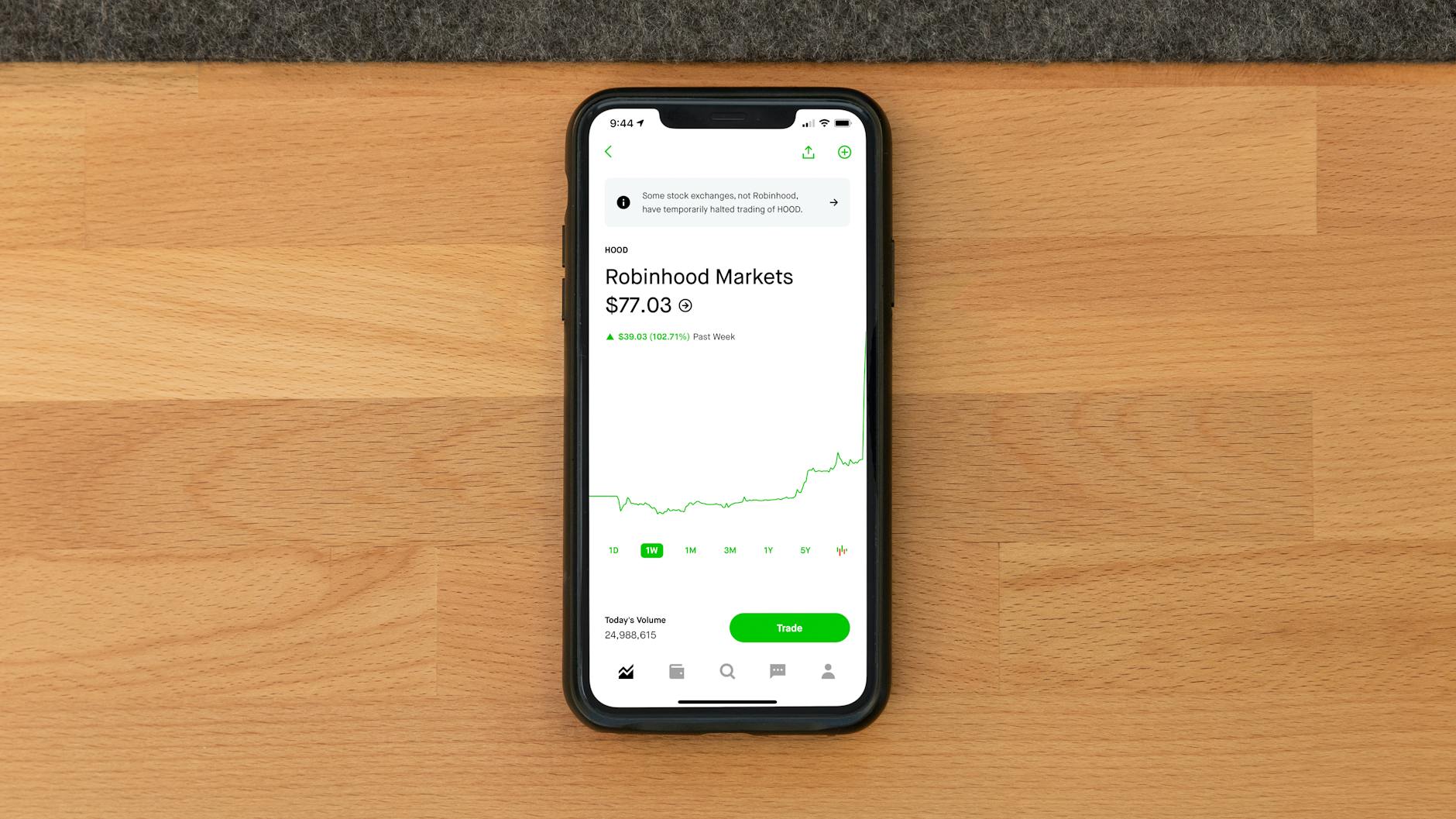
Robinhood pioneered commission-free trading in 2013 and remains one of the most accessible entry points to the stock market. The mobile app is clean, fast, and requires minimal financial literacy to navigate. You can open an account, link a bank, and place your first trade in under 10 minutes. Robinhood supports stocks, ETFs, options, and cryptocurrency in one app with no account minimum.
The tradeoffs are real: research tools are limited compared to Fidelity or Schwab, and customer support is primarily in-app rather than via phone. Robinhood also charges $5 per instant deposit, which catches some new users off guard. Use free ACH transfers (3–5 business days) to avoid this fee entirely.
Fidelity
Fidelity offers $0 commissions on U.S. stocks, ETFs, and options (options contracts are $0.65 each), plus access to more than 3,400 no-transaction-fee mutual funds. The platform supports Traditional IRA, Roth IRA, Rollover IRA, 529 college savings plans, and Fidelity HSA accounts — a broader account-type menu than most competitors.
Fidelity Go®, the platform’s robo-advisor, charges 0% annually for balances under $25,000 and 0.35% per year for balances above that threshold. The mobile app mirrors the full web experience. With 100+ physical branches across the U.S., Fidelity is the strongest choice for investors who want both digital tools and the option for in-person guidance.
Charles Schwab
Schwab charges $0 commissions on stocks and ETFs and $0.65 per options contract. The platform pulls research from 20+ independent providers — one of the widest third-party research networks among retail brokers. Schwab’s StreetSmart Edge desktop platform caters to active traders, while the standard mobile app is suitable for beginners.
Schwab also offers human financial advisors and a robo-advisor (Schwab Intelligent Portfolios®), which charges no advisory fee but requires a $5,000 account minimum. Customer support is available 24/7 via phone and chat, which is a meaningful advantage for beginners who hit confusion outside business hours.
Interactive Brokers (IBKR Lite)
Interactive Brokers runs two tiers: IBKR Pro (for professional and high-volume traders) and IBKR Lite (for retail investors). IBKR Lite charges $0 commissions on U.S. stocks and ETFs, carries no account minimum, and imposes no annual IRA fees — a meaningful long-term savings compared to some legacy brokers that charged $25–$75 per year to maintain an IRA.
IBKR Lite also passes along order liquidity rebates, an unusual feature where the broker shares savings when your orders provide liquidity to the market. The platform’s tools are professional-grade — arguably more powerful than a pure beginner needs — but the Lite interface makes the learning curve manageable. Best suited for cost-conscious investors who plan to grow into advanced features.
E*TRADE
E*TRADE charges $0 commissions on stocks and ETFs and $0.65 per options contract. The standard mobile app handles everyday trading, while the Power E*TRADE app layer adds advanced charting, options analytics, and a paper trading mode for practicing strategies without real money at risk. That practice-trading feature is particularly valuable for beginners before they commit real capital to options strategies.
E*TRADE does not currently offer fractional shares, which limits its appeal for beginners who want exposure to high-priced stocks like Amazon or Google without buying a full share.
SoFi
SoFi positions itself as a financial services super-app rather than a pure brokerage. The investing arm offers $0 commissions on stocks and ETFs, fractional shares starting at $5, and built-in financial planning tools that connect your investment account to budgeting and loan management features. SoFi does not offer options trading as of 2026.
Research depth is limited compared to Fidelity and Schwab. SoFi is best for beginners who want a single app to handle investing alongside other financial goals, and who are not yet focused on options or in-depth stock analysis.
Ally Invest
Ally charges $0 on U.S. stocks and ETFs, $0.50 per options contract (lower than the industry-standard $0.65), and imposes no account minimum or inactivity fees. As an online-only broker, Ally has no physical branches, but its interface is clean and straightforward. It integrates directly with Ally Bank accounts, making deposits and withdrawals fast for existing Ally banking customers.
Ally does not offer fractional shares, which limits position-sizing flexibility for accounts under $500.
Fee Breakdown: What You Actually Pay Beyond Commissions
All seven platforms charge $0 for stock and ETF trades. Here is where real costs appear:
| Fee Type | Robinhood | Fidelity | Schwab | IBKR Lite | E*TRADE | SoFi | Ally |
|---|---|---|---|---|---|---|---|
| Options (per contract) | $0 | $0.65 | $0.65 | $0.65 | $0.65 | N/A | $0.50 |
| Account minimum | $0 | $0 | $0 | $0 | $0 | $0 | $0 |
| Inactivity fee | $0 | $0 | $0 | $0 | $0 | $0 | $0 |
| Instant deposit fee | $5 | $0 | $0 | $0 | $0 | $0 | $0 |
| Annual IRA fee | $0 | $0 | $0 | $0 | $0 | $0 | $0 |
| Outbound wire transfer | $25 | $0 (domestic) | $25 | $10 | $25 | $0 | $0 (via Ally Bank) |
Practical takeaway: For a beginner who deposits via ACH, holds stocks and ETFs, and never trades options or wires money, the total annual cost is $0 at all seven platforms. Fees only appear when you add complexity — instant deposits, options contracts, or international wire transfers.
Critical Features for Beginner Success
Mobile App Quality
Robinhood and SoFi are built mobile-first, with deliberately simplified interfaces. Schwab and Fidelity offer full-featured mobile apps that mirror their web platforms — more powerful but slightly more to navigate. E*TRADE’s dual-app approach (standard + Power E*TRADE) is smart for beginners who want room to grow without switching brokers.
Research and Education
Fidelity and Schwab provide the deepest educational libraries among retail brokers — video tutorials, webinars, and curated beginner learning paths. Schwab sources research from 20+ independent third-party providers. Robinhood offers minimal research content, which is a real limitation for beginners trying to evaluate individual stocks.
Account Types Available
For tax-efficient investing, verify your broker supports the account types you need:
- Taxable brokerage: All seven platforms.
- Traditional and Roth IRA: All seven platforms.
- HSA: Fidelity (Fidelity HSA®); not available at Robinhood, SoFi, or Ally as standalone investing HSAs.
- 529 college savings: Fidelity and Schwab; not available at Robinhood or SoFi.
Fractional Shares
Fractional shares let you invest in high-priced stocks with any dollar amount. Robinhood, Fidelity, Schwab, SoFi, and IBKR Lite all support fractional shares. E*TRADE and Ally do not. If you want to allocate $50 to a stock trading above $200 per share, this feature is essential.
Customer Support
Schwab and Fidelity offer 24/7 phone and chat support plus walk-in branches. Interactive Brokers’ support is limited outside market hours. Robinhood and SoFi rely primarily on in-app chat, which is adequate for common questions but can be slow during high-traffic market events.
Best Platforms by Use Case
Best for Ultra-Simplicity: Robinhood
Robinhood’s interface removes nearly every barrier. You can complete signup, verification, and your first trade in under 10 minutes. If your only goal right now is to buy a few stocks or ETFs from your phone without reading a user manual, Robinhood delivers that experience better than anyone else on this list.
Best for Long-Term Buy-and-Hold: Fidelity or Schwab
Both platforms offer extensive retirement planning tools, no-transaction-fee mutual fund access, and 24/7 support. Fidelity’s Fidelity Go® robo-advisor is free for accounts under $25,000. Schwab’s Intelligent Portfolios® requires $5,000 to start but charges no advisory fee. Either is an excellent home for a Roth IRA or Traditional IRA.
Best for Active and Options Traders: IBKR Lite or E*TRADE
IBKR Lite offers professional-grade tools and order types that most retail brokers don’t provide. E*TRADE’s Power E*TRADE platform includes advanced charting and a paper trading mode. Both charge $0.65 per options contract. IBKR Lite edges ahead on total cost transparency; E*TRADE edges ahead on beginner-friendliness within the active-trading category.
Best for Cost-Conscious Accounts: Ally or IBKR Lite
Ally’s $0.50 options contract fee is below the $0.65 industry standard. IBKR Lite eliminates annual IRA fees and passes along order liquidity rebates. Both have $0 minimums and $0 inactivity fees. For accounts where every dollar counts, these two minimize costs beyond the commission headline.
Best for Investors Seeking Guidance: Fidelity
Fidelity’s combination of free robo-advisor access (under $25,000 balance), 100+ physical branches, 24/7 support, and deep educational resources makes it the strongest all-around choice for a beginner who expects to have questions and wants human or near-human support available.
How to Get Started: Your Action Steps
- Define your investor profile. Are you a buy-and-hold retirement saver, a casual mobile investor, or someone interested in options? Your answer determines which platform from this guide fits best. If you’re unsure, start with Fidelity or Schwab — both grow with you as your strategy evolves.
- Open your account. Download the app or visit the broker’s website. Identity verification (government ID, SSN, and basic personal details) typically takes 5–10 minutes. Most accounts are approved same-day.
- Link your bank account via ACH — not instant deposit. Standard ACH transfers take 3–5 business days but are free at every broker on this list. Robinhood charges $5 for instant access to deposited funds. Skip that fee unless you need to trade immediately.
- Start with the broker’s educational resources before trading. Fidelity and Schwab provide structured beginner guides covering market orders vs. limit orders, what ETFs are, and how to read a stock quote. Spend 30–60 minutes here before placing a real trade — it will prevent common order-entry mistakes.
- Make your first trade with a low-cost index ETF. Options like VOO (Vanguard S&P 500 ETF, expense ratio 0.03%), VTI (Vanguard Total Stock Market ETF, 0.03%), or SCHB (Schwab U.S. Broad Market ETF, 0.03%) give you instant diversification at near-zero ongoing cost. If the share price is high and your broker supports fractional shares, start with $25–$50 to test the platform mechanics.
- Review your account statement quarterly. Look for unexpected fees — inactivity charges, spread widening on thinly traded securities, or foreign transaction costs if you traded an ADR. If fees appear that were not disclosed upfront, compare alternatives and switch platforms if necessary. Account transfers (ACATS) are typically free or low-cost at the receiving broker.
Bottom Line
Commission-free stock trading is now the floor, not a competitive advantage. The brokers that actually serve beginners well in 2026 are the ones that pair zero commissions with transparent fee structures, strong educational content, and reliable mobile apps.
For most first-time investors, Fidelity or Schwab offer the best combination of $0 commissions, robust education, retirement account support, and 24/7 customer service. If simplicity is your only priority, Robinhood gets you started in minutes. If you’re cost-obsessed and plan to grow into advanced tools, IBKR Lite eliminates nearly every non-trade fee in the industry.
Whatever platform you choose, the most important step is starting. Time in the market — invested in low-cost index funds — has historically outweighed timing the market or optimizing broker selection. Pick a platform that removes friction for you personally, open the account this week, and revisit platform choice annually as your needs evolve.