
Public.com vs Robinhood: Which Commission-Free Stock Trading App Is Better for Beginners?
Both Robinhood and Public.com offer commission-free stock trading, fractional shares, and mobile-first platforms designed to lower the barrier to investing. On paper, they look nearly identical. In practice, the differences matter depending on how much you plan to invest, how often you’ll be active, and how much educational support you need when you’re starting out.
This comparison breaks down fees, features, usability, and education side by side so you can make a clear, informed decision — not a guess.
Who This Is Best For
Before diving into fee tables and feature lists, it helps to identify which investor profile each platform actually serves.
- Absolute beginners with small starting funds: Robinhood wins. Zero account minimum, no inactivity fees, and a setup process that takes under five minutes make it the lowest-friction entry point in the market.
- Beginner-to-intermediate investors who want research depth: Public.com is the better fit. You’ll need a $20 minimum deposit to get started, but you get access to more research tools and live educational webinars.
- Active traders who need real-time alerts: Robinhood has the edge for speed and real-time tools. Public.com offers lower margin rates if you plan to borrow to trade.
- Long-term buy-and-hold investors: Either platform works well. The deciding factor is whether you prefer Robinhood’s cleaner simplicity or Public’s additional research depth.
Fee Comparison: What You’ll Actually Pay
Both platforms are marketed as commission-free, and that’s accurate for stock and ETF trades. But several other fees create meaningful differences depending on your habits.
| Fee Type | Robinhood | Public.com |
|---|---|---|
| Stock & ETF trades | $0 | $0 |
| Equity options (per contract) | $0 | $0 (plus $0.06–$0.18 rebate) |
| Index options (per contract) | $0.50 | $0.50 ($0.35 with Public Premium) |
| Minimum deposit | $0 | $20 |
| Inactivity fee | None | $3.99/month after 90+ days inactive |
| IRA closure fee | $0 | $150 |
| ACAT transfer fee | $100 | $100 |
| Margin rates | Standard tiered rates | Slightly lower across all tiers |
Three fees deserve special attention:
- Inactivity fee: Public charges $3.99 per month if your account sits dormant for 90 or more days. If you open an account, deposit $20, and then stop trading, you’ll lose money to this fee. Robinhood charges nothing.
- IRA closure fee: Public charges $150 to close an IRA. Robinhood charges $0. If you plan to use either platform for retirement savings and might later want to transfer out, this is a significant cost difference.
- Options rebate: Public’s $0.06–$0.18 per-contract rebate on equity options is unusual in the industry. For active options traders, this can add up meaningfully over time.
Bottom line on fees: Robinhood is the cheaper starting point for most beginners. Public’s lower margin rates and options rebates only become relevant once you’re trading with more frequency or using leverage.
User Interface and Mobile App Experience
Both apps are rated nearly identically on Google Play — Robinhood at 4.2 stars, Public at 4.1 stars — but the user experience differs in meaningful ways.
Robinhood
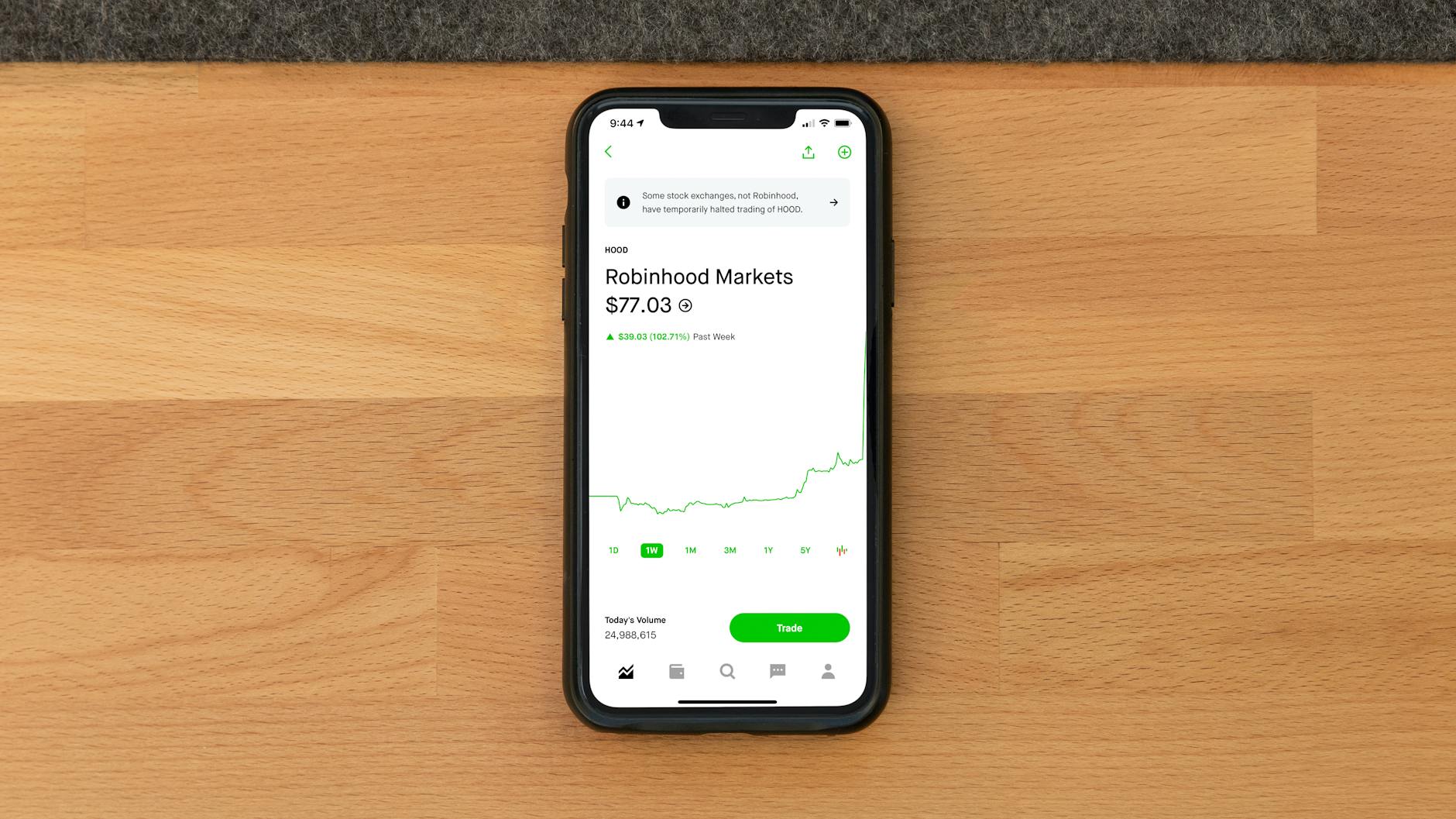
Robinhood was designed from the ground up as a mobile-first product. Its interface is minimal and intentional: a home screen with your portfolio value, a simple search bar, and a trade button. There is almost no learning curve. Reviewers and industry analysts consistently praise it for removing barriers that would otherwise slow down or confuse a new investor.
StockBrokers.com ranks Robinhood #7 out of 14 stock trading apps for overall usability — solid, not exceptional, but consistently reliable.
Public.com
Public’s app is also well-reviewed and offers both a mobile app and a full web dashboard, which Robinhood’s web experience doesn’t match as closely. Users praise Public’s debit card deposit and withdrawal flow, which makes moving money in and out feel fast. The interface is slightly more feature-rich, which means slightly more complex — a reasonable tradeoff as your skills grow.
StockBrokers.com ranks Public #13 out of 14 apps for stock trading — a meaningful gap from Robinhood’s #7 ranking, mostly due to fewer real-time tools and the paywalling of certain features.
If you’re setting up your first brokerage account today, Robinhood will feel more immediately comfortable. If you already have some investing experience and want more screen real estate and research access, Public’s web dashboard adds genuine value.
Key Features: What Each Platform Offers
Fractional Shares
Both apps allow fractional share trading, but the minimums differ. Robinhood requires a $1 minimum per fractional purchase. Public requires a $5 minimum. That gap matters most if you’re investing very small amounts across many stocks at once.
Cryptocurrency
Robinhood offers basic crypto trading at approximately a 0.60% spread on Bitcoin purchases. Public offers access to 30+ cryptocurrencies through its Boxed Crypto partnership, a wider selection than Robinhood currently provides. Cost-wise, Robinhood is slightly cheaper for basic crypto trades.
Options Trading
Both platforms offer $0 commission on equity options contracts. Public goes further by paying users a $0.06–$0.18 rebate per contract when trading stock or ETF options — a feature that’s rare across the entire industry, not just among commission-free brokers.
Extended-Hours Trading
Both platforms support pre-market and after-hours trading, but only via limit orders. This is standard practice for retail apps at this price point.
Paper Trading
Neither Robinhood nor Public offers a paper trading (simulated trading) environment. This is a notable gap for true beginners who want to practice without risking real money. Webull is a competitor that does offer paper trading if that feature is a priority.
Advanced Charting and Alerts
Robinhood includes real-time trading alerts and basic charting built into the app. Public offers more advanced research tools, but some of these are locked behind a Public Premium subscription ($10/month or $96/year). If you want research without paying extra, Robinhood provides more out of the box.
Education and Research Tools: A Key Difference
Both platforms are rated 3.5 out of 5 stars for overall education quality on StockBrokers.com. But how they deliver educational content is different.
Robinhood Education
- Built-in educational resources accessible directly within the app
- Ranked #7 out of 14 brokers for education quality by StockBrokers.com
- Self-paced format: read articles and guides on your own schedule
- No live webinars or instructor-led sessions
Public.com Education
- Hosts live webinars — a genuine differentiator at this price point
- Ranked #8 out of 14 brokers for education quality by StockBrokers.com
- Community-driven features let you see what others are investing in
- Some advanced research tools require a Public Premium subscription
The live webinar advantage is meaningful if you learn better in structured, interactive sessions rather than reading articles at your own pace. If you prefer self-directed learning and want everything included without an upgrade, Robinhood’s built-in content is sufficient for the basics.
Account Setup and Real Barriers to Entry
This is where Robinhood’s edge becomes most concrete for beginners working with limited funds.
Robinhood Account Setup
- Minimum deposit: $0 — you can open an account and browse the platform before funding it
- Fractional minimum: $1 per purchase
- Inactivity fees: None
- Signup bonus: $5–$200 in free stock after linking a bank account or debit card
- IRA closure: Free, making it practical for experimenting with retirement accounts
Public.com Account Setup
- Minimum deposit: $20 required to activate the account
- Fractional minimum: $5 per purchase — meaning your effective minimum to actually invest is $25 ($20 deposit + $5 minimum trade)
- Inactivity fee: $3.99/month after 90 days of inactivity
- Signup bonus: Comparable promotional stocks to Robinhood
- High-yield savings: Public offers a cash management account earning 4.1% APY (as of early 2026) — Robinhood does not have an equivalent product
- IRA closure: $150 fee — a real cost if you open and later decide to transfer
Public’s 4.1% APY cash management account is a genuine advantage for investors who want to earn a return on idle cash sitting in their brokerage account. As of early 2026, that rate is competitive with most high-yield savings accounts.
Robinhood vs. Public.com: Pros, Cons, and Verdict
Robinhood
Pros:
- $0 minimum deposit — lowest barrier to entry available
- No inactivity fees, ever
- Cleanest, most beginner-friendly interface among major apps
- Real-time trading alerts built in
- $0 IRA closure fee — safe to experiment with retirement accounts
- $5–$200 signup bonus with no deposit required
Cons:
- No live educational webinars
- Fewer advanced research tools compared to Public
- Limited cryptocurrency selection relative to Public’s 30+ coins
- No paper trading environment for practice
- No high-yield savings option
Public.com
Pros:
- Live webinars included — unique among free-tier commission apps
- 30+ cryptocurrencies via Boxed Crypto
- Options rebates ($0.06–$0.18 per contract)
- Lower margin rates across all tiers
- 4.1% APY cash management account
- Community features showing real-time investor activity
- Full web dashboard in addition to mobile app
Cons:
- $20 minimum deposit + $5 fractional minimum = $25 effective starting cost
- $3.99/month inactivity fee after 90 days dormant
- $150 IRA closure fee — a real risk if you decide to move accounts later
- Advanced research partially paywalled behind $10/month Premium subscription
- Ranked #13 vs. Robinhood’s #7 on StockBrokers.com’s trading app rankings
Overall Verdict
StockBrokers.com rates Robinhood 4 out of 5 stars and Public.com 3 out of 5 stars in their 2026 comparison. For most beginners — especially those investing less than $100 to start — Robinhood is the more practical choice. Its zero-friction setup, no inactivity fees, and cleaner interface reduce the chance that administrative friction stops you from investing at all.
Public is the better fit for investors who are willing to commit to regular activity, want live educational content, and plan to keep idle cash in a high-yield account. Its $150 IRA closure fee is the one significant risk to weigh carefully before using it for retirement accounts.
What to Do Next: Make Your Decision
Here are four actionable paths based on your situation:
- If you have less than $50 and want to start today: Open a Robinhood account. There is no minimum deposit, no setup friction, and you’ll receive a $5–$200 stock bonus just for linking a bank account. You can be invested within 24 hours.
- If you plan to learn actively and want live sessions: Public.com’s live webinars are a meaningful advantage if you absorb information better through instruction than through reading. Start with the $20 minimum deposit and commit to staying active to avoid the inactivity fee.
- If you’re genuinely unsure: Open both accounts. Both are free to open. Fund each with a small amount — $20 on Robinhood, $20 on Public — and place one or two small trades on each platform over the next week. The one that feels more comfortable and fits your actual trading habits is the one to keep.
- If you’re planning to open an IRA: Strongly favor Robinhood. The $0 IRA closure fee versus Public’s $150 fee gives you flexibility if you later want to roll over to a different platform. Both charge the same $100 ACAT fee for standard account transfers, so don’t let that stop you from switching a taxable account later if your needs change.
This article is for informational purposes only and does not constitute personalized financial, tax, or investment advice. Fee structures and platform features are subject to change; verify current terms directly with each platform before opening an account.