
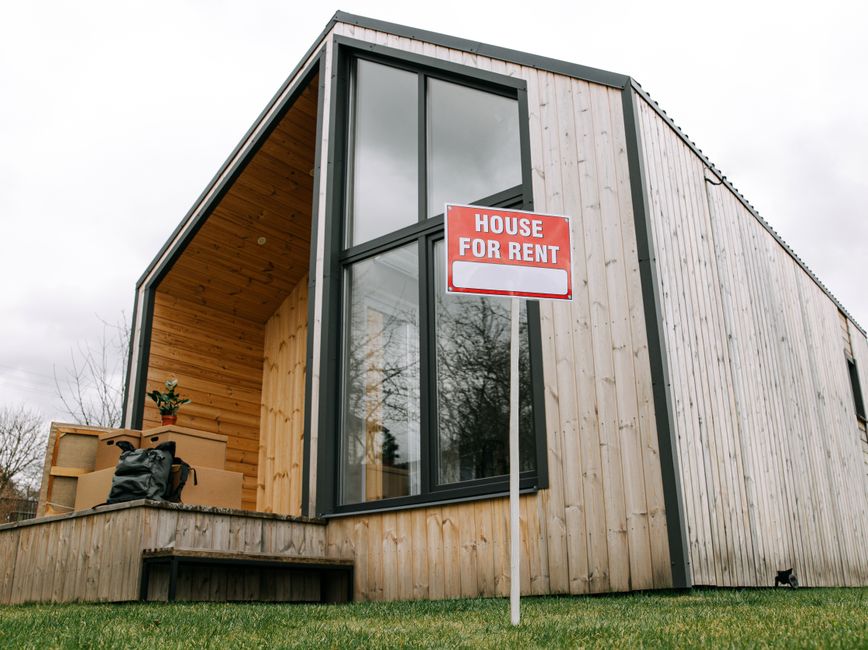
Inherited Real Estate Decision: Sell for Step-Up Basis Gain or Rent It Out? Complete Tax Analysis
Inheriting a house can create a rare tax advantage, but only if you understand what changes on the date of death and what starts over from that point forward. For many heirs, the key rule is the step-up in basis: the property’s tax basis is generally reset to its fair market value at death. That often means a quick sale produces little or no taxable capital gain, even if the original owner bought the home decades ago for a much lower price.
The harder question is whether to cash out that tax benefit now or keep the property as a rental. Renting can produce income and future appreciation, but it also creates a new depreciation schedule, future depreciation recapture, landlord risk, and ongoing ownership costs. This article walks through the tax math in plain English so you can compare an immediate sale with a 3- to 5-year rental hold. It is general educational information, not personalized tax or legal advice.
How Step-Up Basis Works on Inherited Real Estate
Inherited property usually receives a new tax basis equal to its fair market value on the decedent’s date of death. In some estates, an alternate valuation date may apply instead, and if the property fell in value, the basis can effectively step down rather than step up. But in the common case of appreciated real estate, the reset wipes out the unrealized gain that built up during the original owner’s lifetime.
That matters because capital gain is generally measured from your basis, not from what the decedent originally paid. If a parent bought a home for $120,000 and it was worth $520,000 at death, an heir who inherits it usually starts with a basis around $520,000, not $120,000.
If the home is sold soon after inheritance for about that same value, taxable capital gain is often minimal. In practice, sale-related costs such as broker commissions, transfer taxes, attorney fees, and seller credits often absorb small price changes. The result is that a prompt sale may produce little or no federal capital gains tax even though the property appreciated significantly over many years before death.
Only the appreciation after death is generally taxed on a later sale. That is the core advantage of the step-up rule: it cuts off the old gain and starts a new tax clock from the inherited value.
Why the land-and-building split matters
If you keep the property as a rental, you should not treat the entire stepped-up value as depreciable. Land is not depreciable. The land and building must be separated so that only the building portion goes into the residential rental depreciation schedule, which is usually spread over 27.5 years.
That allocation matters for two reasons:
- It determines your annual depreciation deduction.
- It affects your adjusted basis and future gain calculation when you eventually sell.
Simple example
Suppose the date-of-death fair market value is $400,000. If a supportable allocation is $80,000 to land and $320,000 to building, then $320,000 is the amount generally depreciated if you convert the inherited home to a residential rental. At roughly $11,636 per year of depreciation ($320,000 divided by 27.5), your taxable rental income may fall in the short run, but your adjusted basis also falls each year, increasing the gain that can be recognized later.
Sell vs. Rent: The Tax Math at a Glance
Selling and renting create very different tax profiles, even when the starting basis is the same.
| Issue | Sell Soon After Inheritance | Rent Then Sell Later |
|---|---|---|
| Starting basis | Generally the date-of-death fair market value | Generally the same stepped-up value |
| Tax on pre-death appreciation | Often avoided | Still avoided |
| Tax on post-death appreciation | Usually small if sold quickly | Can grow materially over time |
| Depreciation | None | Usually available on the building portion over 27.5 years |
| Future depreciation recapture | None | Possible on sale, often taxed federally at up to 25% |
| Ongoing costs | Ends after closing | Property tax, insurance, maintenance, vacancy, management, compliance |
Selling can lock in the step-up basis and avoid future gain on the property’s pre-death appreciation. Renting creates monthly income, but the new tax clock starts from the stepped-up value. From that point on, both market appreciation and depreciation deductions affect your future sale result.
A quick sale often wins when the property needs major repairs, has weak rent potential, or would generate only a thin monthly surplus after real expenses. Holding can win only if net cash flow plus expected appreciation is strong enough to outweigh future taxes, upkeep, leasing costs, and the risk of unpleasant surprises.
When Selling Usually Makes the Most Sense
Selling is often the cleaner choice when the property is already close to market-ready and could sell near the stepped-up value. In that situation, the tax code is effectively offering you a reset. If you can convert the home to cash without creating much post-death gain, the hurdle for keeping it should be high.
Selling also tends to make sense when you need liquidity. Common examples include:
- Splitting an estate among multiple heirs.
- Paying estate debts, taxes, or final expenses.
- Avoiding co-ownership disputes between siblings or relatives.
- Reducing exposure to ongoing repairs, insurance, and vacancy risk.
From a practical standpoint, a rental that barely breaks even is rarely worth much. If maintenance, property taxes, homeowners insurance, HOA dues, lawn care, utilities during vacancy, and occasional turnover costs would consume most of the rent, the inherited property may be more valuable as a sale asset than as an income property.
Why selling can be tax-efficient
An immediate or near-immediate sale can preserve the main tax benefit of inheritance: the built-in appreciation during the decedent’s lifetime is generally not taxed to the heir. You also avoid creating future depreciation recapture, which only becomes an issue once the property is rented and depreciated.
Selling is especially compelling when the alternative is sinking cash into a roof, HVAC, foundation work, or deferred maintenance just to make the property rentable. That kind of cash commitment raises the bar on how much rental income the home must generate before the hold strategy truly outperforms a sale.
When Renting Can Be the Better Move
Renting can be the better move, but only when the property works as a business asset rather than as a sentimental hold. The local rent must cover the full operating load and still leave a real monthly surplus.
That means rent should be strong enough to absorb:
- Property taxes.
- Insurance.
- Routine repairs and maintenance.
- Vacancy and turnover costs.
- Property management, if you will not self-manage.
- Capital repair reserves for items like roofs, plumbing, appliances, and exterior work.
Renting also makes more sense in a strong rental market with low vacancy, stable tenant demand, and reasonable expectations for appreciation. If the property is in a market where rents are weak relative to value, or where landlord regulation is especially burdensome, the tax benefits of renting may not overcome the operational headaches.
Quick rental screen example
Assume an inherited home could rent for $2,900 per month, or $34,800 per year. Now subtract a realistic vacancy allowance of 5% ($1,740), property taxes of $5,400, insurance of $1,800, maintenance and repair reserves of $3,500, management of 8% of rent collected, and other owner costs of $1,200. If the property only produces a small annual surplus after those items, the hold case is weak. If it still throws off a meaningful cash return after conservative assumptions, the hold case gets stronger.
Long-term holding may work if you want income now and are willing to accept a later taxable sale. That tradeoff should be explicit. Renting is not a way to avoid tax forever by itself. It is a choice to exchange a potentially low-tax exit today for current income and a more complicated tax result later.
Hidden Taxes and Cost Traps to Model
Depreciation begins from the stepped-up building value
Once the inherited home is placed in service as a residential rental, depreciation is generally taken over 27.5 years on the building portion only. This deduction can reduce current taxable rental income, which is valuable, but it is not free money. It lowers adjusted basis over time.
Depreciation recapture can surprise heirs
When you later sell a rental, the gain is not always taxed at one simple capital gains rate. The portion tied to depreciation is generally unrecaptured Section 1250 gain, which can be taxed federally at up to 25%. The remaining gain may qualify for long-term capital gains treatment, depending on your circumstances. High-income taxpayers may also face the 3.8% net investment income tax.
This is why a rental that looks attractive on a pre-tax basis can look less compelling after a full sale analysis.
Repairs do not automatically increase basis
Another common mistake is assuming every dollar spent on the property increases basis. That is not how the rules work. Improvements that must be capitalized generally increase basis. Routine repairs and maintenance usually do not. If you repaint rooms, fix a leak, or replace broken hardware, those costs may be deductible or currently expensed in a rental context, but they usually do not raise basis for future sale purposes.
Examples of items that may increase basis if properly capitalized include:
- A new roof.
- A major kitchen remodel.
- New windows throughout the property.
- Structural improvements or additions.
State and local taxes can change the answer
Federal tax is only part of the decision. State capital gains tax, local transfer tax, recording fees, property tax levels, and even estate or inheritance tax in some jurisdictions can materially affect the math. A property in a high-tax state may need stronger rental economics to justify holding.
Decision Framework: Numbers to Run Before You Decide
Before deciding whether to sell or rent, run both scenarios side by side using the same assumptions. A simple spreadsheet is usually enough if the inputs are honest.
1. Estimate fair market value at death
Start with the best supportable date-of-death valuation you can get. For meaningful tax stakes, that often means a qualified appraisal rather than a casual online estimate. Then estimate net sale proceeds:
Net sale proceeds = expected sale price – commissions – transfer taxes – attorney/title fees – seller credits – pre-sale repair costs
2. Project annual net rental income realistically
Do not use gross rent as your decision metric. Use net cash flow after vacancy, management, repairs, insurance, property taxes, leasing fees, HOA dues, and a reserve for larger capital items.
Net rental income = gross rent – vacancy – operating costs – management – repair reserves
3. Estimate adjusted basis if you keep it
Your future adjusted basis is not the same as your stepped-up basis today. It changes over time.
Adjusted basis = stepped-up basis + capital improvements – depreciation claimed or claimable
The phrase “claimed or claimable” matters because the IRS can still reduce basis for depreciation you were entitled to take, even if you failed to deduct it.
4. Model a future sale after a 3- to 5-year hold
Estimate a reasonable resale value, not a best-case number. Then subtract selling costs and adjusted basis to estimate gain. Split that gain between depreciation recapture and the remaining long-term capital gain bucket.
5. Compare after-tax outcomes, not just pre-tax proceeds
The right comparison is not “rent sounds nice” versus “selling feels final.” The right comparison is:
- After-tax cash from selling now.
- Total expected after-tax rental cash flow over 3 to 5 years.
- Expected after-tax net proceeds from a future sale.
- The value of your time, risk tolerance, and need for liquidity.
Illustrative comparison
Suppose the stepped-up value is $450,000, with $90,000 allocated to land and $360,000 to building. If you sell near that value shortly after inheritance, taxable gain may be very small once selling costs are factored in.
Now suppose instead you rent the home for five years. You claim about $65,455 of depreciation on the building portion over that period. If the property later sells for more than the inherited value, the taxable gain is measured against a lower adjusted basis because of that depreciation. Part of the gain may then be taxed as depreciation recapture, not just at regular long-term capital gains rates. The hold strategy can still win, but only if net rental cash flow and appreciation are strong enough to cover that future tax drag and the real-world cost of ownership.
What to Do Next
The most useful next step is not guessing whether the inherited home is “a good rental.” It is getting the basis and cash flow assumptions right.
- Get a date-of-death valuation you can support if the IRS ever asks.
- Create a clean allocation between land and building before starting depreciation.
- Run two side-by-side scenarios: immediate sale and a 5-year rental hold.
- Use realistic assumptions for vacancy, repairs, management, and future selling costs.
- Review the numbers with a CPA or estate attorney before making the final move.
For many heirs, the inherited home is best treated as a cash-out asset because the step-up basis creates an unusually favorable sale window. For others, it can become a solid income property if the rents are genuinely strong and the holding costs are under control. The decision should come from the numbers, not from the gross rent figure or the original owner’s purchase price.
The practical bottom line is simple: selling usually wins when the property is market-ready, rent margins are thin, or you need liquidity and a clean exit. Renting can win when the home produces durable net cash flow and you are comfortable with landlord duties and a later taxable sale. Inherited real estate decision-making is less about emotion and more about whether the step-up basis should be harvested now or put to work in a rental strategy that truly earns its keep.