
Paycheck Withholding vs. Estimated Taxes for Side Hustlers in 2026: How to Avoid Underpayment Penalties
A profitable side hustle can produce an unwelcome tax bill because clients and payment platforms generally do not withhold federal taxes for you. The IRS still expects those taxes to be paid during the year—not simply when you file your return.
If you also have a W-2 job, you have three practical options: increase the federal tax withheld from your paycheck, make quarterly estimated tax payments, or use a combination of both. The best approach depends on how predictable your income is, how much is already being withheld, and whether your side-hustle profits fluctuate during the year.
This article covers federal taxes. State and local requirements may be different. All calculations below are illustrative estimates, not personalized tax advice.
Paycheck Withholding vs. Estimated Taxes: The Short Answer
The federal income tax system operates on a pay-as-you-go basis. You generally must pay tax as income is earned through one or both of these methods:
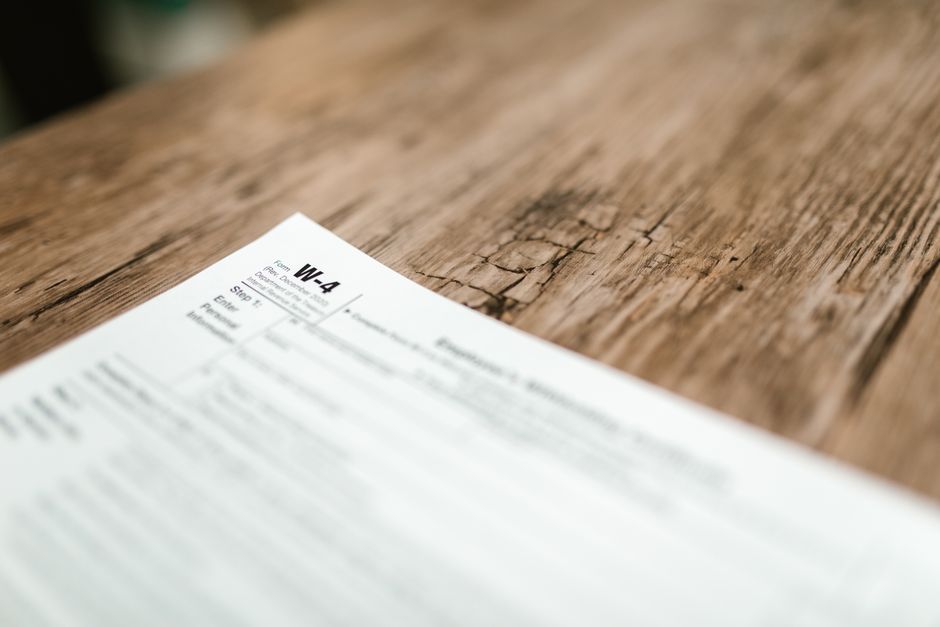
- Paycheck withholding: Your employer sends part of each paycheck to the IRS based on your Form W-4 instructions.
- Estimated tax payments: You send payments directly to the IRS, usually in four installments during the year.
Both methods count toward your federal tax obligation. If you have sufficient W-2 wages, additional withholding from those wages can cover taxes generated by your side business—including both income tax and self-employment tax. You are not automatically required to make separate quarterly payments simply because you receive 1099 income.
The right choice usually looks like this:
- Use extra paycheck withholding when you have steady wages and reasonably predictable side-hustle profit.
- Use estimated payments when you have limited withholding, variable business income, or primarily work for yourself.
- Combine the two when you want predictable paycheck deductions but also need flexibility for unusually profitable periods.
How Side-Hustle Taxes Work in 2026
Start with net profit, not gross revenue
Taxes generally are not calculated on every dollar collected from customers. Start with gross business revenue and subtract ordinary and necessary business expenses to estimate net profit.
For example, suppose a freelance designer collects $30,000 during 2026 and has $10,000 of documented expenses for software, advertising, payment-processing fees, supplies, and other qualifying costs. The estimated net profit is $20,000.
Personal spending is not deductible merely because the taxpayer has a business. Keep receipts and records that establish the business purpose of each claimed expense.
Side-hustle profit can create two federal taxes
Most self-employed side hustlers need to plan for two major components:
- Regular income tax: Net business profit generally adds to taxable income from wages, investments, and other sources.
- Self-employment tax: This generally covers the Social Security and Medicare taxes associated with self-employment. It may apply when net earnings from self-employment are at least $400.
The commonly cited self-employment tax rate is 15.3%, although the calculation is not simply 15.3% of gross revenue. It generally applies to 92.35% of net self-employment earnings, Social Security tax is subject to an annual wage base, and additional Medicare tax rules may affect higher-income taxpayers. A deduction for part of the self-employment tax also affects the income-tax calculation.
A practical starting range
Setting aside approximately 25% to 30% of side-hustle net profit can be a useful planning starting point. On $20,000 of estimated profit, that would mean reserving roughly $5,000 to $6,000.
That range is not a universal tax rate. The actual amount depends on factors including:
- Filing status and total household income
- Federal tax bracket
- W-2 Social Security wages
- Business and personal deductions
- Tax credits
- Other investment or retirement income
- State and local taxes
A taxpayer in a higher federal bracket or a high-tax state may need to save more than 30%. Someone with substantial credits or existing excess withholding may need less.
When Adjusting Your Paycheck Withholding Makes Sense
Additional paycheck withholding is often the simplest solution for someone with a steady W-2 job and predictable side income. Federal withholding is credited against the tax shown on the return as a whole, so it can cover income tax and self-employment tax generated by a side business.
You can request a specific additional amount from every paycheck through Step 4(c) of Form W-4. For example, if you expect a $3,000 federal shortfall and have 20 pay periods remaining, requesting an additional $150 per paycheck would produce approximately $3,000 of added withholding.
Use the IRS Tax Withholding Estimator to evaluate your wages, current withholding, other income, deductions, credits, and expected business profit. Revisit the calculation after a major change rather than assuming one W-4 adjustment will remain accurate all year.
Advantages of additional withholding
- You do not have to remember four separate federal payments.
- Tax payments are spread across regular paychecks.
- Your employer handles the transfer to the IRS.
- You can revise Form W-4 when business income changes.
- Federal withholding is generally treated as paid evenly throughout the year, which can provide useful late-year planning flexibility.
That last point distinguishes withholding from estimated payments. A large estimated payment made late in the year generally does not erase an underpayment from an earlier installment period. Additional withholding later in the year, however, is generally allocated evenly across the year for penalty calculations.
The main drawback is reduced take-home pay. Increasing withholding too aggressively can strain monthly cash flow or produce a large refund that could have remained available for business or household needs. Review an updated pay stub after submitting a new W-4.
When Quarterly Estimated Taxes Are the Better Choice
Estimated payments are usually more appropriate for freelancers, independent contractors, business owners, and side hustlers who do not have enough W-2 income to cover the additional tax through withholding.
They may also be useful when business income is volatile. Instead of permanently reducing every paycheck, a taxpayer can calculate payments as profit becomes clearer. Estimated payments generally cover both income tax and self-employment tax.
2026 federal estimated-tax deadlines
| Payment period | Federal due date |
|---|---|
| First installment | April 15, 2026 |
| Second installment | June 15, 2026 |
| Third installment | September 15, 2026 |
| Fourth installment | January 15, 2027 |
These periods are not four equal calendar quarters, so relying on a standard quarterly calendar can cause a missed deadline.
Taxpayers generally should evaluate estimated payments when they expect to owe at least $1,000 after subtracting withholding and refundable credits. The complete test also considers whether withholding and credits will cover enough of the current-year or prior-year tax under the applicable safe-harbor rules.
Payments can be made through IRS Direct Pay, an IRS Online Account, or other approved payment methods. Keep confirmation numbers and record which tax year each payment was applied to. State estimated-tax forms, thresholds, and deadlines may differ from the federal rules.
Safe Harbors That Can Help Avoid Underpayment Penalties
A safe harbor can protect against the federal underpayment penalty even when the final return shows a balance due. Taxpayers generally avoid the penalty by paying enough through timely withholding, estimated payments, and qualifying credits to meet at least one applicable target.
Current-year safe harbor
Pay at least 90% of the total tax ultimately shown on the 2026 return. This method can work well when income is predictable, but it requires a reasonably accurate projection of the current year’s tax.
Prior-year safe harbor
Pay at least 100% of the total tax shown on the prior-year return. For this purpose, “total tax” generally comes from the prior return—not the amount paid with that return or the size of the refund.
The threshold generally increases to 110% of prior-year tax when prior-year adjusted gross income exceeded $150,000, or $75,000 for someone married filing separately. Additional conditions and exceptions can apply, so taxpayers with unusual filing histories should review Form 1040-ES or consult a tax professional.
What a safe harbor does—and does not do
Withholding and estimated payments are combined when measuring progress toward the target. For example, a $12,000 safe-harbor requirement could potentially be met with $9,000 of federal withholding and $3,000 of timely estimated payments.
Meeting the safe harbor does not mean the tax return will have a zero balance. If actual 2026 tax is $16,000 and the taxpayer meets a $12,000 prior-year safe harbor, the remaining $4,000 may still be due with the return. The safe harbor generally protects against an underpayment penalty; it does not eliminate the underlying tax.
Timing also matters. Estimated payments are evaluated by installment period. Paying the full annual target in December generally will not cure an estimated-payment shortage from April. Taxpayers with income concentrated late in the year may be able to use the annualized income installment method, but that requires additional calculations and records, commonly reported on Form 2210.
A Worked Example: Combining W-4 Withholding and Estimated Payments
Assume an unmarried employee expects to earn $75,000 in W-2 wages and $20,000 of net side-hustle profit during 2026. The side business collects $27,000 of revenue and incurs $7,000 of deductible expenses.
After considering estimated income tax and self-employment tax, suppose the taxpayer projects a total 2026 federal tax liability of $14,500. Current paycheck withholding is expected to total $10,000.
The projected gap is therefore:
$14,500 expected total federal tax − $10,000 regular withholding = $4,500 remaining obligation
The taxpayer decides to cover the gap with:
- $2,500 of additional W-2 withholding during the year
- $2,000 of estimated payments, divided into four timely $500 installments
Total projected federal payments would be $14,500: $10,000 of regular withholding, $2,500 of additional withholding, and $2,000 of estimated payments.
| Tracking item | Illustrative annual amount | Planning action |
|---|---|---|
| W-2 wages | $75,000 | Review each pay stub and year-to-date withholding |
| Side-hustle gross revenue | $27,000 | Reconcile customer payments and tax forms |
| Documented business expenses | $7,000 | Retain receipts and business-purpose records |
| Estimated side-hustle profit | $20,000 | Update as revenue or expenses change |
| Tax savings set-aside | $5,500 | Reserve 27.5% of profit in a separate account |
| Regular federal withholding | $10,000 | Verify against projected year-end pay stubs |
| Additional W-4 withholding | $2,500 | Spread across remaining pay periods |
| Federal estimated payments | $2,000 | Pay four timely installments of $500 |
The $5,500 savings reserve is larger than the projected $4,500 federal gap. That cushion could help cover state tax or an increase in profit. It should not be treated as proof that $5,500 will be sufficient for every taxpayer.
The taxpayer should also compare the planned $14,500 of payments with both safe-harbor targets. If 100% of the prior year’s total tax is $12,000 and the higher-income 110% rule does not apply, the planned payments exceed that target. The taxpayer could still owe more if actual 2026 profit or total tax is higher than projected.
Common Mistakes That Can Lead to Penalties
- Saving a percentage of revenue instead of profit without completing a tax projection: This can substantially overstate or understate the necessary amount.
- Assuming a tax form creates the tax: Income can be taxable even if no Form 1099 is received.
- Ignoring self-employment tax: Regular income-tax estimates alone may not cover the full obligation.
- Making one large estimated payment at year-end: Earlier installment shortages may still generate a penalty.
- Using gross pay instead of federal withholding: Only the actual tax withheld counts toward the federal payment target.
- Forgetting state taxes: Federal payments do not satisfy a separate state obligation.
- Failing to revisit the estimate: A large contract, job change, or lost deduction can make an earlier calculation obsolete.
What to Do Next Before the Next Tax Deadline
- Review the prior-year return. Find the prior year’s total tax and determine whether the 100% or 110% safe-harbor threshold applies.
- Estimate 2026 net profit. Use year-to-date revenue and documented business expenses, then project the remaining months.
- Check current withholding. Use recent pay stubs to estimate total federal withholding for the year.
- Calculate the expected gap. Compare projected total tax with withholding, credits, and payments already made.
- Choose a payment method. Increase Form W-4 withholding, schedule estimated payments, or coordinate both.
- Recheck after major changes. Run the numbers again following a large client payment, new contract, job change, or major deduction.
- Keep tax funds separate. Transfer part of each side-hustle payment into a dedicated savings account instead of relying on money left in a checking account.
For many employees, additional paycheck withholding is the easiest way to cover a modest side hustle. Estimated payments offer more control when income is variable or W-2 withholding is unavailable. A coordinated combination can provide the best balance of convenience, cash flow, and penalty protection.
Consult a qualified tax professional if you have sharply uneven income, multiple businesses, substantial investment gains, employees, multi-state income, or questions about the annualized installment method. These situations can require calculations beyond a basic withholding estimate.