
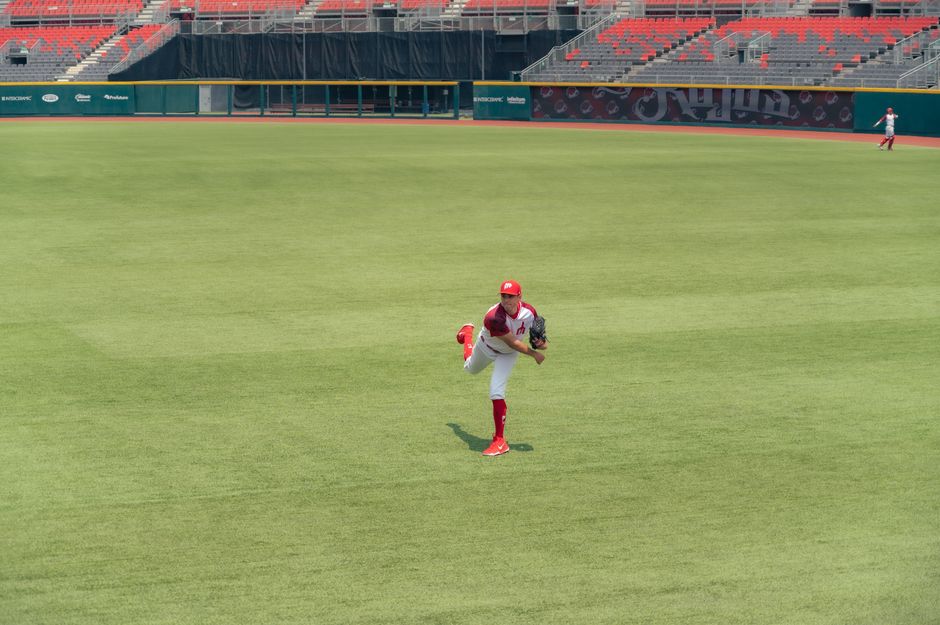
Shohei Ohtani Estimated Net Worth 2026: MLB Contract, Endorsements, and Global Business Income
Shohei Ohtani’s estimated net worth in 2026 is between $150 million and $250 million. That range is more defensible than treating any single celebrity net worth figure as verified. Ohtani has not publicly released a complete personal balance sheet, and important variables—including taxes, agent commissions, investment returns, expenses, and the terms of private sponsorship agreements—remain undisclosed.
His financial story is also unusually complicated. Ohtani signed a record-setting $700 million contract with the Los Angeles Dodgers, but most of that money will not be paid until after the contract’s 10 playing seasons. In the meantime, his annual endorsement income may substantially exceed the salary deposited by the Dodgers.
Shohei Ohtani Net Worth in 2026: Quick Estimate
A reasonable base-case estimate places Shohei Ohtani’s 2026 net worth at approximately $150 million to $250 million. The lower end emphasizes accumulated after-tax cash and investable assets. The upper end gives more weight to his rapidly expanding sponsorship income, licensing revenue, investments, and the present value of guaranteed future compensation.
| Financial category | 2026 assessment | Important limitation |
|---|---|---|
| Dodgers playing salary | Approximately $2 million in 2026 cash salary | Excludes the much larger deferred payments |
| Dodgers contract | $700 million headline value over 10 seasons | Most payments are scheduled for 2034 through 2043 |
| Endorsements | Estimated $100 million to $125 million gross in 2026 | Projection, not a publicly audited total |
| Licensing and business income | Potentially significant but not fully disclosed | Contract terms, royalties, and ownership stakes are generally private |
| Estimated net worth | $150 million to $250 million | Editorial range based on incomplete public information |
Ohtani’s primary wealth sources are Dodgers compensation, endorsement agreements, merchandise and collectibles licensing, appearance and media opportunities, and returns from any investments or privately held business interests. Gross income from these sources is not the same as net worth because substantial deductions apply before earnings become personal assets.
How Much Does Shohei Ohtani Make From the Dodgers?
Ohtani signed a reported 10-year, $700 million contract with the Dodgers in December 2023. The headline average is $70 million per season, but that number does not describe his annual cash flow.
Under the reported structure, Ohtani receives approximately $2 million per year from 2024 through 2033. The remaining $680 million is deferred, with approximately $68 million scheduled to be paid annually from 2034 through 2043. The deferred amounts reportedly do not earn interest.
Ohtani’s estimated 2026 Dodgers cash compensation
- Reported 2026 playing salary: approximately $2 million
- Deferred compensation earned under the contract: much larger in an economic sense, but not paid in 2026
- Estimated endorsement income: potentially $100 million to $125 million before taxes and expenses
This distinction matters because three different measurements are often mixed together:
- Contract value: The $700 million nominal amount promised across the full payment schedule.
- Annual cash income: The money actually paid during a specific year, including salary and off-field earnings.
- Net worth: Assets minus liabilities, potentially including an appropriately discounted value for future guaranteed payments.
For example, adding $70 million to Ohtani’s net worth every playing season would misrepresent the deal. He is receiving only about $2 million in current Dodgers salary each year, while the bulk of the contractual cash arrives later. Major League Baseball reportedly values the contract at roughly $460 million for competitive-balance-tax purposes after accounting for the deferrals, illustrating why future dollars are worth less than immediate dollars.
Ohtani’s Career Earnings Timeline
Ohtani began his professional career with the Hokkaido Nippon-Ham Fighters in Japan’s Nippon Professional Baseball league. His early salaries were modest compared with his eventual MLB earnings, but his two-way success established the combination of pitching, power hitting, and international visibility that later drove his financial value.
When Ohtani signed with the Los Angeles Angels before the 2018 season, international signing rules limited his immediate compensation. Because of his age and entry route, he could not negotiate the type of unrestricted nine-figure MLB deal that an established free agent could command. He received a reported signing bonus of roughly $2.3 million and initially earned close to the MLB minimum salary.
| Period | Reported career development | Likely wealth effect |
|---|---|---|
| 2013–2017 | Played for the Nippon-Ham Fighters in Japan | Built professional earnings and an internationally marketable two-way profile |
| 2018–2020 | Early Angels seasons under MLB salary controls | Relatively limited salary, but rapidly rising endorsement potential |
| 2021 | Won his first American League MVP award | Major increase in negotiating power and global sponsorship demand |
| 2022 | Earned a reported $5.5 million salary | Higher on-field income alongside expanding commercial revenue |
| 2023 | Earned a reported $30 million and won another AL MVP award | Largest Angels salary and peak leverage entering free agency |
| December 2023 | Signed the 10-year, $700 million Dodgers contract | Created substantial long-term contractual value, mostly deferred |
| 2024 | Made his Dodgers debut and expanded his commercial reach | Low current team salary but sharply higher sponsorship and licensing potential |
| 2025–2026 | Continued as a central global face of MLB | Off-field income may exceed playing salary by a wide margin |
Ohtani’s reported Angels salaries were approximately $545,000 in 2018, $650,000 in 2019, a prorated amount in the shortened 2020 season, $3 million in 2021, $5.5 million in 2022, and $30 million in 2023. Including his signing bonus, his gross MLB compensation before joining the Dodgers was roughly in the low-$40-million range. Taxes, agent fees, and other costs would have reduced the amount available to save or invest.
Endorsements and Global Sponsorship Income
Endorsements are the most important source of Ohtani’s current cash income. A practical 2026 estimate is $100 million to $125 million in gross annual off-field earnings. This is an industry-based projection rather than a confirmed figure from Ohtani or his representatives.
His sponsorship portfolio spans several commercial categories:
- Athletic apparel and footwear
- Baseball equipment and sporting goods
- Financial services
- Luxury and consumer products
- Food, beverages, health, and personal-care brands
- Media, technology, and telecommunications
- Japanese companies seeking international visibility
Publicly reported relationships have included brands such as New Balance, New Era, Seiko, KOSÉ, Ito En, and Porsche Japan. The exact value and structure of each agreement are generally private, so lists of sponsors do not reveal how much cash Ohtani personally receives.
Why his endorsement income can exceed his MLB salary
Ohtani offers sponsors access to both the U.S. and Japanese markets. His two-way status also gives brands more storytelling and advertising opportunities than a conventional position player or pitcher. He can be promoted through pitching highlights, home runs, international baseball events, lifestyle campaigns, and licensed products.
The economics are especially striking during the Dodgers contract’s playing term. If Ohtani receives $2 million from the team and generates $110 million in gross off-field income during a hypothetical year, endorsements would equal 55 times his current baseball salary. That does not mean he keeps the entire $110 million: taxes, management fees, production costs, and other contractual expenses may materially reduce the net amount.
Sponsorship revenue should also be divided into separate components:
- Guaranteed fees: Fixed payments for using Ohtani’s name or image.
- Performance bonuses: Additional payments tied to awards, appearances, or campaign results.
- Licensing royalties: A percentage or fixed fee connected to product sales.
- Appearance fees: Compensation for events, advertisements, and promotional work.
- Merchandise income: Royalties or other payments from approved products, where applicable.
Public estimates often combine these categories even though their timing and profitability can differ.
Business Ventures, Licensing, and Investment Income
Ohtani’s commercial income extends beyond conventional television advertisements. Publicly reported arrangements include branded apparel, autographed memorabilia, trading cards, collectibles, and licensing partnerships. Fanatics has announced an exclusive long-term memorabilia relationship with Ohtani, while Topps has pursued global trading-card opportunities connected to his image and career.
These relationships can produce guaranteed payments, royalties, or both. However, revenue collected by a retailer or licensing company is not automatically Ohtani’s personal income. A $100 million product line, for example, could generate only a fraction of that amount for the athlete after manufacturing, distribution, retailer margins, licensing terms, and taxes.
Investments may also contribute to his net worth. High-earning athletes commonly hold marketable securities, real estate, private investments, or equity received through business partnerships. Ohtani’s complete portfolio is not public, so assigning a precise value to his investment assets would be speculation.
It is equally important not to confuse Ohtani’s wealth with the economic activity surrounding him. Dodgers ticket sales, television interest, tourism, sponsor sales, and merchandise demand may demonstrate the value of his public image, but those figures belong to teams and commercial partners unless a contract specifically directs a portion to him.
Why Shohei Ohtani Net Worth Estimates Conflict
Lower estimates near $150 million usually focus on cash already received, approximate after-tax savings, and conservative asset growth. Higher estimates approaching or exceeding $250 million may assume stronger endorsement earnings, high savings rates, successful investments, or the inclusion of some present value for deferred Dodgers compensation.
Common net worth calculation errors
- Counting the entire $700 million immediately: Most of the contract has not yet been paid and must be discounted for time and uncertainty in purchasing power.
- Treating gross income as savings: Federal and state taxes, professional fees, and normal expenses reduce retained wealth.
- Adding sponsor sales to personal income: Revenue generated for a brand is different from the athlete’s fee or royalty.
- Ignoring timing: A future payment is not equivalent to the same amount of liquid cash today.
- Assuming every deal is guaranteed: Some commercial income may depend on performance, appearances, sales, or contract renewal.
Agent commissions, charitable giving, lifestyle expenses, real-estate costs, currency movements, and investment performance can further change the result. None of those categories is disclosed comprehensively enough to produce an audited estimate.
The clearest reported fact is the Dodgers contract’s nominal structure: $700 million over 10 playing seasons, with $680 million deferred. The $150 million to $250 million net worth range and the $100 million to $125 million 2026 endorsement estimate are editorial estimates based on publicly discussed earnings—not verified financial statements.
Bottom Line: What Shohei Ohtani Could Be Worth by 2026
As of 2026, a grounded estimate places Shohei Ohtani’s net worth between $150 million and $250 million. A base case would fall within that range after accounting for taxes, fees, retained endorsement income, previous MLB earnings, and investable assets. A higher-upside scenario is possible if sponsorship revenue reaches the top of published projections and his investments or licensing arrangements appreciate substantially.
The deferred Dodgers compensation provides enormous long-term financial value, but it should not be described as $700 million of immediate liquid wealth. During the playing portion of the contract, global sponsorship demand is likely to remain the larger source of current cash.
The biggest variables are the contract’s deferred structure, endorsement growth in the United States and Japan, licensing and collectibles revenue, investment performance, and Ohtani’s continued visibility on the field.
What to do next
When evaluating any celebrity net worth estimate, check its publication date, identify whether it counts gross or after-tax income, and determine how it treats future contract payments. For Ohtani in particular, any estimate that simply adds $700 million to his current assets is likely overstating his immediately available wealth.