
SoFi Invest vs. Fidelity vs. Robinhood: Which Brokerage Is Best for Beginner Investors in 2026?
SoFi Invest, Fidelity, and Robinhood all let beginners buy U.S. stocks and exchange-traded funds without paying an online trading commission. Beyond that similarity, the platforms serve noticeably different investors.
Fidelity is the best overall choice for most beginners building long-term portfolios. It offers a broad investment lineup, strong research, retirement-planning tools, educational resources, and an account structure that can support investors as their finances become more complicated.
SoFi Invest is more appealing if you want investing, banking, automated portfolio management, and financial guidance in one app. Robinhood is strongest for investors who prioritize a streamlined mobile experience, cryptocurrency, low-cost options trading, or an IRA contribution match.
The right choice ultimately depends on what you plan to own, which account you need, how frequently you expect to trade, and how much guidance you want.
Quick Answer: Which Brokerage Is Best for Beginners?
- Choose Fidelity for long-term investing, Roth and traditional IRAs, mutual funds, bonds, CDs, research, and retirement planning.
- Choose SoFi Invest if you want an approachable financial app combining self-directed investing, automated investing, banking products, education, and access to financial planners for eligible members.
- Choose Robinhood if you want simple mobile trading, cryptocurrency access, options trading, fractional shares, or an IRA contribution match.
A beginner saving for retirement will usually benefit more from Fidelity’s diversified fund lineup and planning tools than from a trading-focused interface. Someone who already uses SoFi for banking may prefer having everything under one login. A mobile-first investor interested in individual stocks or crypto may find Robinhood easier to navigate.
Who this comparison is best for
This comparison is designed for U.S. investors opening their first taxable brokerage account, Roth IRA, or traditional IRA. It focuses on typical beginner priorities: low costs, diversified investments, recurring contributions, ease of use, education, and access to support.
SoFi Invest vs. Fidelity vs. Robinhood: Key Differences at a Glance
| Feature | SoFi Invest | Fidelity | Robinhood |
|---|---|---|---|
| Online U.S. stock and ETF commissions | $0 | $0 | $0 |
| Standard self-directed account minimum | $0 | $0 | $0 |
| Taxable brokerage account | Yes | Yes | Yes |
| Traditional and Roth IRAs | Yes | Yes | Yes |
| Joint taxable account | Generally not available through standard Active Invest accounts | Yes | Available to eligible customers |
| Fractional shares | Yes, on eligible investments | Yes, on eligible U.S. stocks and ETFs | Yes, on eligible stocks and ETFs |
| Mutual funds | Yes | Yes; extensive selection | No traditional mutual fund marketplace |
| Individual bonds and brokered CDs | Limited compared with Fidelity | Yes | Not a core offering |
| Options | Yes, subject to approval | Yes, subject to approval | Yes, subject to approval |
| Direct cryptocurrency trading | Not a standard Active Invest feature; partner access may be available | Available through eligible Fidelity crypto products | Yes, with a comparatively broad selection |
| Automated investing | SoFi Robo Investing | Fidelity Go | Robinhood Strategies |
| Primary advantage | Integrated financial ecosystem | Long-term investing and research | Mobile simplicity and IRA match |
Fractional-share minimums and eligible securities vary. For example, a platform may support fractional purchases of major stocks and ETFs without allowing fractional trading in every listed security. Always check the order screen before assuming a particular investment qualifies.
Fees, Minimums, and Uninvested Cash
All three brokers advertise $0 commissions for online trades of U.S.-listed stocks and ETFs. That does not mean every transaction is free. Regulatory fees, fund expenses, options fees, advisory charges, crypto trading costs, and account-transfer fees may still apply.
Options and cryptocurrency costs
Robinhood and SoFi generally emphasize commission-free options contracts, although regulatory and exchange-related charges can still apply. Fidelity’s standard options pricing has traditionally included a per-contract fee, with certain low-priced closing transactions receiving different treatment. Investors should verify each broker’s current options schedule before trading.
Crypto costs require special attention. A platform may advertise zero commissions while earning money through a spread, routing arrangement, or transaction-based pricing. The spread is the difference between the market price and the price at which an order executes. Even a modest spread can become expensive for someone trading repeatedly.
Automated investing fees
SoFi Robo Investing has generally used a low starting requirement—commonly $50—and a percentage-based advisory fee under its standard program terms. Fidelity Go can begin investing with a small balance and has historically charged no advisory fee below a stated balance threshold, with a percentage fee applying at higher balances. Robinhood Strategies uses a percentage-based advisory fee and a low minimum, with separate benefits or fee caps potentially available to Gold subscribers.
These programs and membership benefits can change. Review the current advisory brochure, not just a promotional page. Also examine the expense ratios of the ETFs inside the portfolio because fund expenses are separate from the robo-advisor’s management fee.
Uninvested cash yields
Cash yields can differ substantially. One 2026 comparison reported a yield of approximately 3.28% for eligible uninvested Fidelity cash, compared with about 0.01% for Robinhood customers without Gold and 3.35% for eligible Gold customers. These are snapshots, not guaranteed rates. Money market yields and bank sweep rates move with short-term interest rates.
Robinhood Gold also carries a membership cost, so a higher yield does not automatically create a better result. For example, an investor holding only $500 in cash may earn too little additional interest to offset the subscription fee. Someone holding $20,000 could reach a different conclusion.
With SoFi, distinguish brokerage cash from money held in SoFi checking or savings products. A banking APY does not necessarily apply to uninvested brokerage cash. Check the brokerage’s current cash-sweep disclosure to see where money is held, what it earns, and whether FDIC or SIPC protections apply.
Investment Choices and Account Types
Fidelity offers the broadest traditional lineup
Fidelity supports stocks, ETFs, mutual funds, options, Treasury securities, corporate and municipal bonds, brokered CDs, and numerous retirement and specialty accounts. This breadth matters if you eventually want to manage an IRA, taxable investments, workplace retirement assets, and cash in one place.
Its mutual fund marketplace includes low-cost index funds, target-date funds, actively managed funds, and Fidelity ZERO funds with no stated expense ratio. Fund eligibility, transaction fees, and account restrictions still need to be checked before purchasing.
SoFi combines self-directed and automated investing
SoFi Active Invest supports stocks, ETFs, eligible fractional shares, options, and mutual funds. SoFi also offers automated portfolios and access to certain alternative investments through eligible products. Alternative investments may carry higher fees, less liquidity, limited pricing transparency, or different qualification rules than publicly traded ETFs.
SoFi’s main advantage is integration. A member may be able to view bank accounts, loans, credit products, rewards, and investments from the same app. That convenience can make it easier to automate monthly investing, although it should not substitute for comparing each product on its own merits.
Robinhood focuses on frequently traded assets
Robinhood’s core lineup includes stocks, ETFs, options, fractional shares, cryptocurrency, taxable accounts, joint accounts for eligible users, and IRAs. It does not provide the same direct access to traditional mutual funds, individual bonds, or brokered CDs that Fidelity offers.
That distinction may not matter to someone buying one diversified ETF each month. It becomes more important to investors who want a bond ladder, a specific mutual fund, or a larger menu of fixed-income products.
Robinhood IRA match versus Fidelity retirement tools
Robinhood’s IRA match is a meaningful incentive. Standard customers may receive a 1% match on eligible IRA contributions, while Gold members may qualify for a 3% match. Holding-period rules, membership requirements, contribution eligibility, and withdrawal consequences apply.
For example, a 3% match on a $7,000 eligible contribution would equal $210 before considering the Gold membership cost. That is attractive, but it should not be the only consideration. Fidelity provides a broader set of retirement calculators, planning resources, fund choices, beneficiary tools, and account-consolidation options.
Apps, Research, Education, and Beginner Support
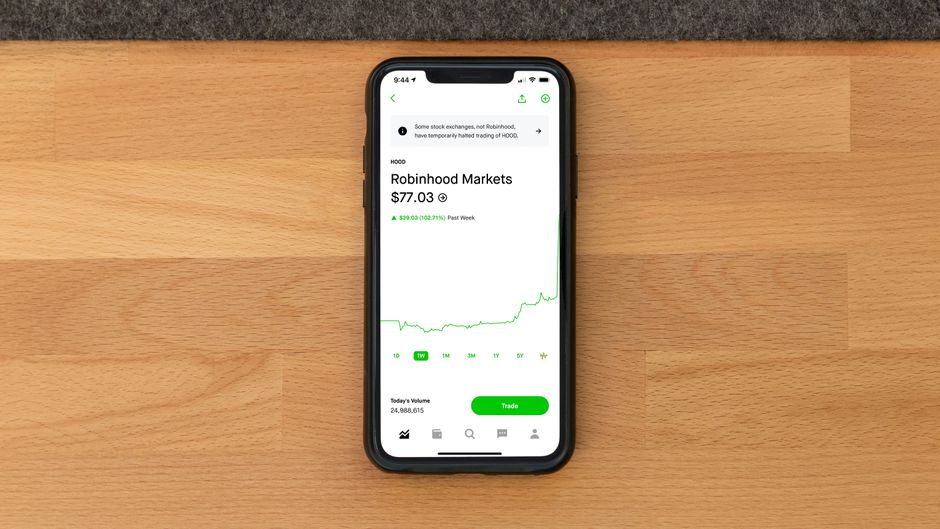
Robinhood is built around speed. Its app makes it easy to search for a security, review a chart, and place an order. That simplicity is useful, but it can also make frequent trading feel deceptively effortless. Beginners should consider disabling unnecessary notifications and using recurring investments instead of reacting to every price movement.
Fidelity offers more company research, screeners, market commentary, planning tools, educational material, and portfolio analysis. It also has desktop and advanced trading capabilities for investors who later need them. The trade-off is complexity: navigating Fidelity’s full website can take longer than learning Robinhood’s focused app.
SoFi occupies the middle ground. Its app is approachable, while SoFi Learn covers investing, budgeting, credit, insurance, and other financial topics. Eligible members may also receive access to financial planners, with the number of meetings or level of access depending on current membership terms.
All three support common beginner features such as watchlists, price alerts, portfolio views, and recurring investments, although eligible securities and scheduling options differ. None should replace independent research, and general educational content is not personalized financial, tax, or legal advice.
Pros and Cons
Fidelity
- Pros: Broad investment selection, extensive retirement tools, strong research, fractional shares, mutual funds, bonds, CDs, and established customer-support channels.
- Cons: The website and feature set can feel complicated, and options traders may pay more per contract than at Robinhood or SoFi.
SoFi Invest
- Pros: Beginner-friendly interface, banking integration, automated investing, mutual funds, financial education, and planner access for eligible members.
- Cons: Fewer advanced research and trading tools than Fidelity, limited direct fixed-income capabilities, and no standard direct crypto trading inside Active Invest.
Robinhood
- Pros: Simple mobile experience, fractional shares, cryptocurrency, low-cost options access, recurring investments, and IRA contribution matches.
- Cons: Limited traditional fixed-income and mutual fund access, weak cash yield for non-Gold customers in some rate environments, and an interface that may encourage excessive trading.
Risks and Potential Drawbacks
Commission-free trading does not eliminate investment risk. Stocks and ETFs can decline, dividends can be reduced, and selling profitable investments in a taxable account can generate tax obligations. Funds may also charge expense ratios even when buying and selling them costs no commission.
- Options risk: Some strategies can lose the entire premium paid. More complex positions can create losses beyond the investor’s initial expectations.
- Crypto risk: Cryptocurrency can experience severe price swings and may not receive the same regulatory or insurance protections as brokerage securities.
- Alternative-asset risk: Private-market and specialty investments may be illiquid, difficult to value, and more expensive than public index funds.
- Fractional-share limitations: Fractional positions may not transfer directly to another broker. The original firm may need to sell the fraction and transfer cash.
- Behavioral risk: A fast interface, constant alerts, and easy options approval can tempt beginners to trade more frequently than their plan requires.
Who Should Choose SoFi, Fidelity, or Robinhood?
Choose Fidelity if your priority is retirement, diversified long-term investing, mutual funds, bonds, CDs, research, or consolidating several account types. It is the strongest default for a beginner who wants one broker that can remain useful for decades.
Choose SoFi Invest if you want investing integrated with banking and other financial products. It is particularly relevant for beginners interested in automated portfolios, broad financial education, and planner access rather than advanced trading tools.
Choose Robinhood if you prioritize a streamlined mobile app, cryptocurrency, options, or an IRA match. It works best when paired with clear trading limits and a written investment plan.
Before deciding, compare customer-service hours, outgoing transfer fees, fractional-share transfer policies, security controls, account eligibility, and current promotions. Brokerage securities are generally covered by SIPC protection when a member brokerage fails, subject to limits and exclusions. SIPC does not protect against market losses. Bank sweep deposits may instead receive pass-through FDIC insurance if program requirements are met.
Alternatives to Consider
These three brokers are not the only reasonable choices. Charles Schwab is another broad, full-service option with retirement accounts and extensive research. Vanguard may appeal to investors focused primarily on low-cost funds and long holding periods. Betterment and Wealthfront are worth comparing if automated portfolio management is more important than selecting individual investments.
What to Do Next Before Opening a Brokerage Account
- Select the account type. Consider a Roth IRA for potentially tax-free qualified retirement withdrawals, a traditional IRA for possible current-year tax advantages, or a taxable account for money needed before retirement. Eligibility and tax treatment depend on individual circumstances.
- Write down your investing plan. Specify the investments you want, your monthly contribution, expected holding period, and acceptable level of volatility.
- Verify current terms. Check trading fees, advisory charges, cash yields, transfer costs, promotions, investment availability, and match conditions directly with each brokerage.
- Start with diversification. A broad, low-cost stock or balanced ETF may be easier to manage than a collection of speculative individual positions, depending on your goals and risk tolerance.
- Automate contributions. A recurring monthly investment can reduce the temptation to time the market.
- Review periodically. Check the portfolio on a planned schedule—such as quarterly or twice a year—instead of responding to daily price changes.
Bottom line: Fidelity is the most complete brokerage for the typical long-term beginner in 2026. SoFi Invest is the better fit for an integrated financial relationship with automated investing and guidance, while Robinhood is most compelling for mobile-first trading, crypto access, and IRA matches. Compare current disclosures before opening an account because yields, fees, promotions, and product availability can change.